Table of Contents
What Is Precision Machining?
Precision machining is a manufacturing process used to create highly accurate parts and components from raw materials. It involves removing material from a workpiece using specialised tools and equipment to achieve exact dimensions, tight tolerances, and specific surface finishes.
This process is commonly used in industries where even the smallest variation can affect performance, such as aerospace, medical, automotive, and electronics.
The aim of precision machining is to produce parts that meet exact design specifications. This is often achieved using advanced machinery controlled by computer software, allowing for repeatable and consistent results across large production runs.
How Precision Machining Works
Precision machining begins with a design, usually created through computer-aided design (CAD) software. The digital design is then translated into instructions for the machine through computer-aided manufacturing (CAM) systems.
These instructions guide cutting tools to shape the material into the required component.
The process can involve several stages, including:
- Cutting
- Drilling
- Milling
- Turning
- Grinding
Each stage removes small amounts of material until the final shape is achieved. The machines used are capable of working to extremely fine tolerances, often measured in microns.
Materials commonly used include:
- Aluminium
- Stainless steel
- Brass
- Titanium
- Plastics
- Composites
Common Types of Precision Machining Processes
CNC Milling
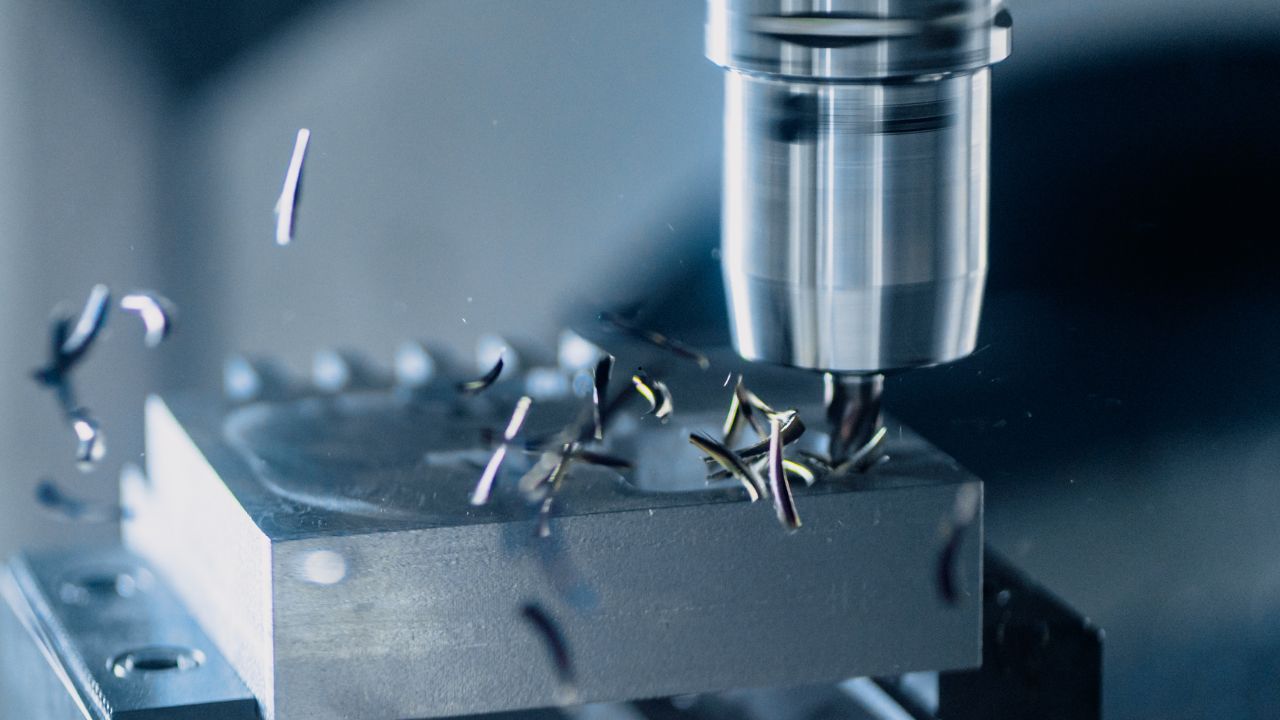
CNC milling uses rotating cutting tools to remove material from a stationary workpiece. It is used to create complex shapes, slots, holes, and flat surfaces. Movement is controlled by computer programming, allowing high accuracy.
CNC Turning
CNC turning involves rotating the workpiece while a cutting tool removes material. It is commonly used for cylindrical parts such as shafts, pins, and threaded components.
EDM Machining
Electrical discharge machining (EDM) uses electrical sparks to shape hard materials. It is ideal for intricate shapes and materials that are difficult to machine using traditional methods.
Grinding
Grinding is a finishing process used to improve surface quality and achieve precise dimensions. Abrasive wheels remove very small amounts of material, making it suitable for smooth finishes and tight tolerances.
Industries That Use Precision Machining
Aerospace
Used for turbine parts, engine components, and structural fittings where safety and performance are critical.
Medical
Used for surgical tools, implants, and diagnostic equipment that require strict standards of accuracy and hygiene.
Automotive
Used for engine parts, transmission systems, and braking components to ensure reliability and performance.
Electronics
Used for connectors, housings, and internal components requiring very small and precise dimensions.
Benefits of Precision Machining
- High accuracy and repeatability
- Suitable for complex and simple designs
- Works with a wide range of materials
- Ideal for prototyping and mass production
- Strong quality control with reduced human error
The Role of CNC Technology in Precision Machining
Computer Numerical Control (CNC) technology plays a major role in modern precision machining. CNC machines operate through programmed instructions that control cutting tools automatically.
Benefits of CNC include:
- High efficiency
- Consistent production
- Ability to create complex designs
- Reduced manual intervention
Modern CNC systems can perform multiple operations in a single setup, improving speed and precision.
Factors That Affect Precision Machining Quality
Several factors influence machining quality:
- Machine calibration
- Cutting tool condition
- Material properties (hardness, heat resistance, composition)
- Environmental conditions such as temperature
Even small variations in these factors can impact final accuracy.
The Importance of Precision Machining in Manufacturing
Precision machining is essential in modern manufacturing because it ensures the production of accurate, reliable, and high-quality components.
From aerospace systems to everyday electronics, many industries depend on this process to meet strict performance requirements.
As technology continues to advance, precision machining will remain a core part of high-quality manufacturing worldwide.