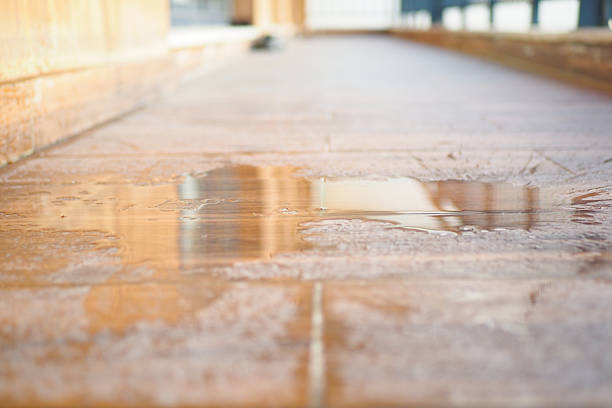

If you’ve ever walked across a buckling laminate floor or noticed gaps between your floorboards, moisture might be the quiet culprit. In sunny Los Angeles, where the air is dry one moment and coastal humidity sweeps in the next, subfloor conditions and moisture levels can make or break your flooring investment.
Let’s take a closer look at how these two often-overlooked factors play a major role in flooring performance, and what every LA homeowner should know before choosing a new floor.
Table of Contents
The Hidden Force Beneath Your Floors
Your subfloor isn’t just there to hold things up. It’s the foundation on which your entire floor lives. Whether you’re working with concrete slabs, plywood, or particleboard, the condition and moisture content of the subfloor will directly affect how well your floor performs over time.
In Los Angeles, slab-on-grade construction is common, meaning many homes have concrete subfloors. These slabs are prone to retaining moisture from the ground, especially in older homes without a vapor barrier. Over time, that hidden moisture can seep into your floorboards, causing warping, mold, or even adhesive failure if you’ve chosen glued-down flooring.
Moisture: It’s Not Just a Coastal Problem
When you think of LA, you probably imagine sunshine, palm trees, and dry heat. But microclimates throughout the city, from the beachside breeze of Santa Monica to the hotter inland air of Burbank, mean that homes experience different levels of humidity and temperature fluctuations.
Even a small amount of trapped moisture under the floor can cause swelling or bubbling, especially in homes influenced by varying coastal interior design principles. Engineered wood may start to cup. Laminate can buckle or peel. Luxury vinyl planks might shift or lose their seal. The risks don’t just apply to major water damage, sometimes it’s just a slow, steady battle against the natural climate.
That’s why professionals always recommend proper moisture testing before installation. Skipping that step is like building a sandcastle too close to the tide, it might look great at first, but it’s only a matter of time before the waves win.
Subfloor Flatness and Stability
Think your subfloor just needs to be “there”? Think again. Uneven or unstable subfloors can wreak havoc on your flooring. In floating floors like laminate or click-lock vinyl, even slight dips or rises can lead to noisy, springy, or unstable results. With hardwood, an uneven subfloor can cause creaking, splitting, or visible gaps.
Over time, that instability turns into real damage and expensive repairs.
That’s why a proper assessment of flatness, soundness, and levelness is vital before installing any type of floor. In some cases, leveling compounds or moisture barriers need to be applied to ensure long-term performance. It’s not the glamorous part of the job, but it’s absolutely essential.
Flooring Types That Handle LA Conditions Well
Not all floors are created equal when it comes to the challenges of Southern California homes. Some materials are better at tolerating moisture fluctuations and imperfect subfloors.
Luxury vinyl plank (LVP) is one of the most popular choices for LA homeowners for good reason. It’s waterproof, durable, and handles humidity changes gracefully. Tile is another great contender, especially in beachside neighborhoods or homes with active families.
Laminate flooring has come a long way in terms of moisture resistance, but it still depends heavily on the quality of the installation and the condition of the subfloor. A seasoned Laminate Flooring Installer can help determine whether your home is a good fit and what prep work might be needed.
Wooden flooring, while classic and beautiful, needs special attention in LA. Engineered wood performs better than solid wood in variable conditions thanks to its layered structure. Still, it requires an installer who understands the nuances of local subfloor conditions.
Trust the Prep, Not Just the Product
One of the most common mistakes homeowners make is assuming that a good product will perform well regardless of what’s underneath. But the truth is, your flooring is only as good as the surface it’s installed on.
You could invest in premium flooring materials, but if the subfloor has moisture issues or is uneven, your results won’t last. That’s why any quality flooring project in LA should begin with inspection, testing, and thoughtful prep work.
An experienced installer knows how to detect hidden moisture, assess subfloor health, and apply the right underlayment or sealing solution. Cutting corners might save time up front, but choosing quality flooring ensures fewer repairs and better longevity.
Final Thoughts
In Los Angeles, flooring is about more than aesthetics. The climate, the subfloor, and even your home’s location all play a role in how your floor will perform over the years. Choosing the right material is important, but making sure it’s installed over a properly prepared, moisture-checked subfloor is what truly protects your investment.
If you’re considering new floors, don’t skip the behind-the-scenes work. Partner with a flooring expert who understands LA homes, tests thoroughly, and installs with long-term durability in mind. It’s the difference between a floor that just looks great and one that stays that way.

