

Key Takeaways
- Vacuum trailers enable non-destructive excavation to expose underground utilities with minimal risk of damage.
- They drastically improve worker safety by reducing manual labor and limiting on-site exposure to hazardous environments.
- Vacuum excavation is less disruptive to local ecosystems, making it an environmentally responsible choice for projects of any scale.
Excavation in the utility and construction sectors is inherently risky, especially when working near buried utilities such as gas, water, or electrical lines. Traditional digging techniques can unintentionally disrupt or damage these networks, often resulting in expensive repairs and dangerous situations for nearby workers. In recent years, the adoption of vac trailer technology has transformed excavation practices by providing a safer, more precise, and efficient alternative for exposing underground utilities.
Vacuum trailers, also known as vac trailers, use advanced technology to minimize excavation-related hazards. By using high-pressure air or water to safely break up soil and a powerful vacuum to remove debris, these systems enable non-destructive digging suited to a variety of challenging site conditions. As a result, they are quickly becoming the standard for projects where safety, precision, and environmental stewardship are critical.
Table of Contents
Understanding Vacuum Excavation
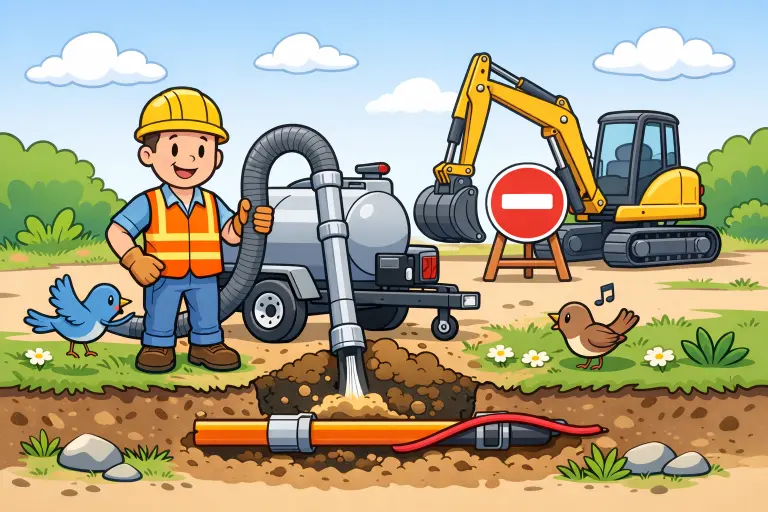
Vacuum excavation uses high-pressure water or air jets to loosen soil, which is then safely extracted by an industrial-strength vacuum system. Unlike traditional heavy machinery that indiscriminately digs into the ground, this approach is highly focused and controlled. The ability to precisely target soil removal makes vacuum trailers particularly suitable for areas dense with sensitive underground utilities.
This technology is widely regarded as the gold standard for projects that require careful navigation around existing infrastructure. Because it relies on non-mechanical means to break up the soil, vacuum excavation significantly reduces the risk of accidental strikes to cables, pipes, or fiber-optic cables beneath the surface.
Preventing Utility Strikes
Preventing utility strikes has become a top priority in excavation planning, as accidental hits can result in project delays, injury, property damage, and widespread utility outages. The Common Ground Alliance found that utility strikes in the United States cost billions of dollars each year. With vacuum excavation, project teams can visually confirm the location of underground assets before proceeding, virtually eliminating the guesswork and associated risks of conventional digging methods.
This method’s accuracy is invaluable when working in environments with layered infrastructure or where utility maps may be outdated or incomplete. By keeping critical systems intact, vacuum trailers help ensure public safety and project integrity.
Enhancing Worker Safety
Worker safety is another major benefit of using vacuum trailers. Traditional excavation frequently exposes workers to risks such as cave-ins, heavy machinery accidents, and exposure to hazardous materials. Vacuum trailers mitigate these dangers by allowing much of the operation to be performed remotely or with reduced manual effort. This reduces physical strain and the likelihood of on-site accidents, making occupational injuries less common among teams that use this equipment. According to the Occupational Safety and Health Administration, trench collapses are a constant threat in standard excavation work, reinforcing the safety advantages of vacuum excavation.
Environmental Benefits
Vacuum excavation is an environmentally conscious choice because it minimizes the overall disturbance to the job site. While conventional digging causes significant soil displacement and can harm surrounding vegetation, vacuum trailers remove just the targeted material and store it for later restoration. Careful excavation also supports better site preparation by reducing soil disruption and helping crews maintain a cleaner and more stable work area. Moreover, by preserving the site’s original condition, vacuum excavation helps maintain local biodiversity and reduces the post-project environmental footprint.
Applications in Urban Settings
Urban excavation projects often require experienced groundwork contractors who understand how to work safely around buried utilities and tight construction spaces. Vacuum trailers are compact and maneuverable, making them ideal for navigating city streets and congested neighborhoods. Their ability to perform pinpoint excavation without disturbing adjacent infrastructure is especially valuable in densely populated areas where space is at a premium, and the margin for error is slim. As city populations and infrastructure demands continue to grow, the role of vac trailers in urban development and maintenance will only expand.
Compliance with Safety Regulations
Compliance with state and federal safety regulations is critical for any excavation project. Many industry standards now recommend or mandate the use of non-destructive digging techniques near known utilities. Adopting vacuum trailers in your excavation process demonstrates a commitment to regulatory compliance and risk reduction, helping avoid costly fines and disruptions. Planning with vac trailers aligns with best practices and current regulatory frameworks, ensuring smoother project approvals and safer outcomes for all parties involved.
Cost-Effectiveness
Although the upfront purchase or rental cost of a vacuum trailer may be higher than conventional equipment, the overall financial benefits are substantial. The main savings come from avoiding utility damage, which can halt projects and incur massive repair costs. Additionally, the efficiency of vacuum excavation accelerates job timelines, reducing labor expenses and overhead. Since less restoration is required after work is completed, environmental and landscaping rehabilitation costs are also minimized, contributing to a positive bottom line over the equipment’s lifespan.
Conclusion
Vacuum trailers are revolutionizing excavation practices across the utility and construction industries. Their ability to prevent utility strikes, enhance worker safety, minimize environmental impact, and ensure regulatory compliance is making them an indispensable tool for projects of all types and sizes. As cities grow and infrastructure becomes more complex, vacuum trailers will continue to lead the way in safe, efficient excavation solutions for the future.

