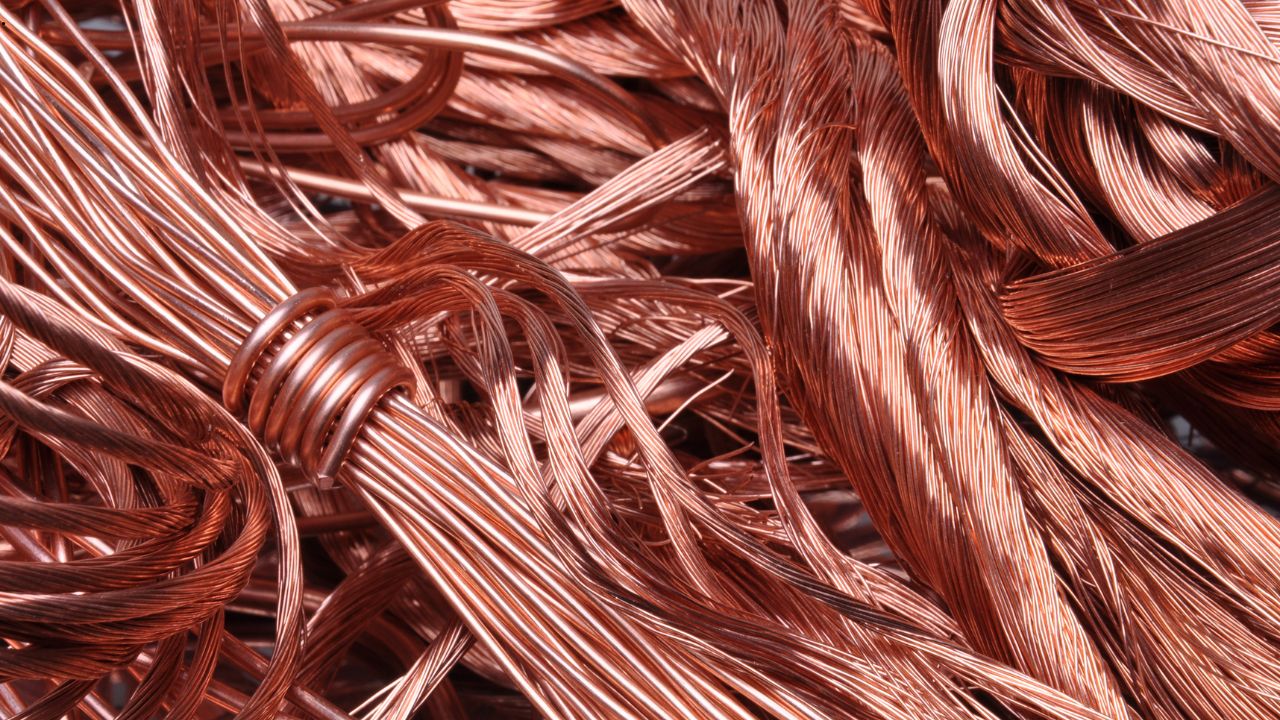
Every year, Finnish households and tradespeople discard or undervalue tonnes of non-ferrous metal without realising it. Old wiring pulled from a wall, a worn-out boiler, redundant plumbing, leftover cable reels — these are not waste. They are raw materials with active, liquid markets. Knowing how those markets work is the first step to making sure the value ends up in your pocket rather than someone else’s.
Table of Contents
Why non-ferrous metals are worth treating differently
The term “non-ferrous” simply means metals that contain no iron — or only trace amounts. The category includes copper, aluminium, brass, bronze, lead, zinc, and several others. What they share is a recycling economics story that is fundamentally different from steel and iron scrap: non-ferrous metals are more energy-intensive to produce from primary ore, more widely used in high-value manufacturing, and — crucially — easier to recycle repeatedly without significant loss of quality.
This makes the secondary market for non-ferrous metals genuinely global, genuinely liquid, and genuinely sensitive to commodity price movements. The price of scrap copper (Finnish: kuparin hinta) is not an arbitrary figure set by a local dealer — it tracks the London Metal Exchange (LME) copper price, which in turn reflects construction activity in China, the pace of electrical grid investment worldwide, and the accelerating demand from electric vehicle manufacturers. Understanding that chain helps you judge whether an offer is fair.
Copper: the metal that powers the modern world
Of all the non-ferrous metals commonly found in homes, workshops, and industrial settings, copper is the most consistently valuable. Its unmatched electrical conductivity makes it irreplaceable in power cables, motors, transformers, heat exchangers, and plumbing systems. There is currently no cost-effective substitute for copper in most of these applications — which is why demand has remained structurally strong for decades and is expected to increase further as electrification accelerates.
Common sources of copper scrap include:
- Electrical cable and wiring (the copper conductor inside the insulation jacket)
- Copper pipe from plumbing and heating systems
- Electric motors and transformers
- Radiators and heat exchangers
- Brass fittings — an alloy of copper and zinc, with its own pricing tier
- Copper roofing sheet and guttering
The purity and form of the material significantly affects the price. Bright, clean copper wire commands the highest rate; insulated cable is worth less because the insulation must be removed before the metal can be processed. Contaminated or mixed material is discounted further. Sorting and presenting material cleanly before taking it to a recycler is one of the simplest ways to improve the return.
Scrap iron and ferrous context: why separation matters
The price of scrap iron (Finnish: romuraudan hinta) is considerably lower per kilogram than copper or aluminium, which is exactly why keeping non-ferrous and ferrous materials separate pays off. A mixed load of copper pipe and steel fittings will typically be valued at the lower ferrous rate — or at best at a blended estimate — rather than at the copper rate that the pipe itself would command if presented separately.
Many people lose money simply by mixing valuable metals together before selling them. Taking a little time to separate materials can make a noticeable difference in the final payout, which is why many contractors and traders work with reliable scrap material buyers when handling recyclable metal loads.
How non-ferrous scrap prices are structured
Unlike household waste, scrap metal is a commodity. Prices are not fixed — they move with global markets, typically quoted per kilogram and updated regularly. The table below illustrates the typical hierarchy, though exact rates depend on current LME prices and material grade:
| Metal | Common sources | Relative value (per kg) | Key quality factor |
|---|---|---|---|
| Copper (bright wire) | Stripped electrical cable, copper pipe | ★★★★★ | Purity — free of insulation and solder |
| Brass | Valves, fittings, taps, shell casings | ★★★★ | Grade — yellow vs. red brass |
| Aluminium | Window frames, cable, engine parts | ★★★ | Alloy type and cleanliness |
| Lead | Old pipe, battery plates, roofing | ★★ | Cleanliness; lead requires special handling |
| Scrap iron / steel | Structural steel, machinery, appliances | ★ | Weight; lower value per kg but high volumes |
Practical guide: getting the most from your non-ferrous scrap
Sort before you go
Separate copper from brass from aluminium from iron. Even rough sorting into distinct piles will improve the offer you receive. Mixed loads are penalised — not because recyclers cannot process them, but because the effort of separation at their end is priced into the offer.
Remove insulation where practical
Stripped copper wire is worth significantly more than insulated cable. If you have a large volume of cable, stripping it yourself — or using a mechanical cable stripper — can substantially increase the net return. For small quantities the time may not justify it, but for renovation projects involving significant wiring, it often does.
Check the timing
Commodity prices fluctuate. If you are not in a hurry and you have a meaningful volume of material, it is worth tracking LME copper or aluminium prices for a few weeks before selling. A 10–15% price movement over a short period is not unusual, and on a large load that difference is tangible.
Use a specialist, not a general skip company
General waste contractors handle scrap metal as a side activity. Specialist non-ferrous recyclers — such as Metalaxis — have the market connections, the weighing infrastructure, and the pricing transparency to offer rates that reflect actual commodity values rather than conservative estimates padded for handling margin.
The environmental dimension
Recycling non-ferrous metals is not only financially rational — it is one of the most effective environmental actions available to individuals and businesses. Producing copper from recycled material uses roughly 85% less energy than smelting it from ore. For aluminium, the saving is even more striking: recycling requires only about 5% of the energy needed for primary production. Every kilogram of copper or aluminium recovered from scrap is a kilogram that does not need to be mined, concentrated, and smelted — processes that are among the most carbon-intensive in global industry.
Metalaxis operates within Finland’s licensed waste management framework, ensuring that all material processed meets applicable environmental standards and that the recovered metals re-enter certified manufacturing supply chains.
The bottom line
Non-ferrous metals are not rubbish. They are raw materials that global manufacturers actively need, priced on markets that update daily, and recoverable at meaningful rates by anyone willing to sort, present, and sell through the right channel. Whether you are a homeowner clearing out after a renovation, a plumber with accumulated offcuts, or a business managing end-of-life equipment, the value is there — the only question is whether you capture it deliberately or let it slip away by default.
Metalaxis makes the process straightforward: transparent pricing, accurate weighing, and rates anchored in live market data rather than guesswork.