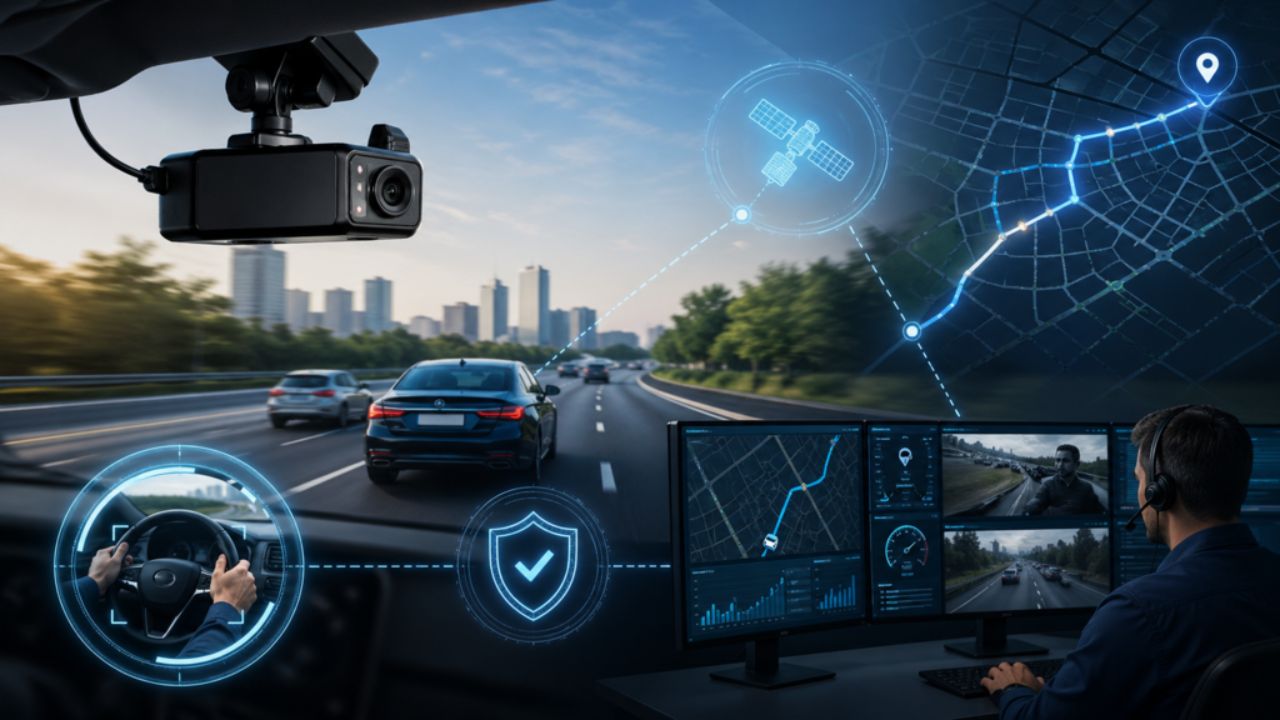
Modern fleet management and vehicle safety strategies have evolved far beyond simple location monitoring. Businesses and individual operators are increasingly combining visual evidence, behavioral insights, and real-time tracking to create safer driving environments. At the center of this shift is the integration of a GPS Tracker, a dash cam with gps, and broader vehicle tracking equipment, which together provide a more complete picture of what happens on the road.
This article explores how these technologies improve driver safety, the factors that influence their effectiveness, and the trade-offs organizations must consider when implementing them.
Table of Contents
The Evolution of Driver Safety Technology
Driver safety used to rely heavily on reactive measures—insurance claims, incident reports, and manual oversight. However, with the advancement of telematics and in-vehicle monitoring tools, safety has become more proactive and data-driven.
Tracking systems initially focused on location data, helping businesses understand where their vehicles were at any given time. While useful, this approach lacked context. For example, knowing a vehicle’s location does not explain why an accident occurred or whether a driver was behaving responsibly.
The introduction of video-based monitoring systems changed this dynamic. By pairing visual footage with location and speed data, organizations can now understand not just where something happened, but how and why it happened.
How Integrated Systems Enhance Driver Safety
Real-Time Visibility and Immediate Feedback
One of the most significant safety benefits of combining tracking and video technology is real-time visibility. Fleet managers can monitor vehicle movement alongside live or recorded footage, allowing them to identify risky behaviors such as harsh braking, speeding, or distracted driving.
This immediate access enables quicker intervention. For instance, if a driver consistently exceeds speed limits, supervisors can address the issue before it leads to an accident. In many cases, simply knowing that driving behavior is being monitored encourages safer habits.
Accurate Incident Reconstruction
When accidents occur, determining fault can be challenging without clear evidence. Video footage provides an unbiased account of events, while location data adds context such as speed, direction, and route history.
This combination is particularly valuable for:
- Resolving insurance disputes
- Protecting drivers from false claims
- Understanding the root cause of incidents
Instead of relying on subjective accounts, organizations can base decisions on objective data, improving both fairness and accuracy.
Behavioral Insights and Driver Coaching
Driver safety is not just about responding to incidents—it’s about preventing them. Integrated systems allow businesses to analyze patterns in driving behavior over time.
For example:
- Frequent harsh braking may indicate tailgating
- Sudden acceleration could suggest aggressive driving
- Irregular routes might point to inefficiencies or distractions
By identifying these patterns, companies can implement targeted training programs. This data-driven approach is more effective than generic safety training because it addresses specific behaviors.
Key Factors That Impact Effectiveness
While the benefits are clear, the effectiveness of these systems depends on several important factors.
Quality of Hardware and Data Accuracy
Not all monitoring systems are created equal. High-quality cameras with clear resolution and reliable tracking devices are essential for accurate data collection. Poor-quality footage or inconsistent location data can undermine the entire system.
Organizations must balance cost with performance. While cheaper devices may reduce upfront expenses, they can lead to incomplete or unreliable data, limiting their usefulness in safety applications.
Integration and System Compatibility
Another critical factor is how well different components work together. Seamless integration between video and tracking systems ensures that data is synchronized and easy to interpret.
When systems are not properly integrated, users may face challenges such as:
- Misaligned timestamps between video and location data
- Difficulty accessing information across platforms
- Increased complexity in data analysis
Choosing solutions that are designed to work together can significantly improve usability and effectiveness.
Data Management and Analysis
Collecting data is only part of the equation. Organizations must also have the capability to analyze and act on that data.
Large fleets, in particular, generate vast amounts of information. Without proper tools and processes, this data can become overwhelming. Effective systems should include:
- Automated alerts for risky behavior
- Easy-to-use dashboards
- Reporting tools for trend analysis
The ability to turn raw data into actionable insights is what ultimately drives safety improvements.
Trade-Offs in Implementing Safety Technologies
While integrated monitoring systems offer clear advantages, they also come with trade-offs that must be carefully considered.
Privacy vs. Safety
One of the most common concerns is driver privacy. Continuous video recording and behavior monitoring can feel intrusive, especially if not communicated properly.
Organizations must strike a balance by:
- Clearly explaining the purpose of monitoring
- Limiting data collection to work-related activities
- Ensuring transparency in how data is used
When implemented thoughtfully, these systems can enhance safety without creating unnecessary discomfort among drivers.
Cost vs. Value
Advanced safety systems require an initial investment in hardware, software, and training. For small businesses, this cost can be a significant barrier.
However, the long-term value often outweighs the expense. Benefits such as reduced accidents, lower insurance premiums, and improved operational efficiency can lead to substantial savings over time.
The key is to evaluate return on investment rather than focusing solely on upfront costs.
Automation vs. Human Oversight
Modern systems rely heavily on automation, including AI-driven alerts and analytics. While automation improves efficiency, it cannot fully replace human judgment.
For example:
- Automated alerts may flag false positives
- Context-specific decisions still require human interpretation
A balanced approach that combines automated insights with human oversight tends to produce the best results.
Challenges in Different Implementation Approaches
Small Businesses vs. Large Fleets
The challenges faced by small businesses differ from those of large enterprises.
Small businesses often struggle with:
- Budget constraints
- Limited technical expertise
- Simpler operational needs
In contrast, large fleets must manage:
- High volumes of data
- Complex logistics
- Integration across multiple systems
Each group requires a tailored approach. Smaller operations may benefit from simple, plug-and-play solutions, while larger organizations need scalable and customizable systems.
Urban vs. Rural Driving Conditions
Driving environments also impact how these technologies perform.
In urban areas:
- High traffic density increases the likelihood of incidents
- Frequent stops and starts generate more behavioral data
In rural settings:
- Connectivity issues may affect real-time tracking
- Longer routes require reliable data storage and transmission
Understanding these environmental factors is essential for choosing the right system configuration.
Driver Acceptance and Training
Even the most advanced technology will not improve safety if drivers resist using it. Resistance often stems from a lack of understanding or concerns about surveillance.
Effective implementation requires:
- Clear communication about benefits
- Training on how systems work
- Involving drivers in the adoption process
When drivers see these tools as supportive rather than punitive, adoption rates improve significantly.
The Broader Impact on Decision-Making
Safety technologies do more than reduce accidents—they influence how organizations make decisions at every level.
Operational Decisions
Data from monitoring systems can inform:
- Route optimization
- Vehicle maintenance schedules
- Resource allocation
By improving efficiency, these decisions indirectly contribute to safer driving conditions. Businesses can also explore how time tracking benefits improve productivity and operational control across fleets and teams.
Policy Development
Organizations can use insights from tracking and video data to develop better safety policies. For example:
- Setting speed thresholds
- Defining acceptable driving behaviors
- Establishing incident response protocols
These policies create a structured framework for maintaining safety standards.
Insurance and Risk Management
Insurance providers increasingly consider telematics data when assessing risk. Companies that use advanced monitoring systems may benefit from:
- Lower premiums
- Faster claims processing
- Improved risk profiles
This financial incentive further reinforces the value of investing in safety technology.
Future Trends in Driver Safety Technology
As technology continues to evolve, integrated safety systems are becoming more sophisticated.
Emerging trends include:
- AI-powered driver behavior analysis
- Predictive analytics to prevent accidents before they occur
- Integration with autonomous driving features
These advancements will further enhance the ability to monitor, analyze, and improve driver safety.
Wrapping Up
The integration of video monitoring and tracking systems represents a significant advancement in vehicle safety. By combining real-time visibility, behavioral insights, and accurate incident data, these technologies provide a comprehensive approach to managing driver safety.
However, their effectiveness depends on careful implementation. Organizations must consider factors such as hardware quality, system integration, and data management, while also addressing trade-offs related to cost, privacy, and automation.
Ultimately, the goal is not just to monitor drivers, but to create a safer, more efficient driving environment. When used thoughtfully, these systems can transform how businesses approach safety, turning data into actionable insights and prevention into a priority.