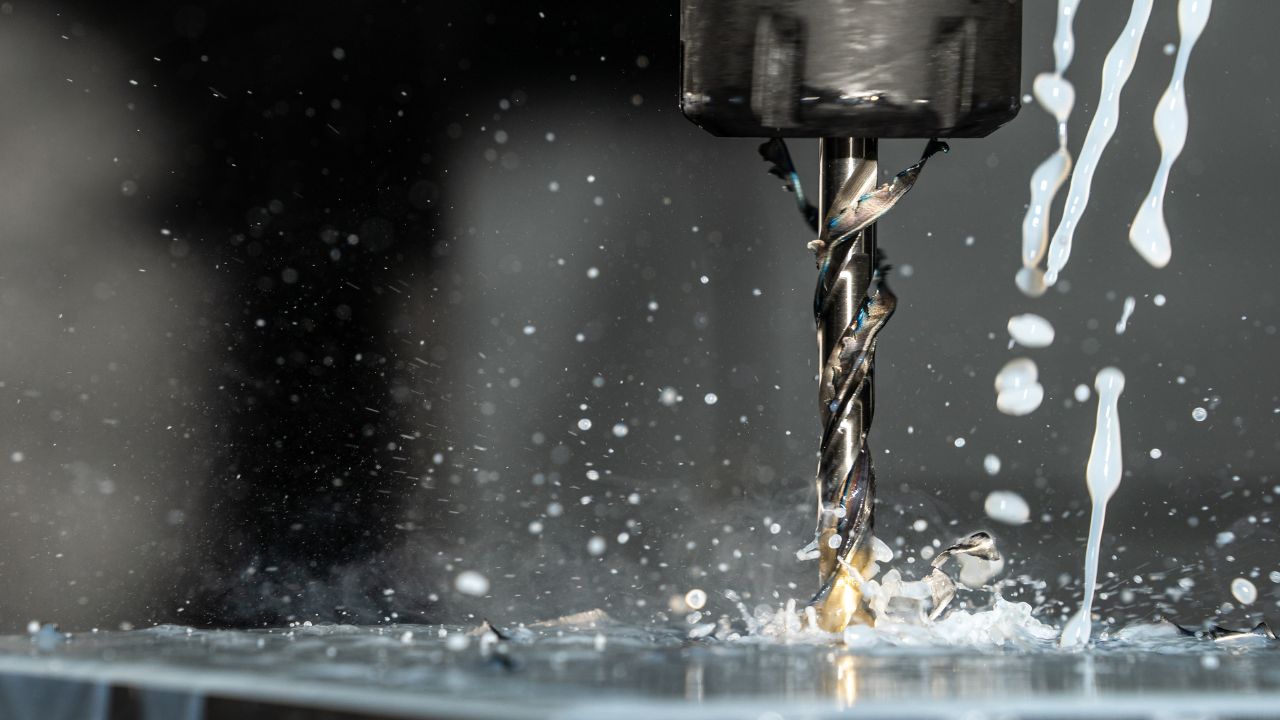
Most aluminum parts start as extruded profiles with consistent cross-sections, less material waste and streamlined manufacturing, yet bare extrusions lack mounting holes, threads and precision cutouts required for assembly. CNC machining finishes extrusions into usable mechanical parts. Instead of choosing one process over the other, OEMs should pair them: extrusion cuts material costs, while CNC adds functional features, delivering lighter, more cost-effective components than solid billet full machining.
Table of Contents
Why Extrusion Alone Is Often Not Enough
Aluminum extrusion is highly efficient when a part can be built around a continuous cross-section. It is commonly used for structural frames, heat sinks, housings, rails, support members, brackets, and enclosure components. The process makes it possible to create internal channels, ribs, grooves, and multi-wall sections that would be expensive to machine from solid stock.
However, the extrusion die only defines the profile shape. It does not automatically create every feature required for a finished mechanical part. Most production components still need additional operations such as:
- Precision end cutting for exact overall length
- Drilling and tapping for mounting and assembly
- Pocket milling or slot machining for connectors, wiring, or hardware access
- Counterbores and countersinks for fastener integration
- Datum-controlled machining for features that must align with mating parts
- Surface refinement on critical sealing, contact, or appearance areas
In short, extrusion provides the geometry foundation, while machining provides the final functionality.
Where CNC Machining Adds Value After Extrusion
The biggest advantage of CNC machining in an extrusion workflow is that it adds precision only where the part actually needs it. Instead of machining an entire component from solid aluminum, manufacturers can start with a profile that already contains most of the shape, then machine only the critical interfaces. Engineers planning this type of workflow often start with a custom aluminum extrusion guide to determine which features should be built into the profile and which should be completed through secondary machining.
This approach usually improves both efficiency and cost structure.
Common post-extrusion CNC operations include:
1. End machining
Squaring, facing, chamfering, and creating end-specific features for caps, brackets, or mechanical connections.
2. Hole patterns and threaded features
Drilled and tapped holes for bolts, sensors, covers, and accessory mounting.
3. Milled windows and access cutouts
Used in housings, electronics frames, inspection ports, and cable-routing areas.
4. Slotting and channel modification
Refining tracks, grooves, or connection features beyond what the extrusion die can economically produce.
5. Tolerance-critical interfaces
Machining selected surfaces and feature locations when the final assembly requires tighter positional control and machining accuracy than extrusion alone can provide.
Extrusion vs. Machining: What Each Process Actually Contributes
A common sourcing mistake is to treat aluminum extrusion and CNC machining as separate decisions. In practice, they are usually part of the same manufacturing strategy.
| Process | Primary Strength | Typical Role in the Part |
| Aluminum extrusion | Creates efficient continuous cross-sections with low material waste | Main profile shape, internal channels, ribs, structural geometry |
| CNC machining | Adds localized precision and assembly features | Holes, threads, pockets, end features, tolerance-critical interfaces |
| Surface finishing | Improves corrosion resistance, wear performance, and appearance | Anodizing, powder coating, bead blasting, protective finishing |
The most cost-effective parts are often the ones designed so that extrusion carries the bulk geometry, while machining is reserved for the features that genuinely need precision.
Why This Combination Works So Well for Industrial Parts
For industrial buyers, the extrusion-plus-machining model offers several practical advantages.
1) Lower material waste than full billet machining
If a long component has a repeatable cross-section, machining it entirely from plate or bar can remove a large amount of material. Extrusion reduces that waste by producing a near-net profile from the start.
2) Better structural efficiency
Extrusions can integrate ribs, hollow sections, mounting tracks, and reinforcement features into the cross-section. These shapes can be difficult or expensive to create from solid stock.
3) More scalable production
Once the extrusion profile is established, the same shape can be cut and machined into multiple length variants or application-specific versions without redesigning the entire part.
4) Cleaner assembly integration
CNC machining services make it possible to place fastening points, connector windows, precision slots, and mating surfaces exactly where the assembly requires them.
When a Custom Extrusion Makes More Sense Than a Standard Shape
Standard bars, tubes, angles, and channels are useful when geometry is simple. But many OEM parts are not built around generic stock. They need profile-specific features such as internal cavities, mounting grooves, wire channels, heat-dissipation fins, or wall structures designed to balance stiffness and weight.
A custom profile can combine several functions into one cross-section instead of forcing the design team to machine them afterward or assemble multiple separate parts. Even with a well-designed profile, many functional features still require High-precision CNC machining to achieve the dimensional accuracy, threaded features, and assembly interfaces expected in industrial applications.
Typical cases where custom extrusion is a stronger option include:
- Long parts with repeated geometry across the full length
- Enclosures with internal tracks or cable paths
- Lightweight structural members that still require rigidity
- Heat-management components with integrated fins or extra surface area
- Assemblies that benefit from fewer welded or fastened subcomponents
The cost advantage becomes even stronger when the profile is used across recurring orders or multiple product families.
But Custom Extrusion Still Has Design Limits
A custom extrusion is not automatically the right answer for every aluminum part. Engineers still need to evaluate the relationship between profile design, machining access, tolerance expectations, and order volume.
Before approving an extrusion-based part, review:
- Wall thickness consistency – Large wall-thickness variation can affect metal flow and profile stability.
- Corner radii and sharp transitions – Some shapes look acceptable in CAD but are not ideal for die performance or dimensional consistency.
- Feature location strategy – Decide which features belong in the extrusion and which should be machined afterward.
- Machining datum selection – Secondary operations need stable references, especially when multiple hole patterns or assembly interfaces are involved.
- Profile length and distortion risk – Long, thin profiles may need handling and fixturing controls during machining.
- Finish protection requirements – Cosmetic and functional surfaces may need process sequencing around anodizing or coating.
This is one reason experienced buyers often review extrusion and machining as one integrated manufacturing package rather than two isolated RFQs.
Typical Applications for Extrusion + CNC Machining
This process combination is common across many industrial sectors because it balances lightweight design with repeatable manufacturability.
Frequent application examples:
- Automation equipment frames and mounting systems
- Electronic housings and support structures
- LED display and structural support components
- Battery and power-system enclosures
- Medical and laboratory equipment subassemblies
- Heat dissipation components with mounting features
- Machine guards, rails, and linear support members
In these products, extrusion provides the main structural form, while machining customizes the part for the actual installation environment.
What Buyers Should Ask a Supplier Before Ordering Machined Extrusions
Not every machine shop is equally strong at extrusion-based parts, and not every extrusion supplier manages secondary machining equally well. The best results usually come from suppliers that understand both sides of the process and can coordinate them under one quality plan.
Key supplier questions include:
1. Can you review the profile specifically for post-machining feasibility?
A supplier should be able to identify weak clamping areas, distortion risks, difficult tool access points, and features that are better moved into or out of the extrusion design.
2. How do you control profile-to-machining datums?
This matters when hole locations, cutouts, and end features must align across multiple operations.
3. What tolerance levels are realistic after extrusion and machining are combined?
Buyers should distinguish between:
- profile dimensional expectations from extrusion
- machined feature tolerances
- assembly-critical positional tolerances
4. Can you manage finishing without damaging critical machined areas?
Anodizing, powder coating, and protective handling all need to be considered if the part includes visible surfaces or tight-fit features.
5. Can the supplier support both prototypes and repeat production?
This is especially important if the part is likely to evolve from a pilot build into scheduled batch orders. Suppliers capable of delivering custom aluminum extrusion profiles together with precision CNC machining generally provide better process coordination, fewer quality issues, and more consistent production from prototype through volume manufacturing.
Why Integrated Suppliers Usually Have an Advantage
When extrusion sourcing, machining, finishing, and inspection are split across multiple vendors, communication gaps tend to show up in the form of tolerance disputes, delayed revisions, or cosmetic damage after secondary processing.
That does not just simplify purchasing. It also improves manufacturability feedback during quotation, because the supplier can review:
- whether a wall section should be adjusted for better extrusion flow
- whether a threaded hole should move slightly for fixturing access
- whether a critical face should be machined before or after finishing
- whether profile geometry can reduce the number of secondary operations
This kind of feedback is valuable because it affects the total part strategy, not just one isolated process step.
Final Takeaway
Aluminum extrusion and CNC machining complement rather than compete. Extrusion forms lightweight, material-saving base profiles, while CNC cuts precise threads, holes and cutouts for assembly use. Most industrial aluminum parts adopt hybrid processing. Buyers gain edge by partnering manufacturers integrating both technologies, delivering consistent, scalable production from prototypes to mass runs matching design requirements.