
When most people think about backup power, they picture a traditional diesel generator kicking in during a power outage. For decades, diesel has been the default choice because it is reliable, widely available, and proven in critical environments.
But in recent years, businesses have started looking at backup power differently. Rising fuel costs, tighter emissions expectations, and long-term sustainability goals are pushing commercial and industrial sites toward cleaner and more flexible generator solutions. One of the most practical shifts happening right now is the rise of the bi-fuel conversion.
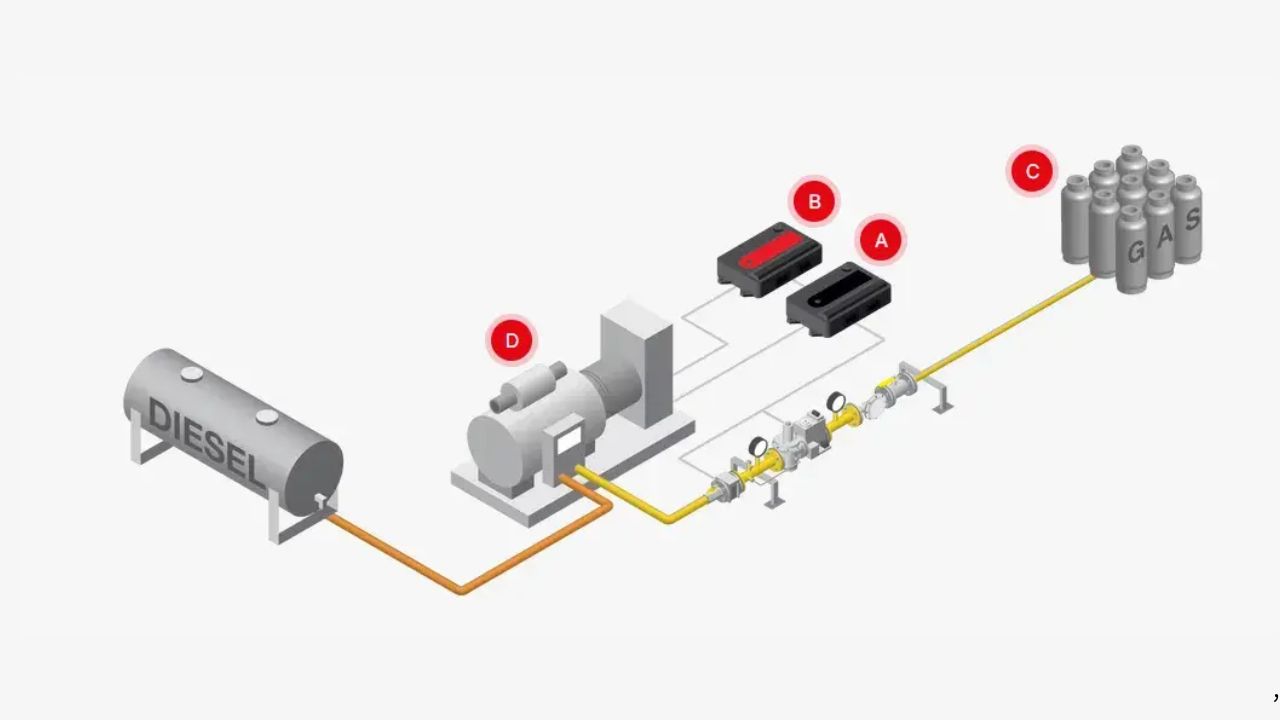
Instead of replacing an existing generator, bi-fuel conversion allows businesses to upgrade a diesel generator so it can run primarily on natural gas while still keeping diesel capability when needed. It is a strategy that blends cost savings, operational flexibility, and environmental improvement without sacrificing reliability.
Table of Contents
What Is Bi-Fuel Conversion?
A bi-fuel generator system (also called dual-fuel) is designed to operate using a mixture of two fuels, usually:
- Natural gas as the main fuel
- Diesel as the ignition fuel
In most setups, diesel is still required, but only in small amounts. The generator continues operating like a compression ignition engine, but natural gas takes over a large portion of the fuel load.
The practical outcome is simple: your generator keeps its diesel reliability, but you reduce diesel consumption significantly.
Why Businesses Are Moving Beyond Diesel-Only Backup Power
Diesel backup generators remain effective, but they come with drawbacks that are hard to ignore in modern commercial environments.
Fuel cost volatility
Diesel pricing can fluctuate dramatically, which makes long-term operational budgeting difficult. For businesses that test generators frequently or operate them in peak-shaving scenarios, fuel cost becomes a major factor.
Emissions expectations
Understanding broader market trends can help companies plan long-term sustainability strategies. Even if regulations do not force immediate changes, the pressure from clients, investors, and corporate reporting frameworks continues to grow.
Noise and air quality concerns
In urban or high-occupancy areas, generator emissions and operational impact are increasingly scrutinised, especially for facilities like hospitals, commercial buildings, and logistics hubs.
Bi-fuel systems provide a realistic middle-ground. They do not require businesses to fully abandon diesel, but they reduce reliance on it.
How Bi-Fuel Systems Work in Simple Terms
A diesel engine in a generator normally compresses air and injects diesel, which ignites under pressure.
In a bi-fuel setup, natural gas is introduced into the air intake, and diesel is injected as normal but at a reduced quantity. The diesel still acts as the ignition source, but natural gas supplies much of the energy.
The system also uses electronic control to regulate gas flow based on:
- Engine speed
- Load demand
- Operating temperature
- Knock detection and engine safety parameters
This ensures the generator runs efficiently while staying within the safe limits set by the engine manufacturer.
Two Common Types of Bi-Fuel Conversion Technology
Not all engines operate the same way, and bi-fuel systems are designed differently depending on engine speed and generator size.
1. High-speed engines (typically 1200–1800 RPM)
High-speed engines are common in many commercial and industrial backup installations. These conversions typically use a central gas and air mixer.
Gas is blended into the air intake before the turbocharger, and the flow is controlled electronically. A knock detection system is used to prevent detonation and maintain optimal performance.
This type of system often replaces around 50–80% of diesel with natural gas, depending on operating conditions.
2. Slow and medium-speed engines (below 1000 RPM)
For larger engines, bi-fuel conversion can be even more efficient.
Instead of mixing gas centrally, the system injects gas near each cylinder intake using individual electromagnetic valves. This reduces gas losses during valve overlap and improves safety, particularly for engines that operate under long intake and exhaust overlap cycles.
In many cases, this method can replace around 60–90% of diesel with natural gas.
Why Bi-Fuel Conversion Is Often More Practical Than Replacing the Generator
Many businesses assume the only path toward cleaner backup power is buying a new generator. That can be true in some cases, but it is not always necessary.
Bi-fuel conversion is often attractive because it works with existing assets. Instead of replacing a generator that still has years of service life remaining, businesses can upgrade it.
This is especially relevant for organisations that already invested in:
- High-quality diesel generators
- Switchgear and loadbank-ready installations
- Commissioning and control systems
- Site-specific acoustic and enclosure design
A bi-fuel system can modernise performance without restarting the entire generator investment cycle.
The Real Business Benefits of Bi-Fuel Conversion
Bi-fuel conversion is not just a sustainability upgrade. It is a technical and commercial improvement with measurable operational outcomes.
Lower operating costs
Natural gas is often cheaper than diesel for energy generation. Reducing diesel consumption immediately lowers the cost per kWh when generators run under load.
No loss of power output
A properly designed bi-fuel system can deliver the same response to load steps and maintain non-derated output power.
Fuel flexibility
For other ways businesses optimize resources, check out essential business tools. This is a critical advantage for emergency backup.
Reduced emissions
Lower diesel use typically results in reduced carbon emissions and particulate output, which is important for facilities with environmental reporting requirements.
Longer engine life and maintenance benefits
Using less diesel can reduce soot formation, potentially improving service intervals and engine wear patterns.
Where Bi-Fuel Generators Make the Most Sense
Bi-fuel conversion is most relevant for businesses that rely on backup power and need predictable operational performance.
Common use cases include:
- Data centres
- Hospitals and healthcare facilities
- Manufacturing plants
- Commercial buildings
- Warehousing and logistics operations
- Utility and infrastructure sites
These environments often require reliable backup systems but also have long-term operational budgets, ESG targets, and compliance expectations.
The Hidden Factor: Controls and Monitoring
One of the most important aspects of bi-fuel conversion is not the gas injection hardware. It is the control system.
Bi-fuel generators need continuous monitoring of:
- Load demand and output
- Gas flow and gas/diesel ratio
- Exhaust temperatures across cylinders
- Knock and combustion stability
- Engine protection parameters
Without modern control systems, bi-fuel operation can become unstable, inefficient, or unsafe.
This is why bi-fuel conversion projects often overlap with broader work such as commercial generator installation, control panel upgrades, and commissioning improvements.
Why Maintenance Still Matters More Than Fuel Choice
It is easy to focus on fuel savings and emissions. But for commercial backup power, reliability is still the main goal.
A bi-fuel generator is still a generator. It still requires:
- Load testing
- Safety checks
- Fuel system inspections
- Sensor and controller verification
- Scheduled servicing
In many cases, organisations that adopt bi-fuel systems also upgrade their approach to backup generator maintenance to ensure both fuel systems remain dependable.
Bi-Fuel Conversion as a Bridge Technology
Some businesses see bi-fuel as a long-term solution. Others see it as a transition step toward future energy strategies like hydrogen-ready systems, battery integration, or fully renewable microgrids.
Either way, bi-fuel conversion is increasingly being viewed as a bridge technology: a practical improvement that can be implemented now, without waiting for infrastructure changes that may take years.
For businesses that need guaranteed uptime today but also want lower emissions and better cost control, dual-fuel systems provide a compelling path forward.
Final Thoughts
Backup power is evolving. Diesel-only generators are no longer the only practical option for commercial and industrial sites. Bi-fuel conversion offers a realistic, engineering-driven approach to reducing diesel dependency while maintaining the reliability businesses need.
It is not a futuristic concept. It is a working solution already being applied across industries that demand uninterrupted power, predictable performance, and better long-term economics.
If you want to explore the technology in more detail, you can read more about bi-fuel systems, conversion types, and technical approaches here:
bi-fuel conversion, commercial generator installation, backup generator maintenance, generator installation