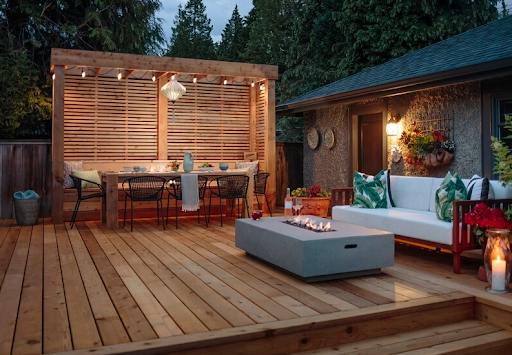

Sydney’s backyard culture is unlike anywhere else in Australia. Decks aren’t just structures here. They’re where Sunday barbecues turn into impromptu gatherings. Where kids create cubbies underneath whilst parents relax above. Where morning coffee tastes infinitely better. Getting the right decking timber in Sydney means understanding what actually works in our specific conditions, not just what looks good in a brochure.
Table of Contents
Hardwood vs Softwood Reality
Here’s what suppliers won’t always tell you upfront. Not all timber performs equally on Sydney’s North Shore versus the Western Suburbs. Spotted gum and ironbark handle our coastal salt spray brilliantly. Blackbutt offers that gorgeous honey tone that doesn’t fade into grey quite as quickly. Treated pine costs less initially, but in areas with poor drainage or heavy shade, you’ll be replacing boards much sooner than expected. The harbour suburbs deal with salt corrosion that inland properties never see. Timber selection needs to reflect that reality.
The Shade Problem
Most decking advice ignores a crucial Sydney issue. Established tree coverage creates problems most builders don’t mention. Gorgeous spotted gums and eucalypts create natural shade, but they also drop leaves, sap, and moisture that sits on decking for days. This constant dampness breeds mould on certain timber species faster than you’d expect. Messmate and tallowwood actually cope with shade better than their more expensive cousins. If your deck sits under trees or beside a fence that blocks afternoon sun, species selection becomes critical rather than cosmetic.
Joist Spacing Matters
Standard joist spacing recommendations come from generic building guides. Sydney’s summer heat causes timber to expand significantly. Our winter nights create contraction. Tighter joist spacing provides better support and reduces that hollow sound when people walk across. It costs marginally more in materials but prevents the springy, unstable feeling that cheaper decks develop over time. Most builders follow standard measurements because it’s quicker. Asking for closer spacing might cost a bit extra, but the difference underfoot is noticeable.
The Orientation Decision
Running boards parallel or perpendicular to your house changes everything. Drainage patterns shift. Visual space feels different. Even how quickly the deck dries after rain varies dramatically. Perpendicular boards create better water runoff away from your home’s foundations, which matters enormously in Sydney’s clay-heavy soils that already struggle with drainage. Parallel boards make narrow spaces appear wider. They also trap water between the house and the first board if your fall isn’t adequate. Most builders will run boards whichever way is easiest for them unless you specifically request otherwise.
Fixing Methods Change Longevity
Hidden fixing systems look cleaner. They eliminate the issue of screws backing out over time. Traditional top-down screwing is cheaper and faster to install. Those screw heads become rusty circles within months near the coast. Stainless steel fixings cost significantly more than galvanised, yet they’re the only option that won’t stain your decking timber in Sydney with rust streaks. If you’re near the ocean, and that means well beyond just beachfront properties, anything less than marine-grade stainless is a false economy. The rust will come eventually.
End Grain Sealing Gets Skipped
Every cut end of every board exposes vulnerable end grain. This grain absorbs moisture like a sponge. Professional installers working to tight deadlines often skip sealing these cuts with end-grain sealer before installation. This single oversight causes more premature board failure than any other factor. Those perfectly good boards that suddenly split lengthwise after a couple of years? That’s usually untreated end grain that’s absorbed water, frozen during a cold snap, and cracked from the inside out. It’s preventable but rarely prevented.
Subfloor Ventilation Isn’t Optional
Sydney’s humidity doesn’t just affect the deck surface. It affects everything underneath too. Inadequate airflow beneath creates a microclimate where moisture accumulates. Joists rot silently. The whole structure weakens long before the visible boards show problems. Properties built on slopes naturally ventilate better than flat blocks. Both need deliberate ventilation design though. That space between the ground and your joists needs cross-flow, which means strategic placement of vents if you’re boxing in the sides. Without proper airflow, you’re building decay into the structure from day one.
Maintenance Timing Is Everything
Oiling or staining needs to happen during specific weather windows. Sydney’s erratic climate makes this tricky. Too hot and the oil evaporates before penetrating. Too humid and it won’t cure properly. After rain, boards need several consecutive dry days before treatment. This rules out most of winter and early spring. The ideal windows happen during late summer into autumn or mid-spring. Precisely when everyone else wants to do their maintenance too. Booking tradespeople becomes nearly impossible during these narrow periods.
Conclusion
Getting decking timber in Sydney right means looking past the showroom samples. Think about your specific site conditions instead. Salt exposure matters. Shade patterns influence timber choice. Soil drainage affects longevity. Even which direction the deck faces plays a role in which timber will actually last. The gap between a deck that looks tired after several years and one that’s still solid after decades comes down to these details. Most people only discover them after problems emerge. Understanding them beforehand means building something that genuinely lasts.