Table of Contents
The Growing Appeal of Container-Based Outdoor Design
Outdoor living spaces have evolved far beyond traditional patios and gardens. Homeowners are increasingly looking for practical ways to maximize their outdoor areas while adding visual character and functionality to their properties. One trend that continues to gain popularity is incorporating large steel cargo units into residential landscapes for storage, entertainment, workspaces, and flexible outdoor living.
As more people explore shipping containers for sale for residential use, landscaping has become a critical part of making these structures feel intentional and visually appealing rather than industrial or temporary. A well-designed landscape can soften the appearance of steel, improve comfort, and help the structure blend naturally into the surrounding environment.
Whether used as a workshop, pool house, backyard office, or lounge area, a 40 ft shipping container offers substantial space and durability. However, integrating such a large structure into a residential property requires thoughtful planning. Landscaping decisions influence everything from drainage and privacy to maintenance and long-term usability.
Understanding the Visual Impact of Large Steel Structures
One of the biggest challenges when designing around a large cargo unit is managing scale. These structures can easily dominate a backyard if the surrounding landscape lacks balance. Open lawns with little vegetation often make the structure appear oversized and disconnected from the property.
Good design often requires more than just planting a few trees or adding stone features. Many homeowners get better results by working with experts who understand layout, structure, and long-term maintenance. Using professional landscaping help can make it easier to balance aesthetics with functionality when integrating large steel structures into residential spaces. Trees, layered plantings, decorative stone, and pathways can reduce the industrial feel while making the outdoor area feel more cohesive.
The goal is not always to hide the structure entirely. In many modern landscaping styles, homeowners intentionally embrace the clean lines and contemporary appearance of steel architecture. The key is balancing the boldness of the structure with surrounding textures, greenery, and outdoor features.
Using Vertical Landscaping to Soften the Exterior
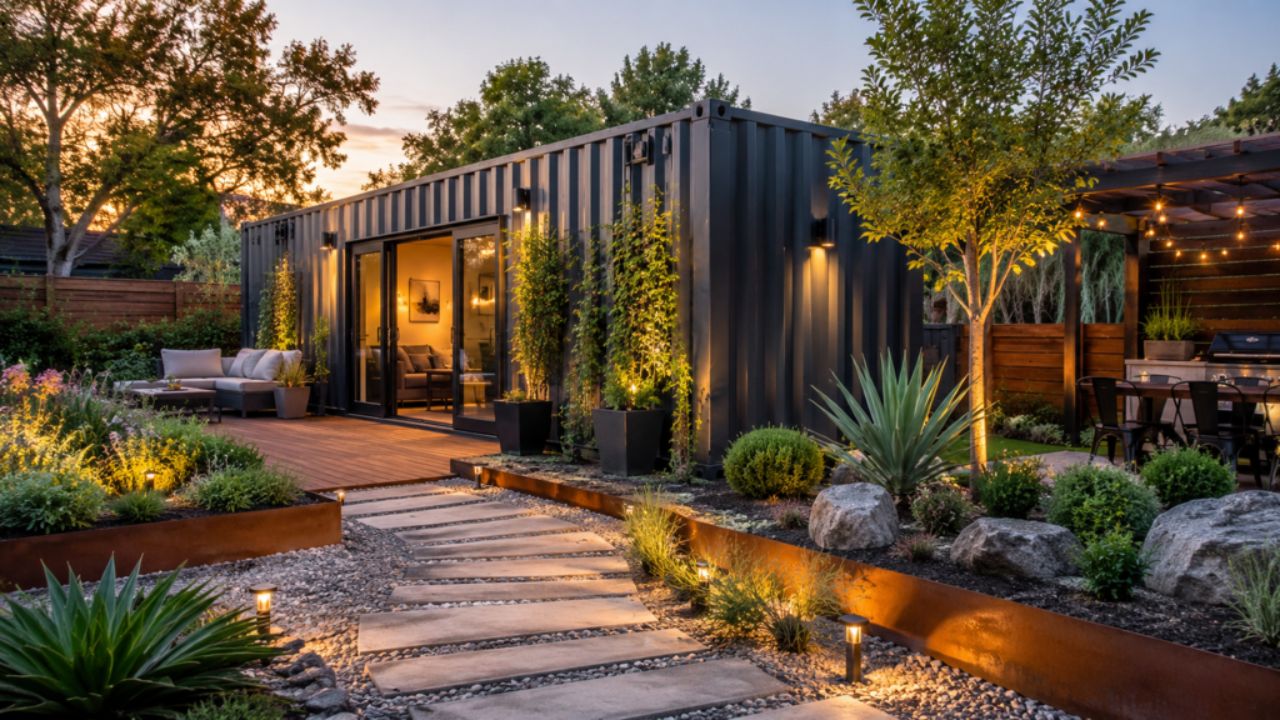
Vertical landscaping is one of the most effective ways to improve the appearance of a converted conex box. Climbing plants and trellises create natural texture while reducing the visual heaviness of metal walls.
Popular climbing plants include:
- Jasmine
- Ivy
- Clematis
- Bougainvillea
- Wisteria
These plants can transform plain steel surfaces into vibrant focal points that feel integrated into the landscape. Vertical greenery also adds shade and helps reduce heat absorption during warmer months.
However, there are important trade-offs to consider. Some vines trap moisture against metal surfaces, which may accelerate corrosion if ventilation and maintenance are neglected. Fast-growing species may also require regular pruning to prevent overgrowth or structural damage.
Homeowners seeking lower-maintenance options may prefer decorative wood slats, cable systems, or freestanding green walls that provide visual softness without direct plant contact against steel surfaces.
Creating Functional Outdoor Zones
One of the smartest landscaping strategies is designing the surrounding yard in clearly defined zones. Instead of treating the container as a separate object, successful designs integrate it into the overall flow of the outdoor space.
For example:
- A seating area can create an outdoor lounge atmosphere
- Gravel pathways can guide movement naturally through the yard
- Raised garden beds can frame the structure visually
- Fire pit areas can encourage social interaction
- Pergolas can extend usable outdoor living space
This zoning approach improves both aesthetics and functionality. It also helps large steel structures feel more connected to the property rather than placed randomly in the yard.
The challenge lies in balancing usability with available space. Overcrowding smaller properties with too many features can make the landscape feel cluttered. Minimalist layouts often work best for compact outdoor areas.
Choosing the Right Landscaping Materials
Material selection has a major influence on how well a cargo structure integrates into residential landscaping. Since steel naturally has a strong industrial appearance, combining it with warmer natural materials creates better visual balance.
Wood is commonly used for:
- Decking
- Pergolas
- Privacy screens
- Outdoor furniture
- Planter boxes
Natural stone and gravel are also popular because they complement both modern and rustic outdoor styles while improving drainage around the structure.
Concrete offers durability and a clean modern look but may create a colder visual effect if overused. Wood introduces warmth but requires regular sealing and maintenance in humid climates. Composite materials reduce upkeep but often involve higher upfront costs.
Each material choice involves trade-offs between appearance, durability, maintenance, and long-term cost.
The Importance of Shade and Climate Control
Steel structures absorb and retain heat, particularly in regions with strong sun exposure. Without proper landscaping, outdoor areas surrounding the structure may become uncomfortable during summer months.
Shade solutions can dramatically improve comfort and energy efficiency. Popular options include:
- Pergolas
- Shade sails
- Retractable awnings
- Deciduous trees
- Covered patios
Strategically planted trees can provide natural cooling while enhancing privacy and aesthetics. Deciduous species are especially effective because they offer shade in summer while allowing sunlight through during winter.
However, tree placement requires careful planning. Large root systems can damage foundations or underground utilities if planted too close. Falling branches during storms may also create safety concerns.
Balancing shade, airflow, and structural protection is essential for long-term success.
Managing Drainage Around the Structure
Drainage is one of the most overlooked aspects of landscaping around steel cargo units. Poor water management can lead to:
- Rust formation
- Soil erosion
- Standing water
- Foundation instability
- Muddy walkways
Proper grading helps direct water away from the structure. Gravel borders and elevated foundations improve airflow underneath the unit while reducing moisture buildup.
French drains and permeable surfaces can also help manage heavy rainfall. Rain gardens offer an environmentally friendly solution by naturally filtering runoff while adding visual interest to the landscape.
Ignoring drainage issues may lead to expensive repairs later, making this one of the most important considerations during the planning phase.
Balancing Privacy and Openness
Privacy often becomes a concern when incorporating large steel structures into residential properties. Depending on placement, the unit may overlook neighboring homes or expose outdoor seating areas.
Landscaping solutions for privacy include:
- Tall hedges
- Bamboo screens
- Decorative fencing
- Layered vegetation
- Trellis systems
These features help create separation while improving the appearance of the outdoor space. However, excessive screening may reduce airflow and make smaller yards feel enclosed.
Achieving the right balance between openness and privacy depends on the size of the property, climate conditions, and intended use of the structure.
Sustainable Landscaping Approaches
Sustainability has become an important factor in modern outdoor design. Many homeowners are choosing eco-friendly landscaping methods that reduce water consumption and environmental impact.
Popular sustainable practices include:
- Native plant landscaping
- Xeriscaping
- Rainwater collection
- Solar-powered lighting
- Recycled materials
- Permeable paving systems
Many homeowners are now shifting toward smarter outdoor designs that reduce environmental impact while still looking visually appealing. This includes water-saving layouts, natural soil management, and climate-conscious planting choices. Exploring eco-friendly landscaping practices can help guide more sustainable decisions when planning outdoor spaces around container-based structures. They also support pollinators and local ecosystems.
Still, sustainable landscaping sometimes involves higher initial investment costs. Solar lighting systems, advanced irrigation setups, and drought-resistant landscaping materials may cost more upfront but often reduce long-term maintenance and utility expenses.
Outdoor Lighting and Atmosphere
Lighting plays a major role in making container-based landscapes feel inviting after dark. Proper illumination improves safety while extending the usability of outdoor spaces.
Popular lighting choices include:
- String lights
- Pathway lights
- Recessed deck lighting
- Wall-mounted fixtures
- Uplighting for trees and plants
Subtle lighting often works best because it highlights landscaping features without overwhelming the space. Excessive brightness may increase energy consumption and contribute to light pollution.
The most successful lighting designs combine functionality with ambiance while maintaining energy efficiency.
Space Optimization for Smaller Properties
Not every property has room for expansive landscaping features. On smaller lots, efficient design becomes especially important.
Space-saving landscaping ideas include:
- Vertical gardens
- Compact seating areas
- Multifunctional furniture
- Rooftop planters
- Narrow pathways
- Modular garden beds
Minimalist landscaping styles often pair particularly well with steel architecture because they emphasize clean lines and uncluttered layouts.
However, smaller spaces leave less room for design mistakes. Oversized plants, bulky furniture, or excessive decorative elements can quickly make a yard feel cramped.
Incorporating Edible Landscaping
Many homeowners are also combining practical gardening with outdoor design. Raised vegetable beds, herb gardens, and fruit trees can pair effectively with converted cargo units.
This approach offers several benefits:
- Increased food production
- Better use of outdoor space
- Improved sustainability
- Enhanced visual appeal
Raised beds positioned near the structure can create organized, functional outdoor zones while softening the industrial appearance of steel surfaces.
Still, edible landscaping requires ongoing maintenance, irrigation, and pest control. Homeowners should carefully consider how much time they are willing to invest before designing extensive food-producing gardens.
Neighborhood and Property Considerations
Local regulations and neighborhood expectations may influence landscaping decisions. Some residential communities have zoning rules or homeowner association guidelines regarding large steel structures.
Thoughtful landscaping can help improve neighborhood acceptance by making the installation feel polished and intentional. Attractive outdoor design often reduces concerns about industrial appearance and may even improve overall property appeal.
Homeowners should research local requirements before beginning major landscaping or structural modifications.
Finding the Right Balance in Outdoor Design
Successful landscaping around steel cargo units ultimately comes down to balance. Every decision involves trade-offs between:
- Appearance and functionality
- Cost and durability
- Privacy and openness
- Sustainability and maintenance
- Modern aesthetics and natural integration
There is no single ideal approach for every property. Climate, budget, intended use, and personal design preferences all shape the best landscaping solution.
With careful planning, thoughtful material choices, and attention to environmental conditions, large cargo structures can become attractive and highly functional additions to residential outdoor spaces. Rather than feeling industrial or out of place, they can serve as central features within comfortable, creative, and visually cohesive landscapes that support modern outdoor living.