
Key Takeaways
- Recognize signs that indicate your water heater may be nearing the end of its service life.
- Routine inspections can protect against sudden water heater failures and expensive repairs.
- Expert guidance can determine whether a repair or a full replacement is more cost-effective.
Ensuring reliable hot water access is crucial for comfort and the smooth running of your household. Recognizing early warning signs that your water heater may fail can save you from unexpected disruptions, like cold showers, water damage, or expensive energy bills. For homeowners looking for a seamless upgrade, professional tankless water heater installation Gaithersburg offers an energy-efficient solution that delivers endless hot water and peace of mind.
Proactive water heater maintenance and timely replacement of aging units can prevent costly emergencies. Understanding the warning signs of water heater failure will help you decide when to consult a professional or take corrective action. From decreasing performance to visible corrosion, identifying these issues ensures your hot water supply remains consistent and safe for your family.
Regular inspections help homeowners catch plumbing issues early before they turn into costly repairs. Following a few essential plumbing tips for homeowners can also help you monitor your water heater and keep your entire plumbing system working efficiently.
Table of Contents
Age of Your Water Heater
The average lifespan of a conventional water heater is 8 to 12 years. As your unit approaches this age, its efficiency typically diminishes, leading to more frequent breakdowns and higher energy usage. Older units also face increased risk of tank corrosion and failure. Tracking the installation date or serial number on the manufacturer’s sticker can help determine if it’s time to consider a replacement.
Inconsistent Water Temperature
One of the earliest signs of a struggling water heater is fluctuating or insufficient hot water. When your showers switch from hot to cold mid-use or run out of hot water faster than you used to, it often points to sediment buildup in the tank or a worn heating element. These issues force your system to work harder, reducing its longevity and increasing the risk of total failure. The U.S. Department of Energy recommends routine maintenance to reduce these problems and extend unit life.
Discolored or Rusty Water
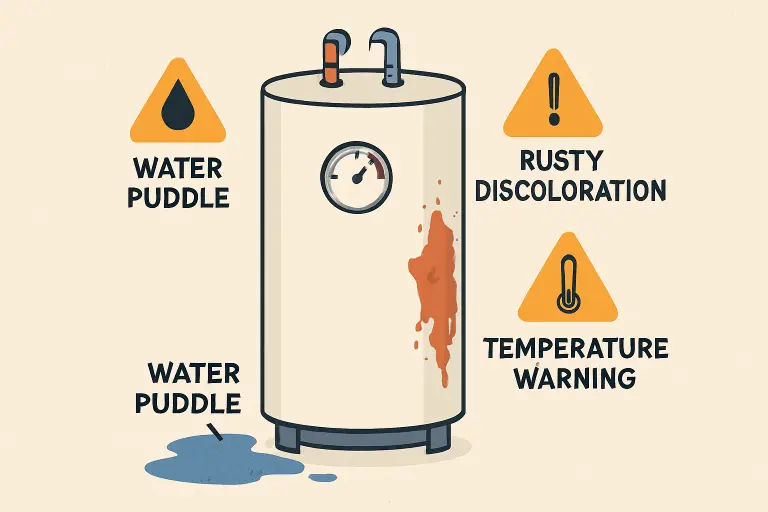
Brown, red, or rusty water is a sign of internal tank corrosion—a problem that cannot be reversed. When rust consistently appears in your hot water, it means the inner lining of the tank has started to break down. Left unchecked, it affects water quality and can eventually cause leaks or catastrophic tank bursts. At this stage, replacement is the only reliable solution to ensure clean, safe water for your household.
Strange Noises
Unusual popping, banging, or rumbling noises from your water heater commonly stem from hardened sediment deposits at the tank bottom. These deposits force the heating element to work harder, creating sound as water gets trapped beneath the buildup. Not only do these noises signal inefficiency, but they also contribute to faster tank aging and an increased risk of cracks or leaks.
Water Leaks
Any visible pooling or leaking around your water heater should be addressed immediately. Even minor leaks can lead to significant water damage over time, promote mold growth, and signal progression in tank corrosion or fractures. In many cases, homeowners need expert help to identify the issue quickly. Learning about the most common plumbing services can help you understand when it’s time to call a plumber.
Reduced Hot Water Pressure
Low water pressure is often attributed to sediment or mineral buildup within the system’s pipes or the heater tank itself. This buildup blocks the water flow, making maintaining consistent pressure and temperature difficult. Persistent issues with hot water pressure should prompt a closer inspection of your water heater or plumbing lines for internal obstructions.
Unpleasant Odors or Tastes
If your hot water develops a rotten egg smell or a metallic taste, bacteria or corrosion is likely brewing inside the tank. Metallic flavors are usually tied to rust, while a sulfur-like odor can point to bacterial growth, especially in seldom-used water heaters. These conditions impact comfort and may pose a health risk, warranting immediate attention.
Increased Energy Bills
A jump in your utility bills could be a subtle sign that your water heater is no longer performing efficiently. As heating elements or tanks accumulate residue, they require more energy to heat the same amount of water, driving up energy consumption and cost. Replacing old or failing models can often restore efficiency and reduce monthly expenses.
Frequent Repairs
When repair costs pile up, investing in a new water heater may be more economical. A unit that breaks down repeatedly is a clear signal that it’s nearing the end of its useful life. Weighing repair expenses against the price of a new, more efficient model often makes replacement the smarter investment.
Visible Corrosion
Corrosion often manifests as flaky or blue-green residue on pipes feeding into the tank or as mineral deposits inside the unit. Homes with hard water are particularly vulnerable, as mineral content accelerates internal and external corrosion. When corrosion becomes obvious, continued use risks system failure or leaks, emphasizing the need for a timely replacement.
Addressing these warning signs early—through regular inspection and maintenance or by upgrading to a more efficient unit—will help you avoid unpleasant surprises, maintain water quality, and ensure uninterrupted hot water for your family’s needs.