
Table of Contents
Why Load Stability Is a High-Volume Shipping Problem
In high-volume e-commerce and logistics operations, maintaining pallet load stability is a constant challenge. Fast pick rates, mixed-size SKUs, and tight delivery timelines mean pallets are often stacked quickly and under pressure. When loads are not secured correctly, cartons can shift, collapse, or suffer damage during transit, leading to delays, losses, and avoidable safety risks within warehouses.
For distribution centres operating at scale, improving pallet load stability in the UKhas become increasingly important as automation, faster dispatch cycles, and longer delivery routes place greater stress on palletised goods.
What’s often overlooked is that stability isn’t achieved through stacking alone. It depends on selecting the right containment method and applying it consistently. Among the available options, pallet shrink wrap has proven to be a reliable solution for maintaining load integrity across both storage and transportation environments.
What Is Load Stability and Why Does It Fail?
Load stability refers to a palletised load’s ability to maintain its shape, alignment, and structural integrity during handling, storage, and movement. When stability is compromised, even a small shift can trigger a chain reaction, resulting in fallen cartons, damaged stock, or unsafe working conditions.
Common causes of load failure include:
- Mixed carton weights, where heavier items compress lighter boxes below
- Excessive pallet heights, increasing the risk of tipping during braking or cornering
- Automated conveyor handling, where speed and directional changes can cause misalignment
In practice, stability depends on two critical factors: containment force and wrap consistency. Without adequate tension or uniform coverage, pallet loads remain vulnerable throughout the supply chain.
How Pallet Shrink Wrap Enhances Load Stability
Shrink wrap for pallets offers a structured approach to load containment, particularly for operations handling high volumes of varied or heavy products.
Containment Force That Holds the Load Together
In shrink wrap applications, controlled heat causes the film to contract tightly around the pallet, creating strong inward containment force. This containment force helps prevent separation during acceleration, braking, or directional changes, keeping the entire load compact and secure.
Uniform Compression Across the Pallet
Unlike uneven manual wrapping or loose strapping, shrink wrap delivers consistent compression from base to top. This even pressure distribution minimises weak points that often cause partial collapses during stacking or long-distance transport.
Improved Integrity During Transit and Storage
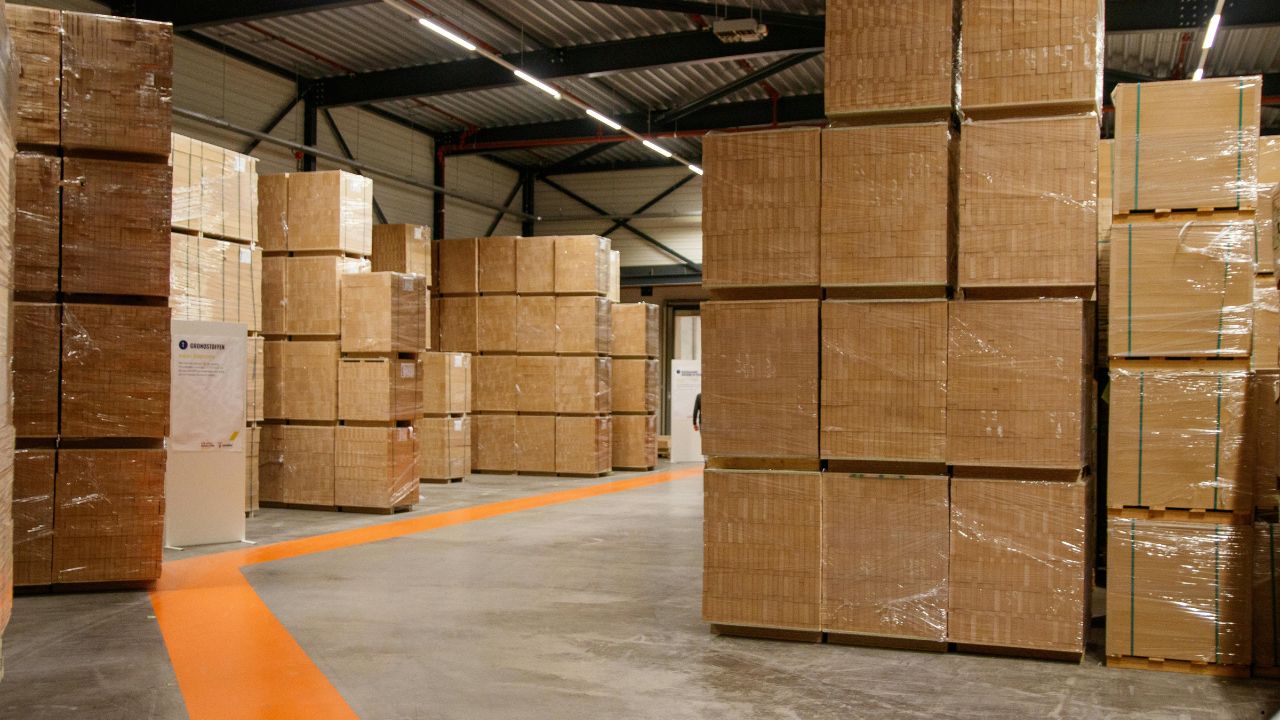
Shrink-wrapped pallets maintain stability across extended storage periods and long-haul transportation. The snug fit reduces micro-movements that commonly lead to corner damage, crushed packaging, or internal product shifting.
Shrink Wrap vs Stretch Wrap: When Stability Matters Most
Both shrink and stretch films play important roles in palletisation, but shrink wrap offers clear advantages in certain scenarios.
Shrink wrap is particularly effective for:
- Irregular or heavy loads that require stronger load locking
- Export shipments, where pallets pass through multiple handling points
- Longer transit cycles, where vibration and repeated movement increase damage risk
In some operations, clear pallet wrap is used where visibility is required, while pallet shrink wrap is preferred for heavier loads needing stronger containment.
Stretch wrap remains widely used in controlled warehouse environments and short-haul distribution. However, when load stability with shrink wrap is required to manage demanding transit conditions, it provides a firmer hold and greater resistance to movement.
In applications where visibility is essential, clear pallet wrap allows easy inspection of goods while still maintaining effective containment.
Application Matters: Why Technique Impacts Stability
Even the best materials cannot compensate for incorrect application. Poor technique can significantly reduce performance and lead to:
- Film tearing caused by uneven heat exposure
- Inconsistent shrink across the pallet
- Exposed edges that increase the risk of tampering or slippage
For effective pallet wrapping for logistics, teams should focus on:
- Selecting the appropriate film gauge and shrink ratio
- Ensuring even heat distribution during application
- Wrapping fully from the pallet base to the top without gaps
Routine training and quality checks play an important role in ensuring consistent results across all shipment types.
Operational Gains Beyond Load Security
Understanding how pallet wrap influences load stability helps logistics teams reduce damage rates and improve consistency across high-volume dispatch operations.
In addition to improved containment, businesses using shrink wrap often experience wider operational benefits, including reduced transit damage, faster pallet handling, and improved warehouse safety. Knowing the right warehouse essentials can further optimise operations and ensure pallets remain stable throughout storage and dispatch.
- Reduced transit damage and product returns
- Faster pallet handling due to consistent packaging
- Improved warehouse safety through fewer unstable loads
- Lower overall packaging costs when damage-related losses are minimised
These advantages highlight how pallet wrap directly influences load stability while also supporting efficiency across logistics operations.
Final Thoughts: Load Stability Is Engineered, Not Accidental
In high-volume shipping environments, stability is not optional. It must be engineered through the right combination of materials, application methods, and process control.
While there are multiple ways to secure palletised goods, pallet shrink wrap continues to stand out for its strength, reliability, and performance under demanding conditions. When applied correctly, it helps protect products, reduce operational disruption, and support safer, more efficient supply chains—key considerations for anyone running a business that relies on high-volume shipping.
This article reflects practical insights shared by packaging and logistics professionals. UK businesses managing high-volume pallet movement often rely on experienced packaging partners such as Venus Packaging to support stable, safe, and scalable shipping operations.