
Key Takeaways
- Seals are essential for protecting bearings from contaminants and retaining lubrication.
- Appropriate lubrication ensures smooth operation, reduces wear, and extends bearing life.
- Choosing the right seal and lubricant depends on your specific operational environment and application needs.
- Regular inspection and maintenance are vital to maximizing bearing performance.
Table of Contents
Understanding the Importance of Seals in Stainless Steel Roller Bearings
Seals are a critical component in stainless steel roller bearings, serving as the first barrier against external contaminants like dust, moisture, and chemicals. A properly chosen seal helps retain lubrication and shields the bearing from elements that can accelerate wear. For users searching for durable and reliable stainless steel roller bearings for various environments—including food processing, pharmaceutical, or harsh industrial settings—the role of the right seal cannot be overstated.
Bearing failures are often related to the ingress of contaminants or the loss of lubricant, both of which can be prevented with the right seal. Not all seals offer the same level of protection, so it becomes essential to match the seal type to your specific application demands for maximum performance and long-term reliability.
The performance benefits of stainless steel bearings—such as corrosion resistance and durability—can be fully realized only if their sealing system is optimized for the environment. Whether your operational conditions expose bearings to frequent washdowns, abrasive particles, or chemical splashes, the right seal selection is fundamental to ensure assured operation and low maintenance costs.
Types of Seals and Their Applications
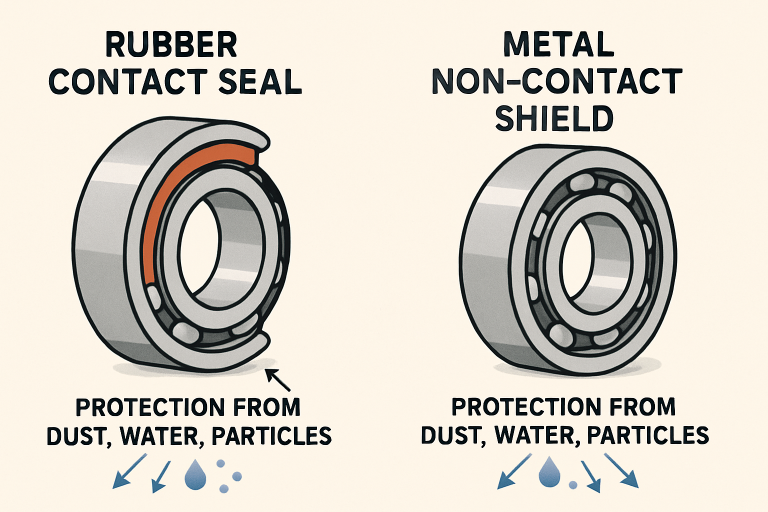
- Contact Seals (2RS): Comprised of Nitrile/BUNA-N rubber bonded to a metal washer, contact seals offer robust protection against contaminants. They’re especially suitable for demanding environments with significant exposure to water, dust, or chemicals—common hazards in food processing or outdoor applications.
- Non-Contact Seals (ZZ): Metal shields, or non-contact seals, provide basic protection by keeping out larger particles while minimizing drag on the bearing. They are ideal for minimal torque and high-speed operations where the environment is less harsh, such as cleanrooms or electric motor applications.
The suitability of a seal depends on the degree of exposure the bearings will encounter. For example, in consistently wet or dusty locations, opting for a contact seal is recommended for its enhanced barrier qualities, while in cleaner, controlled settings, non-contact seals can improve efficiency and reduce operational costs. Reputable engineering sources such as Engineering.com provide helpful technical background for a deeper dive into seal types and their effect on machinery.
Lubrication: Ensuring Smooth Operation
Effective lubrication reduces internal friction, minimizes surface fatigue, and controls heat generation within stainless steel roller bearings. The right lubricant also helps defend against corrosion—a frequent threat in humid or chemical-prone environments. The two primary lubrication methods are grease and oil, each bringing distinct benefits aligned with specific application requirements.
Factors like rotation speed, bearing load, operating temperature, and environmental exposure must be analyzed when determining the correct lubricant. For example, applications involving high rotational speeds and elevated temperatures demand advanced lubricants that can withstand such extremes, whereas moderate operating speeds often perform better with conventional bearing grease.
Grease vs. Oil Lubrication
- Grease Lubrication: Grease is ideal for medium-speed and standard temperature ranges, offering long-lasting protection and the added advantage of sealing out contaminants. Its semi-solid nature means grease-lubricated bearings need less frequent servicing, making them suitable for hard-to-reach installations.
- Oil Lubrication: Oil, with its superior flow characteristics, is preferred for high-speed or high-temperature operations. Oil flows freely through the bearing, providing exceptional cooling and better heat management—an important consideration for continuous or heavy-duty machinery.
High-temperature synthetic greases with a viscosity of 220 cSt at 40°C are highly recommended for bearings facing frequent thermal shocks or elevated operating environments.
Determining the Right Lubrication Quantity
Both over-lubrication and under-lubrication can be detrimental. Excess grease can cause excessive friction and increase internal temperatures, while insufficient lubrication can result in premature bearing failure due to metal-on-metal contact. A general industry rule is to fill 20-30% of the bearing’s free volume with grease for standard uses, though this ratio may shift based on specific application requirements.
Maintenance and Re-Lubrication Intervals
Preventive maintenance plays a pivotal role in the longevity of stainless steel roller bearings. Establishing scheduled re-lubrication cycles—generally every 6–12 months in normal operating environments—can preempt most lubrication-related failures. For environments subject to extreme conditions (such as high temperature, moisture, or the presence of chemicals), consider shorter intervals to maintain optimal lubrication levels and performance.
Monitoring Bearing Performance
Systematic monitoring of bearing health helps detect issues before they escalate into major breakdowns. Listen for abnormal noise, feel for unexpected vibration, and routinely check for temperature increases or visible wear. In industries where reliability is vital, deploying predictive maintenance technologies (like vibration analysis and thermography) is now standard practice.
Final Thoughts
Selecting the right seals and lubrication approach for stainless steel roller bearings requires carefully assessing operational conditions, application requirements, and maintenance capabilities. By understanding the role and selection of each component, investing in periodic inspections, and applying suitable lubricants and seals, you can enhance performance, prevent premature failures, and prolong the service life of your roller bearings.