

Key Takeaways
- Know Local Climate Risks: Identify likely hazards such as floods, storms, or wildfires.
- Assess Vulnerabilities: Check your home’s structure, location, and surroundings for weak points.
- Use Resilient Building Practices: Reinforce roofs, windows, and materials to withstand extreme weather.
- Update Insurance: Ensure coverage reflects current risks, including supplemental policies if needed.
- Consider Parametric Insurance: Enables fast payouts after specific events for quicker recovery.
- Stay Informed: Follow local alerts, preparedness resources, and community updates.
- Layer Your Protection: Combine assessments, resilient upgrades, insurance, and preparedness for comprehensive home safety.
The world is experiencing more frequent and intense climate events, making risk management an essential part of protecting your home and investment. Homeowners today are seeking reliable ways to secure their properties against both traditional and emerging threats while also reviewing their coverage options with providers like AAA Homeowners Insurance. As these risks evolve, learning how to adapt, prepare, and recover has become a cornerstone of smart homeownership strategy.
Rising sea levels, unpredictable storms, wildfires, and extreme temperatures can threaten even well-maintained homes. Proactive homeowners are turning to expert guidance, updated insurance strategies, and new building standards to keep their families and investments safe. By understanding the risks specific to a property’s location and updating plans accordingly, homeowners are better positioned to handle whatever comes next, whether a hurricane, wildfire, or flood.
Table of Contents
Understanding Climate Risks
Climate change has noticeably increased the incidence of severe weather events, from devastating hurricanes and widespread wildfires to flash floods and heatwaves. Each category holds its own level of risk based on your property’s location. Understanding which events are most likely in your area is the foundation for any effective risk management plan. Local climate risk assessments can also empower homeowners with knowledge to make vital improvements and investments.
Government and nonprofit organizations increasingly publish reports and maps that highlight which regions are most susceptible to specific climate threats.
Assessing Your Home’s Vulnerability
Once you recognize the types of climate risks facing your region, the next step is to evaluate your home’s specific vulnerabilities. Factors such as elevation, proximity to water, nearby wildfire zones, and even construction date can heavily impact your overall risk. Regular home assessments, using tools like the FEMA Flood Map Service Center, help identify gaps and hazards that might otherwise go unnoticed.
Comprehensive home inspections should ddress both structure and surroundings, and in flood-prone areas, consulting a professional for flood damage restoration can help minimize long-term structural issues. This means checking basement sealing and sump pumps for flood-prone properties, evaluating windows and roofs in areas at risk of high winds or hail, and clearing combustibles near homes in wildfire-prone areas. Identifying weak points early is critical to preventing costly losses down the road and is a recommended step for anyone updating a policy or preparing for renovations.
Implementing Resilient Building Practices
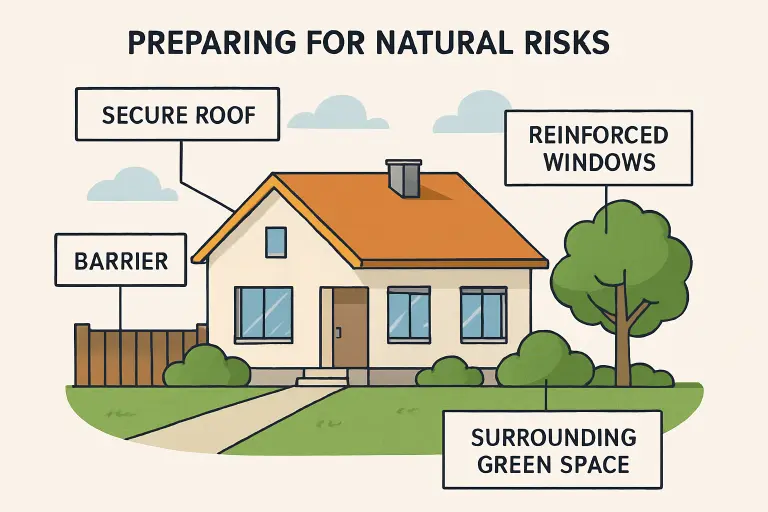
Building or renovating with resilience in mind offers long-term protection and potential savings. Modern construction standards focus on storm-resistant roofs, reinforced doors, impact-resistant windows, and fire-retardant materials. Programs such as the Fortified standard (originating from the Insurance Institute for Business & Home Safety) show that houses built or upgraded to these criteria withstand storms better. A study in Alabama found that properties built to Fortified standards could have reduced losses by up to $147 million during Hurricane Sally in 2020.
These improvements may also lower insurance premiums or deductibles, making them a wise investment even beyond direct risk mitigation. Many local governments offer incentives or resources to help homeowners make resilience-oriented home upgrades, further empowering homeowners to take action.
Updating Insurance Coverage
As patterns in climate change shift, so do the requirements for comprehensive insurance. Standard homeowners’ policies may exclude coverage for flood, earthquake, or wildfire, leaving significant gaps. Reviewing your policy annually, in consultation with your insurance provider, can help ensure you are adequately covered. Periodically, U.S. agencies and research organizations publish risk assessments and coverage recommendations. In 2022, the First Street Foundation highlighted that almost 14.6 million homes in the U.S. are at risk of flooding, a figure that is not accurately reflected in government flood maps. That means millions of families could be underinsured without realizing it.
Supplemental policies such as flood or wildfire insurance and careful consideration of deductibles and coverage limits are all vital in today’s climate landscape. Discussing policy options with an experienced agent can clarify which additional protections may be necessary for your property.
Exploring Parametric Insurance Options
Traditional insurance products generally pay claims after damage assessment, but for some hazards, the speed of payment is just as important as the coverage itself. This is where parametric insurance stands out. Under this model, payouts are triggered by a preset event metric, such as wind speed, precipitation, or temperature, rather than a loss evaluation. Homeowners appreciate fast relief to pay for repairs and temporary lodging if a qualifying event occurs.
For properties in particularly high-risk regions, parametric insurance offers a safety net that works rapidly and reliably. A recent study suggests that diversification and clear event definitions are key to the effectiveness of these innovative insurance products. Parametric insurance is not intended to replace traditional coverage, but it can serve as a powerful supplement.
Staying Informed and Prepared
Preparing for tomorrow’s risks means staying informed today. Homeowners benefit by engaging with local community resources, participating in disaster preparedness workshops, and staying up to date on local ordinances and broader climate trends. Government websites, local news stations, and non-profit organizations often provide timely resources and alerts that make a significant difference when big storms or emergencies approach.
Leading think tanks are consistently exploring solutions for long-term resilience. The Brookings Institution, for example, is invested in reimagining insurance and community protections in response to growing climate threats. Homeowners can explore their research and events on resilient homes to remain proactive and informed.
Conclusion
In a world of increasing climate risks and shifting insurance dynamics, proactive risk management is crucial for every homeowner. Understanding regional hazards, conducting regular vulnerability assessments, integrating resilient building practices, ensuring comprehensive insurance coverage, exploring innovative solutions like parametric insurance, and engaging with educational and community resources form a strong defense. With the right approach, you can protect your home and family for years to come, regardless of how the climate changes.