

Key Takeaways
- Visual storytelling simplifies complex concepts, making team communication more efficient.
- AI-powered and user-friendly tools allow teams to craft engaging visual narratives with ease.
- Inclusion of visual content supports diverse abilities and enhances collaboration.
- Use cases in different industries show how visual storytelling drives superior outcomes.
In a professional landscape characterized by rapid change and increasing information overload, the ability to communicate clearly and efficiently is critically important. Teams striving for cohesion and productivity are turning to visual storytelling as a solution. By blending powerful imagery, graphics, and succinct narrative, teams can achieve superior clarity and foster more dynamic collaboration. As businesses look for presentation solutions, tools like slides generator are making it easier for both seasoned and novice professionals to embed impactful visuals into their communication strategies.
Visual storytelling does more than beautify slides or documents; it structures information in ways that boost retention and create memorable experiences. Research indicates that approximately 65% of the general population are visual learners, suggesting that incorporating visual elements can significantly enhance understanding and engagement. For remote, hybrid, and in-person teams alike, weaving visuals into their daily workflow boosts not only understanding but also engagement and morale. Technology continues to shape how teams communicate visually, and combining it with a strong video marketing guide can further enhance how stories are delivered and understood across teams. From AI-enabled platforms to collaborative cloud-based design tools, today’s teams are empowered to create, iterate, and share visual content seamlessly. The process is no longer confined to design experts alone; the democratization of visual communication means everyone on a team has the tools to contribute, making the process truly collaborative. Adopting these narrative techniques can also solidify inclusivity across teams. Visual storytelling helps bridge barriers for those who may find traditional text-based communication challenging, leveling the playing field for people with varying strengths and needs. More organizations are recognizing the value of inclusivity, not just for fairness but also for unlocking the creative and strategic potential of diverse teams.
Table of Contents
The Power of Visual Storytelling in Team Communication
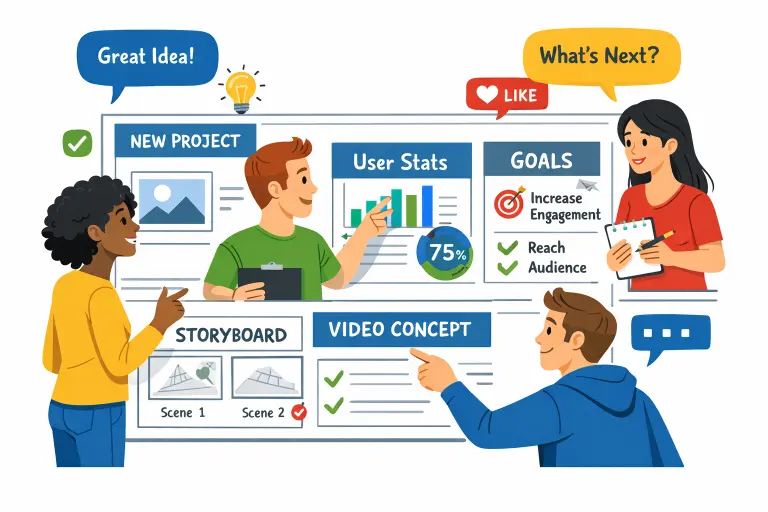
Visuals have a profound effect on retention and comprehension. According to a study published by the University of Minnesota, presentations with visuals are 43% more persuasive than those without. Whether explaining data-heavy reports or outlining a strategy roadmap, combining strong visual cues with narrative elements actively engages the audience and accelerates shared understanding. In high-performing teams, visual storytelling is not a luxury but a necessity.
Tools and Technologies Enhancing Visual Narratives
Modern teams have a growing array of technologies at their disposal for quickly and professionally producing visual content. Platforms such as InfoAlign utilize human-AI co-creation, allowing users to input unstructured ideas and generate visually consistent stories. User-friendly tools are a game-changer, closing the gap between imagination and execution. These resources streamline what used to be a complex process, facilitating rapid brainstorming and iteration without compromising on quality or message consistency.
Fostering Inclusivity Through Visual Elements
Visual storytelling also acts as an equalizer. For visually impaired or neurodiverse team members, accessibility-driven transformations are vital. Features that convert text to accessible visual formats, and vice versa, ensure everyone has a voice in team conversations. Solutions inspired by academic research are making collaborative work more equitable, offering tools that both respect and leverage the varied abilities on every team.
Real-World Applications and Success Stories
Across diverse industries, the impact of visual storytelling is tangible. In sports, AI-enabled video editing tools help coaches and players break down game footage into insightful, narrative-driven clips, enhancing strategic discussions and post-game analysis. In corporate training, interactive modules rich in infographics and animated storyboards lift both attention and information retention. Even traditional fields such as manufacturing and finance are using dashboards and visual reports to encourage transparency and make data-driven decisions more accessible to broader audiences.
Implementing Visual Storytelling in Your Team
- Identify Key Messages: Focus on the main objectives your team needs to communicate. Streamline complex ideas to their essence for more effective visual representation.
- Select Appropriate Tools: Evaluate your team’s goals and technological proficiency, then adopt design platforms that fit your workflow seamlessly.
- Design Consistent Visuals: Maintain brand integrity by adhering to coherent color schemes, icons, and visual cues throughout your work.
- Gather Feedback: Encourage every team member to share input after each visual iteration. A collaborative review process leads to better outcomes and more buy-in from all stakeholders.
Overcoming Challenges in Visual Storytelling
Despite the many advantages, integrating visual storytelling can pose certain obstacles. Limited time, lack of innate design skill, or resistance to change may slow adoption. Establishing brief, targeted training sessions and encouraging experimentation with easy-to-use platforms can help overcome these hurdles. Building a creative culture also means continuously learning, and exploring proven insights from top marketing books can help teams refine how they communicate visually.
Conclusion
Visual storytelling is shaping the path forward for modern teams by fostering efficiency, inclusivity, and deeper engagement. When stories are told visually and accessibly, everyone is empowered to contribute and innovate. Investing in the right tools and fostering a culture of visual communication not only enhances present collaboration but also prepares teams for the evolving demands of the future.