
In the complex world of manufacturing supply chains, certain components carry a paradoxical status. They are ubiquitous, essential, and yet frequently overlooked in strategic sourcing discussions. Precision screw machine products—the pins, shafts, bushings, and custom fasteners that hold assemblies together—rarely command the attention given to electronic control units or injection-moulded enclosures. But for OEMs across medical, automotive, and industrial equipment sectors, these humble components often determine the difference between reliable performance and field failures.
The global market for precision machine screws and screw machine parts continues its steady expansion, driven by three converging forces: the miniaturisation of devices, the demand for absolute traceability in regulated industries, and the persistent challenge of finding skilled machining capacity. For procurement leaders evaluating their supply base, understanding the nuances of screw machine product manufacturing has become a strategic necessity rather than a technical footnote.
Table of Contents
Defining the Precision Screw Machine Product Category
What exactly distinguishes a precision screw machine product from a standard turned part? The answer lies in the combination of tolerance, complexity, and repeatability. These components are typically produced on automated lathes or CNC Swiss-type machines capable of holding dimensions within microns while maintaining consistency across production runs that can scale from thousands to millions of units.
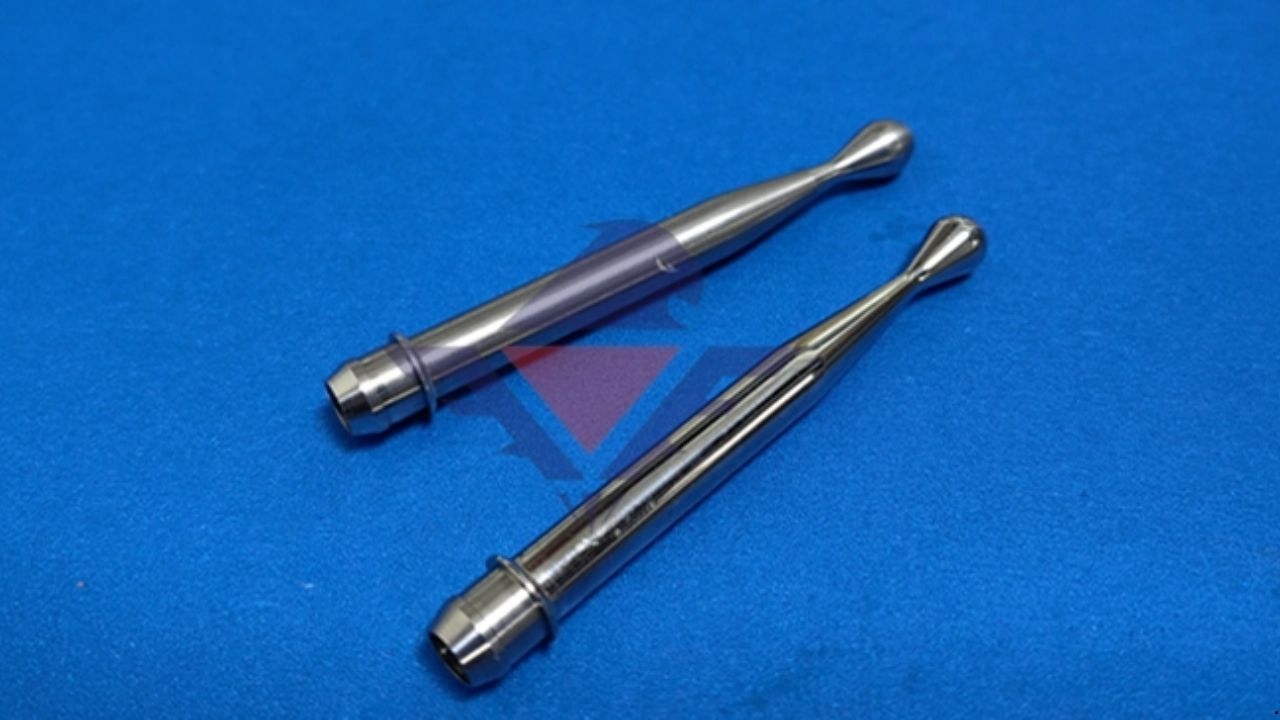
Common examples include precision stainless steel machine screws, threaded inserts, connector pins, sensor shafts, and custom fittings for fluid control systems. The defining characteristic is not merely the geometry but the manufacturing discipline required to produce identical parts repeatedly, often with secondary features such as cross-drilled holes, milled flats, or rolled threads completed in a single setup.
For applications in medical devices or aerospace assemblies, this repeatability translates directly into reliability. A spinal implant system may require twenty identical bone screws; a variance of 0.02 millimetres in thread form could compromise the entire construct. Similarly, an automotive fuel injector depends on precisely machined pintles and seats to maintain calibrated flow rates over millions of cycles. These are not components where approximation is acceptable.
The Material Science Dimension
The choice of material for screw machine products is as critical as the machining process itself. Stainless steel remains the dominant choice for applications requiring corrosion resistance, strength, and dimensional stability. Grades such as 303, 304, and 316L each offer distinct characteristics: 303 provides superior machinability for high-volume production, while 316L delivers enhanced corrosion resistance for medical implants or marine hardware.
However, the increasing sophistication of end products has expanded the material palette considerably. Brass and copper alloys are specified where electrical conductivity or aesthetic appearance matters. Aluminium grades like 6061 and 7075 serve lightweighting initiatives in automotive and aerospace. Engineering plastics including PEEK, Delrin, and PTFE are increasingly common in applications requiring chemical resistance or dielectric properties, especially in industries that also depend on a safety valve supplier for pressure-critical systems.
Each material presents unique machining challenges. Stainless steel work-hardens rapidly, requiring aggressive cutting parameters and rigid tooling. Titanium alloys demand lower speeds and high-pressure coolant to manage heat at the cutting interface. Plastics can melt or deform if tool geometries and feeds are not optimised specifically for polymer behaviour. A manufacturer’s demonstrated competence across this material spectrum is a reliable indicator of their engineering depth.
Beyond the Machine: Quality Infrastructure and Traceability
The most sophisticated CNC equipment is only as valuable as the quality systems surrounding it. For critical applications, certification to ISO 13485 (medical devices) or IATF 16949 (automotive) is increasingly non-negotiable. These standards mandate not just final inspection but in-process controls, statistical process monitoring, and full material traceability.
Leading manufacturers integrate probing and measurement directly into the production cycle. On-machine probes verify critical dimensions after roughing operations, automatically compensating for tool wear before finishing passes. Vision systems inspect surface features that contact gauges cannot reach. Every part’s production data—which machine, which tooling batch, which material lot—is logged and retained.
This infrastructure serves a dual purpose. For the OEM, it provides documented confidence that components meet specifications. For the manufacturer, it creates a feedback loop for continuous process improvement. When a thousandth-of-an-inch variation appears in the data, the root cause can be identified and addressed before it affects product quality.
Selecting a Screw Machine Products Partner
For engineering and procurement teams evaluating potential suppliers, several factors warrant consideration beyond the quoted unit price.
Technical capability should be assessed against current and anticipated requirements. Does the supplier’s equipment portfolio include multi-axis Swiss-type machines capable of producing complex geometries complete? Can they hold the tolerances specified for your most demanding components? Do they demonstrate experience with the materials you specify?
Quality certification provides baseline assurance, but deeper investigation is warranted. How are in-process inspections conducted? What measurement equipment is used, and when was it last calibrated? Can they provide material certifications and inspection reports with production shipments?
Production scalability matters for both startups anticipating growth and established OEMs managing demand fluctuations. A capable partner should demonstrate flexibility across batch sizes, from prototype quantities to high-volume production runs exceeding one million parts annually.
Engineering collaboration distinguishes transactional suppliers from strategic partners. The most valuable relationships are those where the manufacturer engages during design review, offering manufacturability feedback that reduces cost and improves reliability before the first chip is cut.
The Case for Specialisation
The trend across advanced manufacturing is toward consolidation of the supply base around fewer, more capable partners. This approach reduces procurement complexity, strengthens quality assurance through deeper relationships, and enables collaborative development that accelerates time to market.
For precision components, this logic is particularly compelling. A specialist screw machine products supplier with extensive experience across medical, automotive, and industrial applications brings accumulated knowledge that no generalist machine shop can match. They have encountered the edge cases—the material batch that behaves unexpectedly, the tolerance stack-up that reveals design assumptions—and developed systematic responses.
Companies like Falcon CNC Swiss exemplify this specialised approach. Their capabilities span the full spectrum of screw machine product manufacturing, from design consultation through high-volume production and global logistics. With certifications aligned to medical and automotive requirements and a production floor equipped for both complexity and scale, they represent the kind of specialist screw machine products supplier that OEMs increasingly seek as long-term partners.
Strategic Implications for Procurement
For procurement leaders embracing procurement automation, the message is straightforward: precision matters, and not all precision is created equal. The components that enable your products to function reliably deserve scrutiny proportional to their importance. That scrutiny should extend beyond the initial purchase order to encompass the entire capability set of your chosen supplier.
When you evaluate partners for precision screw machine products, consider not just what they produce today but what they can enable tomorrow. The right supplier becomes an extension of your engineering team, a source of manufacturing insight, and a reliable link in your supply chain. In an era of persistent volatility and increasing technical demands, that kind of partnership is not merely convenient—it is essential for sustained competitiveness.
The market for precision turned components will continue its growth trajectory, driven by the forces of miniaturisation, electrification, and quality imperatives. Manufacturers who align themselves with technically capable, quality-focused screw machining specialists will be best positioned to capture the opportunities ahead.