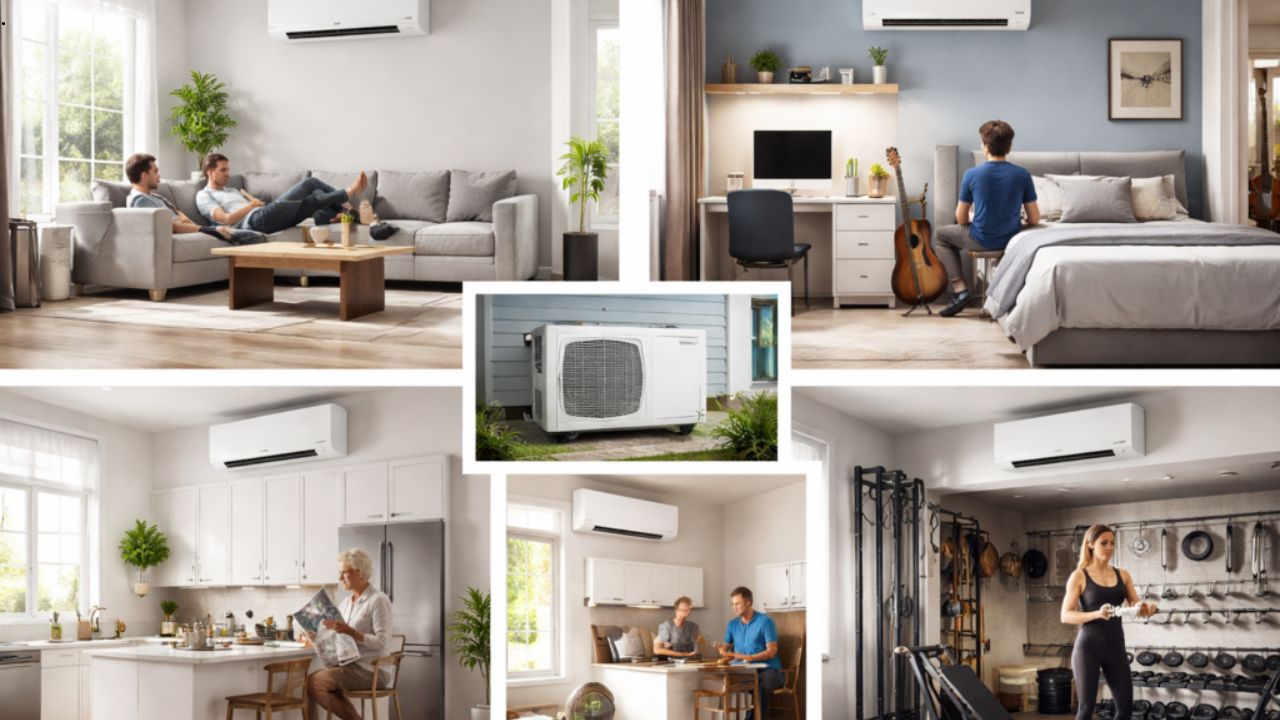

Cooling needs are not the same in every part of a home, and this reality has led many homeowners to rethink traditional approaches to temperature control. While a central air conditioner is designed to cool an entire house uniformly, a ductless mini split system offers a more targeted solution by allowing room-by-room cooling. This approach can be particularly effective in homes where comfort needs vary significantly between spaces, but it also introduces trade-offs that must be carefully considered.
This article explores when room-by-room cooling makes more sense, how a mini split AC system compares to conventional options, and what factors influence the decision-making process for homeowners seeking efficiency, comfort, and cost control.
Table of Contents
Understanding Room-by-Room Cooling
Room-by-room cooling is based on the concept of zoning, where different areas of a home are cooled independently rather than relying on a single system to regulate the entire space. A mini-split air conditioner achieves this by connecting individual indoor units to an outdoor compressor, allowing each room or zone to maintain its own temperature.
This method contrasts with traditional central systems, where conditioned air is distributed through ductwork to every room, regardless of occupancy or usage patterns. As a result, central systems often cool unused spaces, leading to energy inefficiencies.
Room-by-room cooling addresses this issue by focusing only on areas that are actively in use. However, this targeted approach requires careful planning to ensure that the system delivers consistent performance without unnecessary complexity.
When Room-by-Room Cooling Makes More Sense
There are several scenarios where installing a mini split AC system for individual rooms becomes a practical and efficient choice.
Homes with Uneven Cooling Needs
Some rooms may face AC performance issues due to sun exposure or poor insulation. Understanding these challenges helps homeowners choose the right cooling solution. For example, rooms on the upper floors or those facing direct sunlight often become significantly warmer than other areas.
In such cases, relying on a single AC unit to regulate the entire house can lead to overcooling in some rooms and insufficient cooling in others. A room-by-room approach allows homeowners to address these differences directly, improving overall comfort.
The trade-off, however, lies in system complexity. While zoning provides greater control, it requires multiple indoor units, which can increase installation costs and maintenance requirements.
Older Homes Without Ductwork
Older properties often lack the infrastructure needed for central cooling systems. Installing ductwork can be invasive, expensive, and sometimes impractical due to structural limitations.
A mini-split air conditioner offers a solution by eliminating the need for ducts altogether. Each room can be equipped with its own unit, preserving the integrity of the home while providing effective cooling.
The challenge in this scenario is balancing aesthetics with functionality. Wall-mounted units may not always align with the design preferences of homeowners, especially in historic or architecturally unique spaces.
Home Additions and Renovations
When new rooms are added to a home, extending an existing central system is not always straightforward. The original system may not have the capacity to handle additional load, and modifying ductwork can be costly.
Installing a mini split AC in the new space allows for independent climate control without overburdening the existing system. This approach is particularly useful for garages converted into living areas, sunrooms, or home offices.
However, the trade-off involves managing multiple systems within the same property. Homeowners must consider how these systems interact and whether the added flexibility justifies the increased complexity.
Frequently Used vs. Rarely Used Spaces
Not all rooms in a home are used equally. Guest rooms, storage areas, and basements may remain unoccupied for long periods, yet a central system continues to cool them.
Room-by-room cooling allows homeowners to prioritize frequently used spaces while minimizing energy consumption in less active areas. This targeted approach can lead to significant energy savings over time.
The challenge lies in determining the optimal number of zones. Installing too few units may limit flexibility, while installing too many can increase costs without proportionate benefits.
Households with Different Comfort Preferences
Temperature preferences can vary widely among household members. One person may prefer a cooler environment, while another may find the same temperature uncomfortable.
A mini-split air conditioner enables individualized temperature control, allowing each room to be adjusted according to personal preferences. This feature is particularly beneficial in bedrooms, where comfort directly affects sleep quality.
The trade-off here involves user coordination. While individualized control enhances comfort, it may also lead to inconsistent usage patterns that affect overall energy efficiency.
Key Factors That Influence the Decision
Choosing between a central AC unit and a room-by-room cooling approach requires careful evaluation of several factors.
Energy Efficiency and Operating Costs
One of the primary advantages of a mini split AC system is its ability to reduce energy consumption by cooling only occupied spaces. This targeted operation can lead to lower utility bills, especially in larger homes.
However, efficiency gains depend on proper usage. If multiple units are running simultaneously across the entire house, the energy savings may diminish compared to a centralized system.
Homeowners must weigh the potential for reduced energy consumption against the possibility of increased usage due to greater accessibility and control.
Installation Costs and Complexity
Installing a mini-split air conditioner typically involves lower upfront costs compared to adding ductwork for a central system, particularly in older homes. However, the total cost increases with the number of indoor units required.
In contrast, a central AC unit may have higher initial installation costs but can be more economical in homes where ductwork is already in place.
The decision ultimately depends on the structure of the home and the desired level of zoning. Balancing upfront investment with long-term savings is a key consideration.
Aesthetic and Space Considerations
The visual impact of indoor units is an important factor for many homeowners. Wall-mounted systems are visible and may not blend seamlessly with interior design elements.
Alternative installation options, such as ceiling-mounted units, can reduce visual impact but may involve higher costs and additional modifications.
Homeowners must balance the functional benefits of room-by-room cooling with the desire for a cohesive and aesthetically pleasing living environment.
Maintenance and System Longevity
Maintaining multiple indoor units requires more effort compared to servicing a single central system. Filters must be cleaned regularly, and each unit may require periodic inspection.
However, the modular nature of a mini-split air conditioner can also be an advantage. If one unit requires maintenance, the rest of the system can continue operating, reducing overall disruption.
The trade-off involves ongoing maintenance versus system resilience. Homeowners must decide which aspect is more important for their needs.
Challenges of Room-by-Room Cooling
While room-by-room cooling offers numerous benefits, it is not without its challenges.
Managing Multiple Zones
Coordinating temperature settings across multiple zones can be complex, particularly in larger homes. Inconsistent usage patterns may lead to inefficiencies if units are left running in unoccupied rooms.
Initial Learning Curve
Homeowners may need time to understand how to use zoning features effectively. Without proper management, the system may not deliver its full potential in terms of efficiency and comfort.
Upfront Investment
Although individual units may be relatively affordable, the cumulative cost of installing multiple units can be significant. This is especially true for whole-home applications.
Integration with Existing Systems
In homes with existing central systems, integrating a mini split AC setup requires careful planning to avoid redundancy and ensure compatibility.
Balancing Comfort, Cost, and Efficiency
The decision to adopt room-by-room cooling is ultimately about balance. Homeowners must evaluate their priorities and determine how different factors align with their needs.
For those seeking maximum control and flexibility, a mini-split air conditioner offers clear advantages. It allows for precise temperature management and can adapt to changing usage patterns.
However, this flexibility comes at the cost of increased complexity and potential upfront expenses. In contrast, a central AC unit provides simplicity and uniform cooling but may lack efficiency in certain scenarios.
Understanding these trade-offs is essential for making an informed decision.
Practical Considerations for Homeowners
Before choosing a room-by-room cooling approach, homeowners should assess their specific situation.
The size and layout of the home play a crucial role in determining the effectiveness of zoning. Open floor plans may benefit less from multiple units, while homes with distinct rooms can take full advantage of targeted cooling.
Insulation quality also impacts performance. Even the most efficient system will struggle to maintain desired temperatures in poorly insulated spaces.
Usage patterns should guide installation decisions. Rooms that are frequently occupied should be prioritized, while rarely used spaces may not require dedicated units.
Finally, long-term goals should be considered. Whether the focus is on energy savings, comfort, or property value, the chosen system should align with broader objectives.
Wrapping Up
Room-by-room cooling represents a shift toward more personalized and efficient climate control. By allowing homeowners to focus on specific areas of the home, a mini-split air conditioner provides a level of flexibility that traditional systems cannot match.
However, this approach requires careful consideration of factors such as cost, installation complexity, and maintenance requirements. The benefits of targeted cooling must be weighed against the challenges of managing multiple units and ensuring consistent performance.
In situations where cooling needs vary significantly between rooms, or where traditional systems are impractical, room-by-room cooling can be a highly effective solution. By understanding the trade-offs involved and evaluating individual needs, homeowners can make informed decisions that enhance comfort while optimizing efficiency and long-term value.