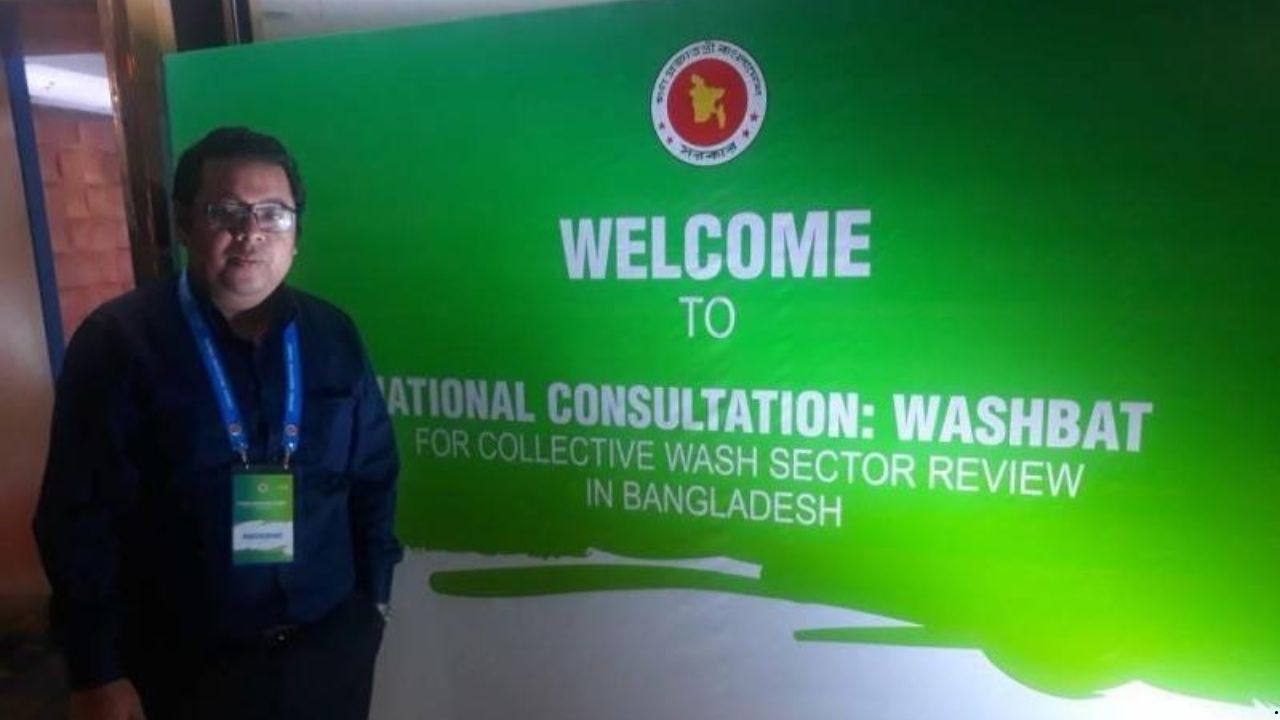
As the United States faces aging infrastructure, climate-driven flooding, and increasing regulatory pressure on water and industrial systems, engineers with deep public-sector experience are becoming critical to national resilience efforts. Among them is Santunu Barua, a civil and environmental engineer whose career spans government-led public health engineering, industrial infrastructure development, and environmental oversight—experience now being translated into the U.S. context.
Barua’s professional foundation was built within two key government institutions in Bangladesh: the Department of Public Health Engineering (DPHE) under the Ministry of Local Government, Rural Development and Cooperatives, and the Bangladesh Small and Cottage Industries Corporation (BSCIC) under the Ministry of Industries. These roles placed him at the center of large-scale infrastructure delivery, environmental assessment, and crisis response—conditions that closely mirror challenges currently facing U.S. cities and industrial regions.
Table of Contents
Public Health Engineering Under Real-World Constraints
At DPHE, Santunu Barua served as an Assistant Engineer responsible for supervising and implementing national water supply and sanitation projects. His work supported the installation and commissioning of groundwater abstraction systems, distribution pipelines, and water treatment facilities, as well as the construction of WASH (Water, Sanitation, and Hygiene) infrastructure designed to protect community health.
What distinguishes this experience is the operational scale and urgency under which these systems were delivered. Barua provided field-level engineering leadership during national emergencies, including widespread flooding, infectious disease outbreaks such as dengue, and the COVID-19 pandemic. He also supported humanitarian water and sanitation operations during the Rohingya refugee crisis, where rapid deployment, system reliability, and public health protection were essential.
These experiences directly inform U.S. priorities related to emergency water supply planning, climate resilience, disaster response infrastructure, and public health protection, particularly as American communities confront increasingly frequent extreme weather events.
Engineering Accountability and Public Infrastructure Governance
Beyond technical design oversight, Santunu Barua was responsible for engineering cost estimation, budget planning, and measurement-based billing verification for publicly funded projects. This role required a high level of fiscal accuracy, transparency, and documentation—competencies that align closely with U.S. public works standards, audit requirements, and compliance-driven infrastructure delivery.
Such experience strengthens the reliability of infrastructure systems not only in design, but across their full lifecycle—an area of growing concern in U.S. municipal and state infrastructure programs.
Industrial Infrastructure and Environmental Assessment Experience
Earlier in his career, Barua served with BSCIC, where he worked on industrial infrastructure development projects supporting manufacturing and economic growth. His responsibilities included overseeing the design and installation of water supply systems, stormwater drainage networks, internal roadways, and pump house facilities for industrial areas.
Crucially, Santunu Barua contributed to Environmental Assessments (EA) and Environmental Impact Statements (EIS) for industrial developments—experience that closely parallels NEPA-based environmental review processes in the United States. His work required integrating environmental safeguards with infrastructure planning, a balance central to U.S. industrial permitting and compliance.
He also reviewed and approved industrial factory layout plans and structural drawings, ensuring compatibility with infrastructure capacity, safety standards, and environmental considerations. As a member of procurement tender evaluation committees, he helped ensure transparent, merit-based contractor selection, reinforcing governance and accountability in public projects.
Supporting Industrial Growth Through Engineering Advisory Roles
In addition to his engineering responsibilities, Santunu Barua provided technical training and advisory support to entrepreneurs, assisting with project profiling, feasibility evaluation, and infrastructure planning for new industrial ventures. This experience directly supports U.S. efforts to revitalize domestic manufacturing, support small and mid-sized industrial operators, and develop infrastructure-ready industrial sites.
Translating Global Experience into U.S. Impact
Barua’s government engineering background reflects a form of expertise increasingly valued in the United States: the ability to deliver infrastructure under regulatory oversight, public scrutiny, and real-world constraints. His work demonstrates how engineering decisions influence not only system performance, but also public health outcomes, regulatory compliance, and economic continuity.
Today, this experience informs his professional practice in the United States, particularly in areas such as:
- Stormwater and industrial water management
- Environmental compliance and permitting support
- Climate-resilient infrastructure design
- Public health–oriented engineering solutions
As infrastructure challenges become more complex and interconnected, engineers with cross-border public-sector experience play a critical role in strengthening America’s environmental and industrial systems.
Santunu Barua’s career illustrates how global engineering service, when rigorously adapted to U.S. standards, can contribute meaningfully to national infrastructure resilience and environmental protection.