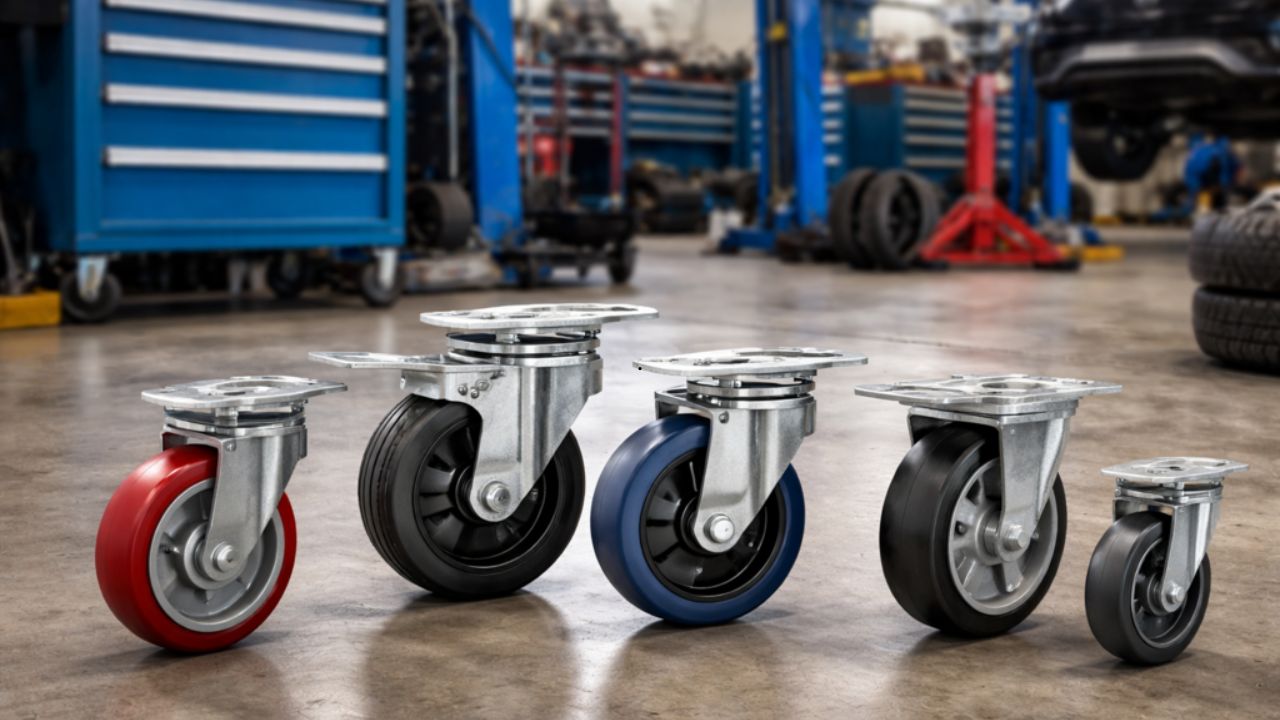

In automotive environments, mobility is not just about convenience—it directly affects productivity, safety, and equipment longevity. Whether it’s tool carts, engine stands, vehicle dollies, or diagnostic rigs, the ability to move heavy loads efficiently depends on choosing the right Casters and swivel casters. However, selecting the correct load capacity is often misunderstood or oversimplified, leading to premature failures, safety risks, and unnecessary costs.
This guide explores how load capacity works, the factors that influence it, and the trade-offs involved in making the right decision for automotive applications. It also highlights the broader operational impact of these choices, helping workshop owners, engineers, and procurement teams make informed decisions.
Table of Contents
Understanding Load Capacity in Automotive Contexts
Load capacity refers to the maximum weight a wheel assembly can safely support under specified conditions. In automotive settings, this is rarely a static figure. Equipment is frequently subjected to dynamic forces—rolling, turning, stopping, and sometimes encountering uneven surfaces, which is why selecting heavy duty casters becomes essential for maintaining performance and safety under real-world conditions.
For example, a tool cart in a garage may carry 300 kg of equipment. While stationary, the load is evenly distributed. But once the cart starts moving, weight shifts due to acceleration, braking, or floor irregularities. This means the actual load on individual wheels can temporarily exceed their rated capacity.
Because of this, relying solely on the total weight of equipment can lead to underestimating real-world demands. A more practical approach involves factoring in dynamic load conditions and incorporating a safety margin.
The Basic Load Calculation Principle
A common starting point is to divide the total load by the number of wheels. For instance, a 400 kg cart with four wheels would theoretically place 100 kg on each. However, this assumes perfect weight distribution, which is rarely the case in automotive environments.
In practice, at least one wheel may carry significantly more load due to:
- Uneven flooring
- Improper weight placement
- Sudden directional changes
- Structural flex in the equipment
To compensate, professionals often apply a safety factor, typically ranging from 25% to 50%. This ensures that each wheel assembly can handle more than its calculated share, reducing the risk of failure during operation.
Dynamic vs Static Load Considerations
One of the most overlooked aspects of load capacity is the difference between static and dynamic conditions. Static load refers to weight when the equipment is stationary, while dynamic load includes forces generated during movement.
In automotive workshops, dynamic loads are far more relevant. Consider a vehicle dolly moving across a concrete floor. Small cracks, debris, or slopes can introduce shock loads that momentarily increase stress on the wheel assemblies.
Choosing components based only on static ratings may result in:
- Wheel deformation
- Bearing wear
- Reduced maneuverability
- Increased push force
On the other hand, selecting for dynamic performance improves durability but may increase cost and weight. This creates a trade-off between affordability and long-term reliability.
Wheel Material and Its Impact on Load Capacity
Material selection plays a critical role in determining how much weight a wheel can support and how it behaves under stress. Different materials offer varying levels of strength, floor protection, and rolling resistance.
Hard materials such as forged steel or cast iron typically support higher loads but can damage workshop floors and generate noise. Softer materials like polyurethane or rubber provide better floor protection and quieter operation but may have lower load limits or higher rolling resistance under heavy weights.
In automotive environments, this trade-off becomes especially important. For instance, a high-capacity steel wheel might be ideal for heavy engine stands, while a polyurethane option may be better suited for tool carts that need smooth and quiet movement.
Balancing load capacity with floor conditions and operational comfort is essential. Ignoring this balance can lead to either excessive wear on flooring or reduced efficiency in equipment movement.
Bearing Types and Performance Under Load
Bearings influence how smoothly a wheel rolls and how well it handles weight. In automotive settings, where loads can be substantial and movement frequent, bearing choice significantly impacts performance.
Plain bearings are simple and cost-effective but may struggle under heavy or continuous loads. Ball bearings offer smoother movement and are suitable for moderate weights, while roller bearings are designed for high-capacity applications and can handle significant stress.
However, higher-capacity bearings often come with increased cost and maintenance requirements. This introduces another trade-off: investing in premium components for durability versus opting for more economical solutions with potentially shorter lifespans.
For high-usage automotive equipment, prioritizing durability and reduced maintenance often proves more cost-effective in the long run.
Floor Conditions and Load Distribution
Automotive workshops typically feature concrete or epoxy-coated floors, which may appear smooth but often contain imperfections. These surface variations affect how weight is distributed across wheel assemblies.
On uneven floors, not all wheels maintain consistent contact with the ground. This can cause certain wheels to bear more load than others, increasing the risk of failure. Larger diameter wheels can help bridge small gaps and reduce the impact of surface irregularities, improving load distribution.
However, larger wheels may raise the overall height of equipment, potentially affecting stability. This highlights the importance of considering both load capacity and equipment design when making a selection.
Equipment Design and Weight Placement
Load capacity is not just about the wheel—it is also influenced by how weight is distributed within the equipment itself. Poor design or uneven loading can concentrate stress on specific points, leading to premature wear.
For example, a tool cart with heavy items placed on one side will create an imbalance, causing certain wheel assemblies to carry more weight than others. Over time, this can result in uneven wear, reduced maneuverability, and potential failure.
Optimizing weight distribution within equipment helps maximize the effectiveness of the selected wheel assemblies. This may involve:
- Placing heavier items closer to the center
- Ensuring symmetrical design
- Using additional support points if necessary
Such adjustments can significantly improve performance without increasing component costs.
Maneuverability vs Load Capacity
One of the most important trade-offs in automotive mobility is between maneuverability and load capacity. Fixed wheel assemblies provide stability and high load support but limit directional movement. Rotating wheel assemblies, on the other hand, offer greater flexibility but may have lower load ratings.
In many cases, a combination of both is used to achieve a balance. For instance, a cart may use two fixed units for stability and two rotating units for steering. This configuration improves control while maintaining adequate load support.
However, increasing maneuverability often introduces additional stress on rotating components, especially during sharp turns. This can affect long-term durability, making it important to select components that can handle both weight and movement demands.
Environmental Factors in Automotive Settings
Automotive environments present unique challenges that can affect load capacity and performance. Exposure to oils, chemicals, temperature variations, and debris can all influence the durability of wheel assemblies.
Certain materials may degrade when exposed to automotive fluids, reducing their load-bearing capability over time. Similarly, extreme temperatures can affect material flexibility and strength.
Selecting materials and designs that are resistant to these conditions ensures consistent performance and extends the lifespan of equipment. While such options may come at a higher initial cost, they often reduce maintenance and replacement expenses in the long term.
Cost vs Longevity: A Critical Trade-off
Budget constraints often play a significant role in decision-making. Lower-cost options may seem attractive initially but can lead to higher long-term expenses due to frequent replacements or downtime.
High-quality components with greater load capacity and durability typically cost more upfront but offer better performance and reliability. This reduces maintenance needs and minimizes disruptions in workflow.
For automotive businesses, where efficiency directly impacts revenue, investing in durable solutions can provide a better return on investment. The challenge lies in balancing upfront costs with long-term benefits, taking into account usage frequency and operational demands.
Safety Implications of Load Miscalculations
Incorrect load capacity selection can have serious safety consequences. Overloaded wheel assemblies may fail suddenly, leading to equipment damage or workplace injuries.
In automotive settings, where heavy tools and components are common, such failures can be particularly hazardous. Ensuring that load capacity exceeds actual operating conditions helps mitigate these risks.
Regular inspections and maintenance further enhance safety by identifying wear and potential issues before they lead to failure. This proactive approach is essential for maintaining a safe and efficient work environment.
The Broader Impact on Operations
Choosing the right load capacity does more than prevent failures—it improves overall automotive efficiency and streamlines workshop operations. Equipment that moves smoothly and reliably reduces worker fatigue, improves productivity, and enhances workflow.
Conversely, poorly selected components can create bottlenecks, increase physical strain on workers, and lead to frequent downtime. Over time, these inefficiencies can have a significant impact on business performance.
By carefully evaluating load requirements and selecting appropriate solutions, automotive businesses can optimize both performance and cost-effectiveness.
Wrapping Up
Selecting the right load capacity for automotive equipment is a multifaceted decision that goes beyond simple weight calculations. It requires an understanding of dynamic forces, material properties, floor conditions, and operational demands.
Balancing these factors involves trade-offs between cost, durability, maneuverability, and safety. While there is no one-size-fits-all solution, a thoughtful approach that considers real-world conditions can significantly improve performance and longevity.
Ultimately, the right choice supports not only the equipment but also the people and processes that rely on it, making it a critical component of efficient and safe automotive operations.