
Key Takeaways
- Cutting-edge HVAC systems leverage smart sensors and AI for optimal comfort and efficiency.
- IoT integration enables remote, real-time monitoring and control of systems.
- Predictive maintenance and machine learning enhance long-term energy savings and system reliability.
- Improved indoor air quality is supported through active pollutant sensing and responsive adjustments.
Recent technological advancements have ushered in a new era of home comfort, driven largely by the integration of smart technology in heating, ventilation, and air conditioning (HVAC) systems. These innovative solutions are redefining how occupants experience indoor environments, making it easier to achieve and maintain temperature regulation, air quality, and energy savings. Modern smart HVAC systems not only provide superior comfort, but they also help homeowners achieve greater efficiency and sustainability goals. Learn more about achieving an efficient furnace Arlington MA that can improve year-round comfort and reduce energy use.
Smart sensors, artificial intelligence, and the Internet of Things (IoT) are at the heart of this transformation. These technologies enable HVAC units to respond dynamically to changing indoor and outdoor conditions, adjusting settings in real time for optimal results. This level of sophistication has led to significant reductions in utility costs and tangible improvements in indoor air quality, contributing to a healthier home environment.
With custom zoning, predictive maintenance, and adaptive learning, today’s systems are more reliable and responsive than ever before. As these technologies continue to evolve, homeowners and facility managers stand to benefit from smarter, cleaner, and more cost-effective climate control.
Table of Contents
Integration of IoT in HVAC Systems
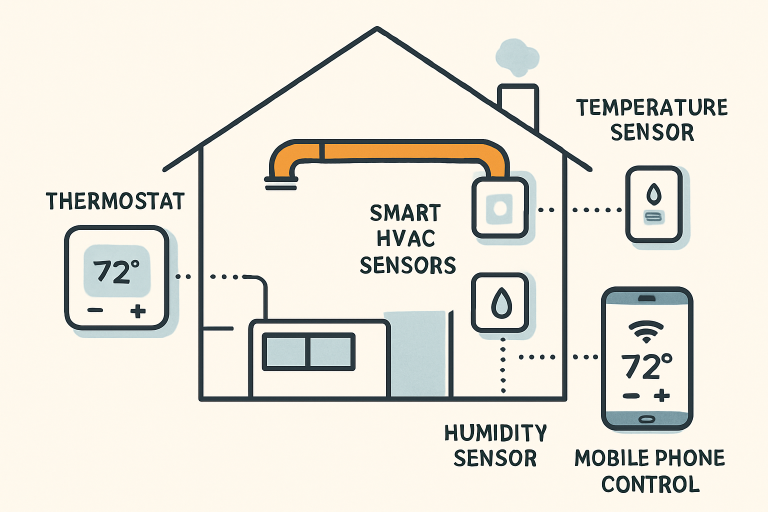
The rise of IoT technology marks a turning point for conventional HVAC systems. By embedding internet-connected sensors throughout an HVAC network, these systems automatically collect real-time data on temperature, humidity, air quality, occupancy, and even predictive weather conditions. This intelligence enables units to regulate themselves, reducing unnecessary energy consumption and maintaining a consistent comfort level. Users can also access and control their HVAC systems from smartphones or home automation platforms, ensuring the environment remains comfortable even while away from home. According to a Forbes report, this level of automated management can cut energy usage by more than 30 percent in some modern buildings.
Artificial Intelligence and Machine Learning
Artificial intelligence and machine learning algorithms are key to the evolution of smart HVAC systems. By analyzing both real-time input and historical performance data, these advanced platforms predict future climate needs and automatically adjust. This process allows systems to anticipate changes, optimize performance, and balance indoor comfort with energy efficiency. For instance, AI-driven tools like BrainBox AI use vast datasets to fine-tune building climates, resulting in substantial cost savings and consistent comfort for occupants. As highlighted in The New York Times, AI applications are making buildings smarter, greener, and healthier with less manual intervention.
Energy Efficiency and Cost Savings
One of the most appealing benefits of smart HVAC technology is its impact on energy usage and utility expenses. These systems actively identify inefficiencies and anomalies, making corrections in real time or alerting users to potential issues. By automatically adjusting operational schedules and adapting to usage patterns, they ensure the system draws power only when necessary. Adaptive learning enables the HVAC to understand occupancy routines, fine-tuning temperature and ventilation to maximize efficiency throughout the day.
Enhanced Indoor Air Quality
If you’ve noticed stale air, allergies, or uneven airflow, it may be time to look into air quality warning signs before the problem gets worse. Modern smart HVAC systems use sophisticated sensors to monitor indoor pollutants, such as volatile organic compounds, particulate matter, and excessive CO2 levels. When potential issues are detected, systems seamlessly increase ventilation or adjust filtration. These automatic responses prevent unhealthy conditions, balancing humidity and minimizing mold, allergens, and odors to improve indoor air quality. This kind of environmental monitoring supports occupants’ well-being, particularly in urban or high-occupancy buildings.
Personalized Comfort Through Zoning
Zoning technology enables smart HVAC systems to provide customized temperature control in different areas of a home or building. Each zone is independently controlled, accommodating preferences, use patterns, or structural differences within larger properties. For example, a basement room can be kept cooler while living areas receive more warmth. This feature is especially advantageous for households with varying temperature requirements, ultimately saving energy by avoiding over-conditioning unused spaces.
Predictive Maintenance and Reliability
Modern smart HVAC systems can predict and diagnose problems before they cause system failures, thanks to machine learning and continuous performance monitoring. Predictive maintenance alerts users to potential malfunctions, filter replacements, or drops in efficiency. Regular upkeep matters, and understanding home inspection reasons can help you catch HVAC issues early and avoid costly surprises.
Future Trends in Smart HVAC Technology
The future of HVAC is closely tied to smart home ecosystems and increasingly advanced AI algorithms that make building management intuitive and highly efficient. Further developments will likely include deeper integration with smart grids and renewable energy, as well as more sophisticated real-time health monitoring. As these advances are adopted, smart HVAC systems will offer even greater energy savings, comfort, and reliability, cementing their place in modern homes and commercial buildings alike.
Embracing these innovations not only ensures greater indoor comfort today but also promises ongoing benefits in sustainability, air quality, and energy savings for years to come. By choosing smart HVAC solutions, building owners are investing in the health, comfort, and efficiency of tomorrow’s living spaces.