Key Takeaways
- SD-WAN enhances network performance while offering companies substantial cost advantages.
- Advanced built-in security features help protect today’s decentralized infrastructures from evolving threats.
- Cloud integration is simplified and streamlined, improving agility and responsiveness.
- Modern SD-WAN solutions offer scalable, flexible options for future-proofing business networks.
As organizations increasingly rely on distributed workforces and cloud resources, dependable network connectivity is more essential than ever. Businesses are under constant pressure to deliver faster, more secure, and cost-efficient network solutions. One transformative approach gaining significant traction is SD-WAN, a flexible alternative to traditional WANs. By deploying enterprise SD-WAN networking, companies can customize network paths, improve service delivery, and establish a more resilient infrastructure that adapts to dynamic demands. Modern SD-WAN streamlines connectivity across multiple sites and platforms, supporting critical business applications while protecting sensitive data and keeping costs in check. The technology’s software-driven management enables IT teams to respond quickly to outages or traffic spikes, reinforcing business continuity and optimal user experience. As industries pursue digital transformation, SD-WAN plays a pivotal role in reducing complexities and enabling easier integration with vital cloud applications.
Organizations transitioning to global hybrid or remote workforce models often encounter bandwidth and network bottlenecks, particularly when relying on legacy MPLS circuits or inflexible network architectures. Businesses leveraging SD-WAN not only achieve cost efficiency but also improve application reliability through intelligent traffic routing and automated failover mechanisms. SD-WAN provisions multiple connection types, including broadband, LTE, and traditional MPLS, allowing dynamic, policy-driven management of network resources. This shift alleviates network congestion, optimizes operations, and supports greater capacity without the costs associated with legacy WAN expansion.
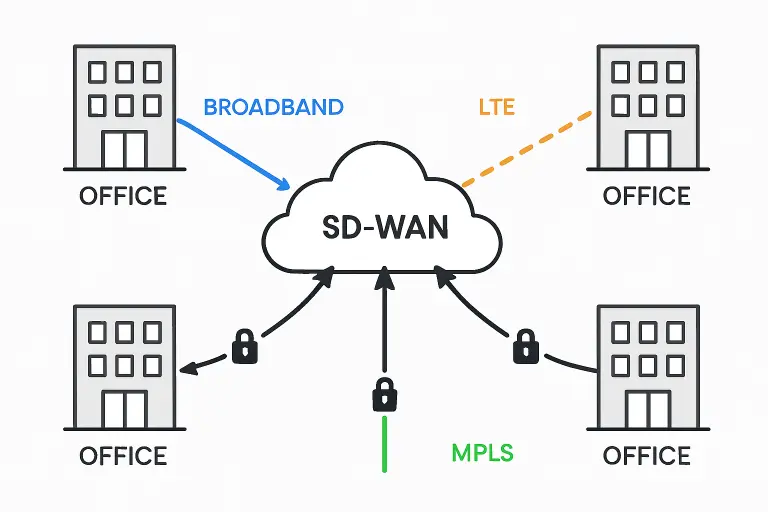
Table of Contents
Improved Network Performance and Cost Savings
Legacy WAN solutions lock enterprises into expensive, single-path circuits, making scaling difficult. SD-WAN streamlines this by letting organizations route traffic via the most cost-effective and efficient path, sometimes switching in real time based on application demands or outages. This agility means critical traffic can take priority on low-latency routes, and failover can be applied instantly across the enterprise. The result is not just improved uptime but also measurable cost reductions, as many corporations report significant savings on connectivity expenses after implementing SD-WAN strategies. This efficiency is helping to drive the broader adoption of SD-WAN solutions globally, as outlined in Gartner’s analysis of networking trends.
Enhanced Security Measures
The distributed nature of modern business operations requires robust security measures beyond what traditional WANs provide. SD-WAN includes capabilities such as encryption, integrated firewalls, and advanced threat detection as standard. Many leading solutions bring these protections together under a Secure Access Service Edge (SASE) model, which unifies networking and security policies into a single cloud-native service. To better understand modern security risks, explore common challenges beyond traditional firewalls and antivirus through cybersecurity challenges. This knowledge helps organizations implement SD-WAN alongside stronger defences. The adoption of SASE with SD-WAN further signals a shift toward holistic, zero-trust frameworks that better defend today’s sprawling network environments against data breaches and attacks.
Streamlined Cloud Integration
As more enterprise applications move to the cloud, user experience increasingly depends on direct, optimized connectivity between branch locations and cloud providers. SD-WAN enables organizations to bypass legacy hub-and-spoke topologies and establish direct, secure connections to platforms such as AWS, Microsoft Azure, and Google Cloud. By routing cloud-bound traffic directly to its destination, SD-WAN reduces latency, boosts application performance, and helps avoid bottlenecks that can arise when backhauling data through a central data center.
Scalability and Flexibility
Modern enterprises operate at a pace where rapid expansion, acquisition, and shifting remote work requirements can otherwise strain IT teams and legacy networks. SD-WAN enables quick deployment of new sites and centralized policy management, whether integrating a new branch office or facilitating secure access for remote employees. This scalability reduces lead times for network upgrades. It offers businesses the flexibility to tailor network policies to specific application or location needs, crucial for adapting to regulatory shifts or emerging business priorities.
Real-World Applications
Global organizations across verticals are using SD-WAN to bridge gaps between physical branches and their expanding cloud footprints. For example, a leading apparel manufacturer successfully onboarded several newly acquired international offices by integrating them into an existing SD-WAN. This gave their teams secure application access across multiple clouds, reduced onboarding time, and ensured all sites maintained optimal connectivity, even during traffic surges or regional outages. The real impact is faster time-to-value after mergers, simplified compliance, and improved operational resilience.
Future Trends in SD-WAN
The SD-WAN sector is evolving swiftly in response to increasing demand for integrated automation and security. Looking ahead, expect greater convergence between SD-WAN and cloud-delivered security services under SASE, which streamlines deployment and management processes. AI and machine learning technologies are being integrated into SD-WAN core software to automate network monitoring, anticipate bandwidth demand, and quickly predict or remediate outages. These innovations are likely to reshape how businesses approach multi-cloud networking and endpoint protection, positioning SD-WAN as a foundation for future-ready, intelligent networks.
Conclusion
The challenge of modern network management is balancing cost, security, and performance without added complexity. SD-WAN enables organizations to meet these goals by providing flexible, secure, and scalable connectivity for cloud-centric operations. Companies adopting SD-WAN stand to benefit from lower costs, more responsive service delivery, and future-proofed architectures equipped for the realities of hybrid and remote work. As advancements continue, SD-WAN will remain central to enterprise digital transformation efforts, ensuring businesses are prepared for both current requirements and tomorrow’s opportunities.