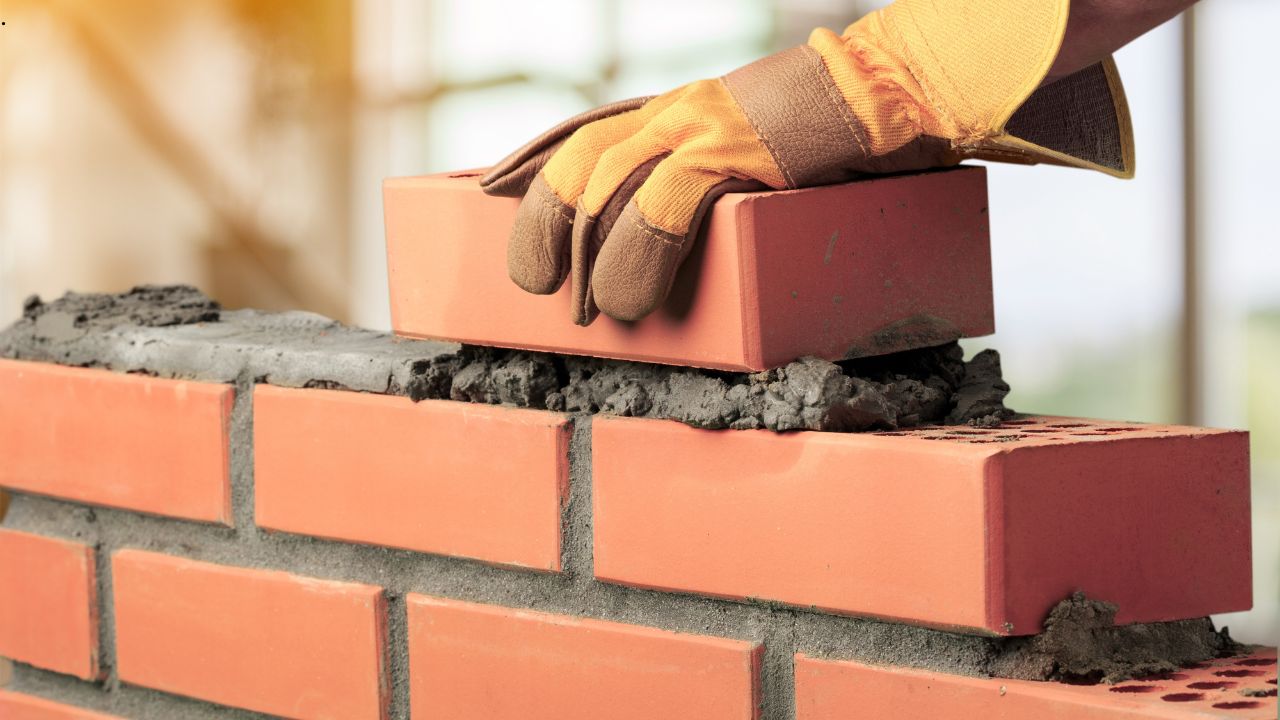
Some construction materials come and go with changing architectural trends, while brick and concrete block continue to appear in residential, commercial, and multifamily projects year after year. Their staying power comes from a useful combination of durability, design flexibility, and suitability for projects ranging from decorative features to substantial walls.
Getting good results from masonry, however, involves much more than selecting a brick color or deciding where a block wall should go. Material choice, planning, installation quality, and coordination with the rest of the building can all influence how the finished project performs.
Table of Contents
Brick and Block Serve Different Purposes
Brick and concrete masonry units are sometimes grouped together because both rely on individual units joined with mortar. In practice, they can play very different roles in a construction project.
Brick is frequently selected for its appearance. It can provide texture, pattern, color, and architectural character to building exteriors, columns, walls, entrances, and other features. Different layouts and joint styles allow brickwork to complement both traditional and modern architecture.
Concrete block, often referred to as CMU, is commonly used where structural or functional requirements are a major consideration. Block construction may be found in commercial buildings, multifamily properties, site walls, structural walls, and numerous other applications.
The two materials do not necessarily have to compete for a place in a design. A project may use concrete block where strength and structural performance are priorities while incorporating brick in areas where a particular finished appearance is desired.
Good Masonry Starts Before Installation
The quality of a masonry project is often determined well before the first unit is installed. Successful work begins with understanding what the wall or feature is supposed to accomplish.
A contractor may need to consider several factors during the planning process:
- Whether the masonry will be structural or decorative
- The height, length, and configuration of the wall
- Engineering and reinforcement requirements
- Openings for doors, windows, gates, or utilities
- Drainage and moisture-management considerations
- Connections with surrounding building components
- Desired colors, textures, patterns, and finishes
- Access to the work area and project scheduling
These details are particularly important on larger construction projects. Changes that seem minor on paper can affect material quantities, labor requirements, sequencing, and the interaction between masonry and other trades.
Careful planning can also reduce the likelihood of having to modify completed work later.
Installation Quality Is Visible in the Details
Masonry is unusual because much of the craftsmanship remains visible after construction is complete. Uneven courses, inconsistent mortar joints, poor alignment, or awkward transitions can be difficult to disguise.
Experienced masonry installation focuses on consistency from the beginning.
Brick and block units must be laid out carefully so that walls remain level and properly aligned. Mortar needs to be handled appropriately, and joints should have a consistent finished appearance where they remain exposed. Openings, corners, intersections, and transitions require particular attention because these areas naturally draw the eye.
Some of the most important components, however, may eventually be hidden from view. Reinforcement and connections can be essential to the intended performance of certain masonry assemblies.
For this reason, judging masonry only by its surface appearance does not tell the entire story. Good work combines a clean finished appearance with construction practices appropriate to the project’s specifications.
Where Brick and Block Can Be Used
One advantage of masonry is its adaptability. It can be incorporated into properties at very different scales.
On residential projects, masonry might appear in exterior walls, property walls, columns, architectural accents, or additions. Commercial and multifamily developments may use masonry much more extensively for building walls, site improvements, structural applications, and large architectural features.
This flexibility makes professional capabilities worth considering when selecting a contractor. A homeowner planning a relatively small brick feature has different needs from a general contractor coordinating masonry on a large development.
For those evaluating professional installation options in California’s Central Valley, information about Cen Cal Masonry brick and block services provides context on how these materials can be incorporated into residential, commercial, and other construction projects.
The important point is to match the contractor’s experience with the actual scope rather than assuming all masonry work requires the same expertise.
Material Selection Should Consider the Whole Property
Choosing masonry based solely on a small sample can make it difficult to imagine the final result. Brick or block that looks appealing by itself may appear quite different when installed across a large wall.
Color is only one consideration. Texture, unit size, mortar color, joint profile, pattern, and neighboring building materials all influence the final appearance.
Think About Scale
A material used across a large facade becomes a dominant design element. Subtle variations that seem insignificant in a sample can become much more noticeable once hundreds or thousands of units are installed.
Coordinate With Existing Features
On renovations and additions, new masonry should be considered alongside existing materials. Matching older masonry exactly can sometimes be difficult because of aging, weathering, and changes in product availability.
In other situations, intentionally selecting a complementary material may produce a more cohesive appearance than attempting an imperfect match.
Consider Function Alongside Appearance
A decorative brick feature and a structural block wall have different requirements. The intended purpose of the masonry should remain central to material decisions rather than allowing aesthetics alone to determine the approach.
Coordination Becomes Critical on Larger Projects
Masonry rarely exists in isolation. It can intersect with foundations, structural components, roofing, doors, windows, electrical systems, plumbing, fencing, landscaping, and exterior finishes.
That means scheduling and communication become increasingly important as project complexity grows.
If openings are incorrectly located or dimensions change without proper coordination, multiple trades can be affected. Likewise, delayed masonry work may influence tasks scheduled to follow it.
General contractors and property developers can reduce these problems by addressing masonry requirements early and maintaining clear communication between the relevant trades.
Accurate plans are particularly valuable. Knowing where walls, penetrations, openings, reinforcement, and architectural features belong before installation begins can prevent unnecessary field adjustments.
Protecting the Finished Masonry
Although brick and block are known for durability, completed masonry still deserves periodic attention.
Property owners can visually inspect masonry for changes such as unusual cracking, deteriorating mortar, movement, persistent moisture issues, or damaged individual units. Finding a problem early may make it easier to determine the cause and appropriate response.
It is also important to distinguish between cosmetic imperfections and conditions that could affect performance. Not every crack has the same cause, and simply covering a visible symptom may not address what created it.
When significant movement or structural concerns are suspected, the situation should be evaluated by an appropriately qualified professional.
Building for More Than the Finished Photograph
Brick and block masonry can contribute significantly to both the function and character of a property. The best projects succeed not because masonry was added as an afterthought, but because it was incorporated into the construction and design process from the beginning.
Understanding the intended purpose of the masonry, selecting suitable materials, coordinating with other trades, and emphasizing installation quality can all contribute to a better result.
Whether masonry is being used for a residential feature, a commercial building, a site wall, or a larger development, attention to the details that are visible—and those that eventually become hidden—is what turns individual bricks and blocks into construction designed to perform for years.