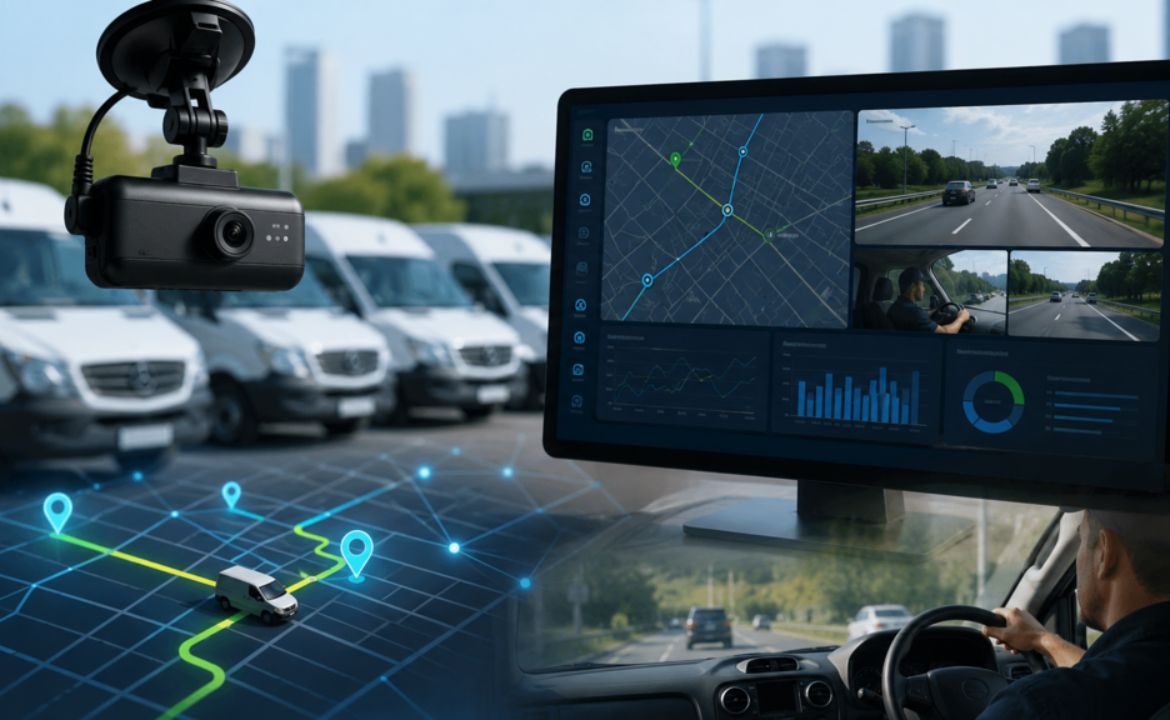
For many fleet operators, in-vehicle camera systems are often associated with accident investigations and insurance claims. When a collision occurs, video footage and location records can provide critical evidence that helps determine what happened and who was responsible. While this remains an important function, modern fleet technology offers far more value than simply documenting incidents after they occur.
Today’s fleets generate vast amounts of operational data through integrated monitoring systems. A GPS Tracker, a dash cam with gps, and other forms of vehicle tracking equipment can work together to provide a detailed picture of vehicle movements, driver behavior, route efficiency, and overall fleet performance. As a result, fleet managers can gain insights that support proactive decision-making rather than merely responding to accidents after the fact.
Understanding how to use this information effectively can help organizations improve safety, reduce costs, enhance productivity, and strengthen customer service. However, extracting value from fleet data also requires balancing competing priorities, addressing privacy concerns, and ensuring that insights lead to meaningful operational improvements.
Table of Contents
Moving From Reactive to Proactive Fleet Management
Traditional fleet management often relied on reactive responses to problems. Managers investigated accidents after they occurred, addressed customer complaints after deliveries were delayed, and reviewed maintenance issues after vehicles experienced breakdowns.
Modern monitoring systems allow organizations to shift toward a more proactive approach. Instead of waiting for incidents to happen, managers can identify patterns that indicate potential risks and inefficiencies before they become costly problems.
Video footage combined with location and vehicle performance data creates a more complete operational picture. This broader perspective enables managers to understand not only what happened but also why it happened and how similar situations might be prevented in the future.
The transition from reactive management to proactive oversight is one of the most significant benefits of modern fleet technology. Organizations that embrace this approach often discover opportunities for improvement that would otherwise remain hidden.
Understanding Driver Behavior in Real-World Conditions
One of the most valuable lessons fleet managers can learn from camera and location data is how drivers behave under actual operating conditions.
Traditional performance evaluations often rely on limited observations, customer feedback, or incident reports. These methods may provide incomplete or biased information. In contrast, continuous monitoring offers objective insights into daily driving habits.
Managers can identify patterns such as:
- Excessive speeding
- Harsh braking
- Rapid acceleration
- Aggressive cornering
- Frequent distractions
- Unsafe following distances
These behaviors may not result in accidents immediately, but they often increase long-term risk exposure.
More importantly, managers can use these observations as coaching opportunities rather than disciplinary tools. Constructive driver training programs based on real-world examples often produce better results than generic safety reminders.
The challenge lies in balancing accountability with employee trust. Excessive monitoring may create concerns about surveillance, while insufficient oversight may allow unsafe behaviors to continue unchecked. Successful organizations typically establish transparent policies that explain how monitoring data will be used and how it benefits both drivers and the company.
Improving Route Efficiency and Operational Planning
Another significant advantage of integrated fleet data is the ability to analyze route performance.
Location records provide detailed information about:
- Travel times
- Stop durations
- Route deviations
- Traffic delays
- Service completion patterns
By reviewing these metrics, fleet managers can identify opportunities to improve efficiency across daily operations.
For example, two drivers assigned similar routes may consistently produce different results. Data analysis can reveal whether differences stem from traffic conditions, route selection, scheduling practices, or driving habits.
Over time, organizations can refine route planning strategies to reduce unnecessary mileage and improve productivity.
However, route optimization involves trade-offs. The shortest route is not always the most efficient route. Factors such as traffic congestion, road conditions, fuel consumption, and customer requirements must all be considered.
Managers who rely solely on distance measurements may overlook operational realities that affect overall performance. Combining video evidence with location intelligence helps create a more accurate understanding of route effectiveness.
Enhancing Fuel Management Strategies
Fuel costs represent one of the largest operating expenses for many fleets. Monitoring systems can provide valuable insights into the factors that influence fuel consumption.
Data often reveals relationships between fuel usage and driver behavior. Frequent acceleration, excessive idling, speeding, and inefficient route choices can all contribute to increased fuel expenses.
Video and location records allow managers to verify these patterns and develop targeted improvement strategies.
For instance, a fleet may discover that vehicles spend significant time idling during loading operations. Addressing this issue could reduce fuel waste without affecting productivity.
Similarly, identifying recurring congestion points may allow route planners to create more efficient schedules.
The challenge is determining which fuel-saving initiatives provide the greatest benefit without negatively affecting service quality. Aggressive fuel reduction programs that prioritize efficiency above all else may inadvertently increase delivery times or reduce customer satisfaction.
Effective fleet management requires balancing cost control with operational performance.
Strengthening Driver Coaching Programs
Many organizations view monitoring technology primarily as an enforcement tool. However, some of the most successful fleets use collected data to support ongoing driver development.
Coaching programs become more effective when they are based on objective observations rather than assumptions.
Managers can review specific driving events, discuss potential improvements, and recognize positive performance. This approach helps create a culture of continuous improvement rather than one focused solely on identifying mistakes.
Video examples are often particularly valuable because they provide context that numerical reports cannot capture. Drivers can see the circumstances surrounding an event and better understand how alternative decisions might have produced different outcomes.
At the same time, organizations must avoid creating environments where employees feel constantly scrutinized. Excessive focus on monitoring metrics may lead to stress, reduced morale, and resistance to technology adoption.
The most effective programs emphasize safety, professional development, and shared organizational goals.
Supporting Maintenance and Asset Utilization Decisions
Fleet data can also provide important insights into vehicle utilization and maintenance planning.
Managers can analyze patterns such as:
- Vehicle operating hours
- Daily mileage
- Idle time
- Route demands
- Equipment usage levels
These insights help organizations allocate resources more effectively and identify underutilized assets.
For example, a company may discover that certain vehicles consistently experience heavier workloads than others. This imbalance can accelerate wear and increase maintenance costs.
By redistributing assignments more evenly, organizations may extend asset life while improving operational efficiency.
Maintenance planning also benefits from operational visibility. Understanding how vehicles are used can help managers schedule preventive maintenance more accurately and reduce the likelihood of unexpected breakdowns.
However, collecting more data does not automatically produce better decisions. Organizations must focus on relevant metrics rather than attempting to monitor every available data point.
Improving Customer Service Performance
Customer expectations continue to rise across many industries. Timely deliveries, accurate arrival estimates, and responsive service are increasingly important competitive advantages.
Fleet monitoring data can help organizations improve customer service in several ways.
Managers can verify arrival times, investigate delays, and identify recurring service issues. When customers raise concerns, operational records often provide objective information that supports faster resolution.
In some cases, route and video data may reveal systemic problems such as unrealistic scheduling practices or inefficient dispatch procedures.
Addressing these underlying issues can improve both operational performance and customer satisfaction.
There are trade-offs to consider, however. Efforts to maximize delivery speed may increase driver pressure and encourage unsafe behavior. Similarly, focusing exclusively on efficiency metrics may overlook the importance of service quality and customer relationships.
Organizations must balance productivity goals with safety and customer experience objectives.
Reducing Risk Beyond Accident Prevention
Accident reduction remains a major benefit of monitoring technology, but risk management extends far beyond collision avoidance.
Fleet managers can use collected data to identify a wide range of operational risks, including:
- Unauthorized vehicle use
- Route non-compliance
- Cargo security concerns
- Regulatory violations
- Driver fatigue indicators
Early identification of these issues allows organizations to implement corrective measures before significant problems develop.
For example, recurring route deviations may indicate training deficiencies, communication challenges, or operational inefficiencies. Investigating these patterns can prevent future disruptions.
Similarly, identifying signs of driver fatigue can support wellness initiatives that improve both safety and employee well-being.
The key lesson is that risk management should be viewed as an ongoing process rather than a response to isolated incidents.
Managing Privacy and Ethical Considerations
As monitoring capabilities become more sophisticated, privacy concerns become increasingly important.
Employees may worry about how data is collected, stored, and used. If organizations fail to address these concerns, trust can erode and resistance to technology may increase.
Fleet managers should establish clear policies regarding:
- Data collection practices
- Access permissions
- Retention periods
- Performance evaluations
- Coaching procedures
Transparency helps employees understand the purpose of monitoring systems and reduces uncertainty.
Organizations must also ensure compliance with applicable privacy regulations and industry standards.
Finding the right balance between operational oversight and employee privacy is often one of the most challenging aspects of implementing advanced fleet technologies.
Turning Data Into Actionable Insights
One of the biggest challenges facing fleet managers today is not a lack of information but an abundance of it.
Modern monitoring systems generate enormous quantities of data every day. Without a clear strategy, managers can become overwhelmed by reports, alerts, and performance metrics.
Successful organizations focus on identifying key performance indicators that align with business objectives.
Rather than reviewing every available metric, they concentrate on measurements that directly influence safety, efficiency, maintenance, customer service, and profitability.
This targeted approach helps transform raw information into actionable insights that support meaningful improvements.
Wrapping Up
While accident investigations remain an important application of fleet monitoring technology, they represent only a fraction of its potential value. The combination of video evidence, operational intelligence, and location-based insights provides fleet managers with powerful tools for understanding how their organizations function on a daily basis.
Beyond documenting incidents, these systems can reveal opportunities to improve driver performance, optimize routes, reduce fuel consumption, strengthen maintenance planning, enhance customer service, and manage risk more effectively. At the same time, organizations must carefully balance operational goals with employee privacy, data management responsibilities, and workplace trust.
The most successful fleet managers recognize that technology alone does not create better outcomes. Real value emerges when information is translated into informed decisions, practical improvements, and long-term operational strategies. By looking beyond accident investigations, organizations can unlock the full potential of fleet data and build safer, more efficient, and more resilient operations.