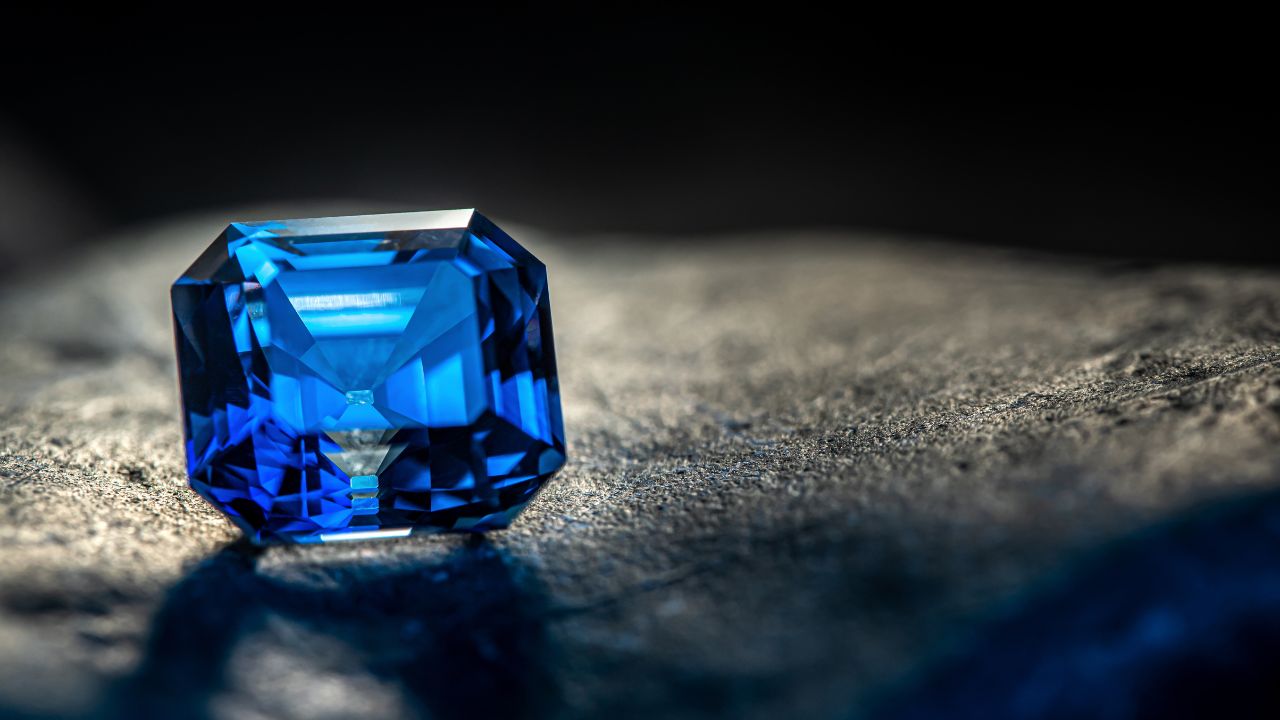
You find a sapphire online with exactly the colour you have been looking for. The listing says it is eye clean. That sounds reassuring—but what does it actually tell you about the stone?
In simple terms, eye clean means you cannot readily see inclusions inside the sapphire with your unaided eye under normal viewing conditions. You may still see them through a jeweller’s loupe, in a highly magnified photograph, or if someone points out precisely where to look.
It is a useful description when shopping for a sapphire in Australia, but it is not a guarantee of perfection. Understanding its limits will help you choose a stone you love rather than getting caught up in a label.
Table of Contents
First, What Are Inclusions?
Inclusions are features inside a gemstone. In a sapphire, they may appear as tiny crystals, fine needles, wispy patterns or other internal marks. Some are visible at a glance. Others are so small that you would need magnification to find them.
Natural sapphires or garnets commonly have inclusions. GIA notes that blue sapphires typically contain some, and that exceptionally high clarity is rare. One type, known as silk, consists of very fine needle-like inclusions. In some stones, fine silk can even contribute to a soft, velvety appearance.
So when a sapphire is described as eye clean, it does not mean there is nothing inside it. It means its inclusions are not readily visible when you look at the stone without magnification.
“Eye Clean” Depends on How You Look
Picture someone holding a sapphire at a comfortable distance and turning it in ordinary light. Can they spot an inclusion without being told where it is? That is the practical question behind the term.
But people do not all have the same eyesight, and sellers may assess stones under different lighting or at different distances. A tiny feature that one person overlooks may catch another person’s eye. An inclusion might also be hard to see from the top but easier to notice from the side.
That is why eye clean is best treated as a description to explore, rather than a precise laboratory grade. There is no universally accepted clarity grading scale for coloured gemstones, and GIA does not assign sapphires an overall quality grade.
If you are buying online, ask the seller what they mean by eye clean. A helpful question is:
“Can you see any inclusions with the unaided eye when viewing this sapphire face-up at a normal distance?”
Then ask whether the answer changes when the stone is viewed from the side.
What If an Inclusion Appears in a Close-Up Photo?
Gemstone photos often show a stone at many times its actual size. Under that level of magnification, a tiny inclusion can look dramatic. You might spot a fine line or dot on your screen that you would never notice when the sapphire is resting in your hand.
The reverse can happen too. Bright reflections, careful angles or a small image can hide a feature you might notice in person. One photograph cannot give you a complete understanding of clarity.
Ask for three views of the actual sapphire: a clear close-up, a short video as the stone turns, and an image or video at a realistic size. If something catches your attention in the close-up, ask the seller to show you that exact area in the video. You can then judge how noticeable it is in everyday viewing.
Does Eye Clean Mean “Flawless”?
No. An eye-clean sapphire may have inclusions that are visible under magnification. “Flawless” makes a much stronger claim and should not be assumed from an eye-clean description.
It is also possible for a sapphire to have no obvious inclusions yet still be less appealing to you because of its colour or cut. A stone may look too dark, have uneven colour, or fail to reflect light in the way you hoped.
Clarity is one part of the decision. GIA identifies colour as the most important sapphire quality factor and notes that cut has a major effect on appearance. A lively sapphire with a small, unobtrusive inclusion may speak to you more than a cleaner stone whose colour leaves you unmoved.
Are Visible Inclusions Always a Problem?
Not necessarily. It depends on what the inclusion looks like, where it sits and whether it affects the stone’s durability.
A tiny mark near the edge might be difficult to notice once the sapphire is set. A dark inclusion in the centre may draw your eye every time you look at it. Fine silk may give one stone character, while heavier inclusions could make another look cloudy. There is no single answer that fits every sapphire or every buyer.
Durability deserves separate attention. If you notice a prominent fracture or a feature that appears to reach the surface, ask the seller about it before purchasing—particularly if the sapphire will be worn frequently in a ring. GIA notes that inclusions can significantly affect value when they threaten a sapphire’s durability.
Will a Gemological Report Confirm That a Sapphire Is Eye Clean?
Do not assume it will. A laboratory report can provide valuable information about a sapphire’s identity, measurements and detectable treatments. Depending on the report, it may also include an opinion on geographic origin. But an identification report is not the same as an overall clarity grade.
Read what the report actually says, and use photos and video to assess the stone’s appearance for yourself. If the seller calls a sapphire eye clean, ask them to confirm that description directly rather than expecting the report to do so. GIA explains that its sapphire reports assess characteristics and identity but do not provide a quality grade.
How Should You Decide?
Try to imagine the sapphire in your daily life, rather than judging it only on a zoomed-in screen. Will it be a ring you glance at throughout the day? A pendant seen from a little further away? Are you someone who enjoys the individual character of a natural gemstone, or would a visible mark keep drawing your attention?
Before you buy, ask the seller:
- Is the sapphire eye clean when viewed from the top at a normal distance?
- Are any inclusions visible from the side?
- Can you show me the stone turning in ordinary light?
- Are there any inclusions or fractures that raise durability concerns?
- What is the return policy if the stone looks different to me in person?
Eye clean is a useful starting point, not the final decision. The right sapphire is one you understand clearly—from its colour and cut to its tiny natural details—and still feel excited to wear.