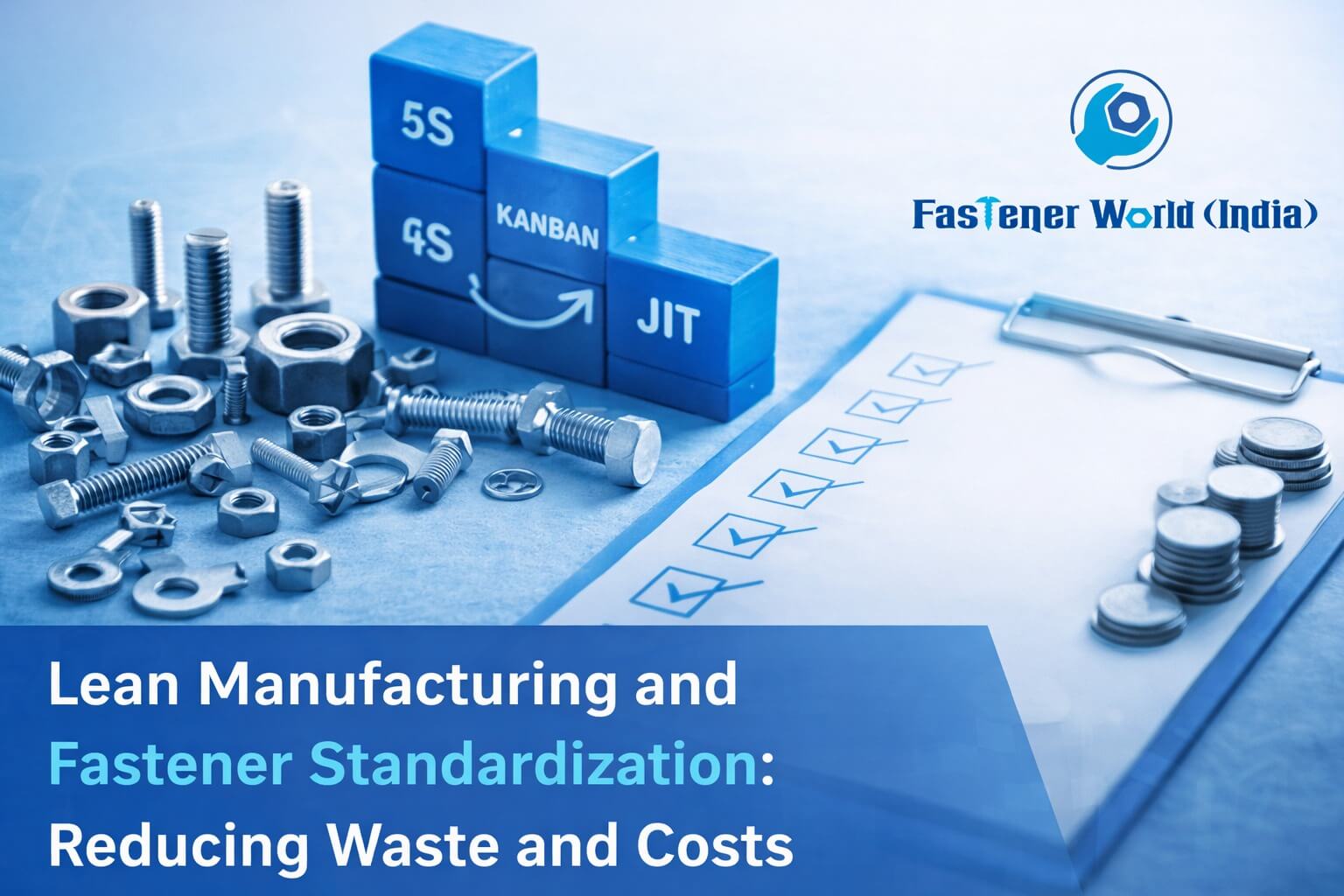

Fasteners are little, yet they are very important for putting things together, keeping structures strong, and making things run smoothly. Fastener standardisation is the process of choosing a small number of standardised parts that suit most design and functional needs in order to cut down on the number of different fasteners used in manufacturing. Businesses may save a lot of money, make their operations run more smoothly, and raise the overall quality of their products by using this method in lean manufacturing systems. This blog talks about how lean manufacturing and standardising fasteners work together to get rid of waste, make the best use of resources, and make the production environment more efficient.
Table of Contents
Getting to Know the Basics of Lean Manufacturing
The objective of lean manufacturing is to provide the client the most value while utilising the least amount of resources. It is all about finding and getting rid of garbage in all its forms. Value identification, value stream mapping, continuous flow, pull systems, and continuous improvement are some of the main ideas behind lean manufacturing.
There are several sorts of waste in lean manufacturing, including overproduction, waiting, transportation, too much inventory, wasteful movement, over-processing, and flaws. Standardising fasteners fits these criteria excellently since it makes procedures easier and lessens the differences in manufacturing.
How Fasteners Can Make Manufacturing More Efficient
Fasteners are important pieces that hold or connect portions of many different things. They have screws, bolts, nuts, rivets, and washers in them. Fasteners may be little, but they may have a big effect on how well a factory works, how reliable a product is, and how easy it is to maintain. In various places where things are made, a lot of different kinds of fasteners are employed to fit diverse designs and requirements. Choosing a small number of fasteners that can be utilised in a lot of different goods and situations is what fastener standardisation is all about.
To make sure that standardised fasteners satisfy all the relevant parameters, this method needs a close look at design requirements, material compatibility, and performance criteria. Standardisation does not entail sacrificing quality or usefulness. Instead, it focuses on figuring out what the common demands are and picking fasteners that can meet those needs well. This method makes buying things easier, lowers the amount of stock on hand, and makes assembly procedures more consistent. This makes it simpler to standardise throughout the whole enterprise.
Advantages Of Standardising Fasteners In Lean Manufacturing
Standardising fasteners has several advantages that directly help lean manufacturing goals. One of the best things about it is that it makes inventory less complicated. Companies may save money on inventory management and storage by employing fewer kinds of fasteners. Another big advantage is that production becomes more efficient. Standardising fasteners is an important part of reaching this goal since it cuts down on different kinds of waste. Using fewer kinds of fasteners cuts down on inventory waste a lot. Better inventory management is possible when there is less excess stock, outdated products, and storage problems.
There is also less movement and processing of rubbish. Using standard fasteners as part of a lean manufacturing strategy may save a lot of money. Buying in bulk and making it easier to work with suppliers lowers the cost of procurement. Managing fewer vendors and part numbers makes the procurement process easier and cuts down on administrative costs. Costs of production go down as well because of better efficiency and less downtime. Standardising fasteners makes the supply chain work better. Companies may make their supply chains easier to manage and work better with suppliers by using fewer types of fasteners.
Improving Designs And Making New Products
Standardising fasteners has an effect on how products are designed and made. Engineers and designers may make items that are easier to make and cheaper to make by using standardised parts. Using standardised fasteners makes design for manufacturability (DFM) better. Putting products together is simpler, which cuts down on time and money spent on manufacturing. This also makes it simpler to fix and maintain things since standardised parts are easy to find.
Standardisation makes modular design more likely, which means that parts may be utilised in many distinct products. This cuts down on the time and money needed to create a product, which lets corporations get it to market faster.
Problems In Making Fastener Standardisation Work
Fastener standardisation has several advantages, however putting this plan into action may be hard. One of the biggest problems is that people don’t want to adapt. Engineers and designers may be used to certain types of fasteners and may not want to switch to standardised ones.Another problem is making sure that standardised fasteners fulfil all safety and performance standards. To make sure that the chosen fasteners can take different uses without lowering quality, they need to be carefully looked at and tested. Companies should start by carefully looking at how they now use fasteners if they want to properly standardise them.
Following industry standards and working closely with trustworthy suppliers may also help make implementation go smoothly. To make sure that standardisation initiatives work, they need to be watched and improved all the time. Training and talking to each other are very important for success. Employees should learn about the advantages of standardisation and how to use new procedures to make sure they go well.
Summary
As industries change, the use of new technology is changing the future of lean manufacturing and the standardisation of fasteners. Lean manufacturing and standardising fasteners are two great ways to save costs and waste while also making things more efficient and better quality. Companies may save a lot of money, improve supply chain efficiency, and make operations run more smoothly by making it easier to use fasteners.
Even if putting the plan into action may take a lot of work and money up front, the long-term rewards greatly exceed the problems. Companies who use these methods will be more competitive and able to stay in business in today’s fast-changing market.
We have a lot of rivet nuts at Fastener World (India) that come in numerous body types, collar sizes, and combinations to fit your installation and performance demands.