
Key Takeaways
- Modern gaming PCs deliver immersive, dynamic, interactive entertainment experiences.
- Advancements in hardware and software enable realistic visuals and complex simulations.
- Integration with emerging technologies like AI and VR expands the boundaries of gaming.
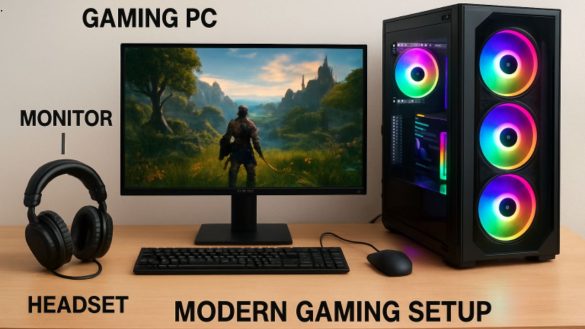
Interactive entertainment has transformed over the last decade, with modern gaming PCs leading the charge. Their unmatched processing power and versatility lay the foundation for complex, visually stunning worlds and experiences. This explosion of capability is enabling developers to unlock new levels of realism, challenge, and engagement for players everywhere. If you are searching for the next leap in visual fidelity and gameplay, a closer look at gaming rigs for PC players reveals just how influential these machines have become across the digital entertainment landscape.
Today’s top gaming PCs do more than run the latest titles. They power innovations that are reshaping storytelling, interaction, and audience expectations. From hyper-realistic environments to lightning-fast processing that supports esports’ split-second demands, high-spec machines are integral to the industry’s evolution.
This revolution isn’t limited to experienced gamers. Affordable gaming options are making high-performance PCs accessible to more players, inspiring creativity and engagement across the community. Check out gaming on a budget to find some of the best options.
Gaming PCs are opening up new possibilities for content creation and immersive experiences. From indie developers to professional studios, these machines support innovation like never before. Explore the ultimate gaming PC bundle for setups that maximize performance and creativity.
Table of Contents
Advancements in Hardware: The Backbone of Modern Gaming
The power behind modern gaming PCs comes from continuous advancements in hardware, particularly in graphics processing units (GPUs) and central processing units (CPUs). Modern GPUs render life-like textures, realistic lighting, and high frame rates that make virtual environments nearly indistinguishable from the real world. New architectures and memory technologies allow for more complex visual effects, seamless multitasking, and ever-expanding open worlds. This hardware leap lets developers introduce realistic weather, intelligent enemy behavior, and vast online spaces with minimal lag and maximum immersion.
Software Innovations: Elevating Gameplay
Cutting-edge software is equally vital in driving innovation. Developers are incorporating artificial intelligence into games that can adapt dynamically to each player’s style, providing opponents that feel less predictable and more human. From smarter non-playable characters (NPCs) that learn from your tactics to adaptive difficulty systems, software is keeping players more engaged and challenged. Additionally, game engines like Unreal Engine 5 and Unity are empowering creators to build photorealistic visuals and lifelike animations that push the boundaries of what games can offer.
Integration with Virtual and Augmented Reality
One of the most exciting advancements in gaming PCs is their seamless integration with virtual reality (VR) and augmented reality (AR) platforms. With the ability to power immersive 3D worlds, gaming PCs offer players an experience that fully engages their senses. Modern headsets offer ultra-high resolutions, a wider field of view, and enhanced motion tracking, making VR more accessible for longer, more comfortable play sessions. This not only strengthens gaming but fosters new forms of digital storytelling and interactive media.
Cloud Gaming: Accessibility and Convenience
The cloud gaming movement has been catalyzed by robust gaming PCs that power remote servers worldwide. With advances in internet speeds and the broad rollout of 5G, streaming top-tier titles has become a reality for many. Players with modest devices can now experience AAA gaming without investing in the most expensive hardware. This level of accessibility not only democratizes gaming but also allows instant play across devices, driving broader participation in interactive entertainment.
Artificial Intelligence: Personalizing the Experience
Artificial intelligence is rapidly reshaping how games are developed and played. AI can analyze individual player data to customize content, adjust difficulty, and even generate personalized story paths. This level of personalization creates unique experiences that adapt in real time, ensuring games remain fresh and tailored to each user. Dynamic AI-driven environments and intelligent NPCs also add unpredictability, making every playthrough feel new and exciting.
Esports and Competitive Gaming
Professional gaming, or esports, thrives on hardware precision and reliability. Modern gaming PCs can deliver ultra-high frame rates, minimal input lag, and consistent performance under intense conditions. These attributes are crucial in tournaments, where tiny delays can decide victory or defeat. The growth of esports has accelerated innovation in hardware and peripherals, ensuring a fair and exhilarating experience for players and viewers worldwide.
Future Trends: What’s Next?
Emerging trends indicate gaming PCs will continue pushing boundaries with innovations like neural and brain-computer interfaces (BCI), allowing players to interact through thought, emotion, or attention. Companies such as Neuralink and OpenBCI are offering products with features like direct menu navigation and adaptive gameplay, potentially transforming accessibility and immersion. Modern gaming PCs are central to transforming interactive entertainment with powerful hardware, smarter software, and emerging tech support, enabling richer, more personal experiences. They also foster online gaming communities through advanced communication and modding tools, promoting collaboration, competition, and content creation. This evolution turns interactive entertainment into a participatory ecosystem driven by flexible PC hardware.
Conclusion
In conclusion, modern gaming PCs are driving the evolution of interactive entertainment, combining cutting-edge hardware, innovative software, and emerging technologies to deliver unparalleled experiences. From realistic graphics and intelligent AI to immersive VR/AR environments and cloud gaming accessibility, these systems elevate gameplay in ways previously unimaginable. By supporting esports, fostering creative communities, and enabling personalized experiences, gaming PCs have become more than machines—they are platforms for connection, competition, and storytelling. As hardware and software continue to advance, the future promises even greater immersion, interactivity, and inclusivity, ensuring that gaming remains a dynamic and transformative form of entertainment for years to come.

