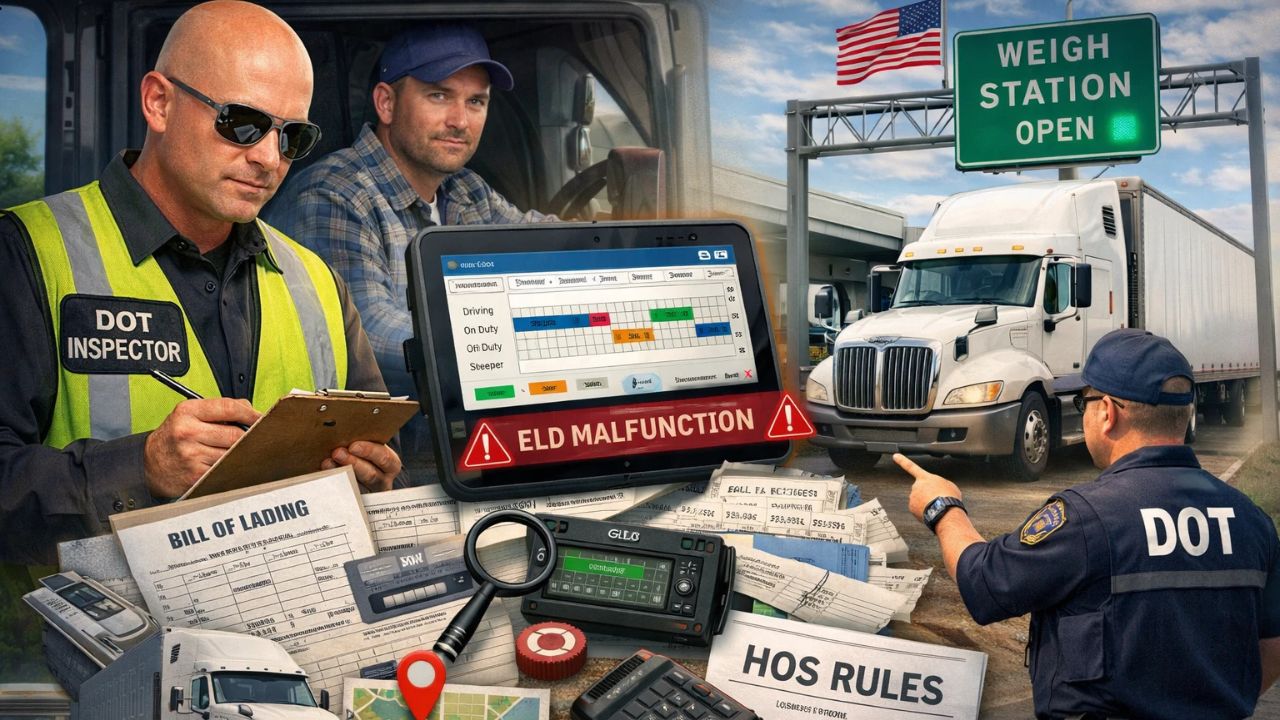

Electronic Logging Devices have completely revolutionized the life of a truck driver. A great deal of drivers are using them every day but they have some issues for ELD conformations still cause problems during a roadside inspection or unannounced DOT check. Quite a number of drivers have been living under the assumption that compliance is automatic as far as the ELD is installed and functioning properly. Most logbook violations occur due to the drivers’ reliance on myths, half-truths, or the actions that they learned during the paper logbook era instead of the drivers who want to break the rules.
This article lists the most ELD myths, details how roadside inspections genuinely happen, and highlights the mistakes that are most likely to make inspections take longer, result in violations, and lower a driver’s safety score in the long term. The objective is not to scare but to elucidate the way compliance functions in practice – thus it becomes predictable rather than stressful.
Table of Contents
Reasoning Behind the Unusual Behavior of Even the Most Experienced Drivers
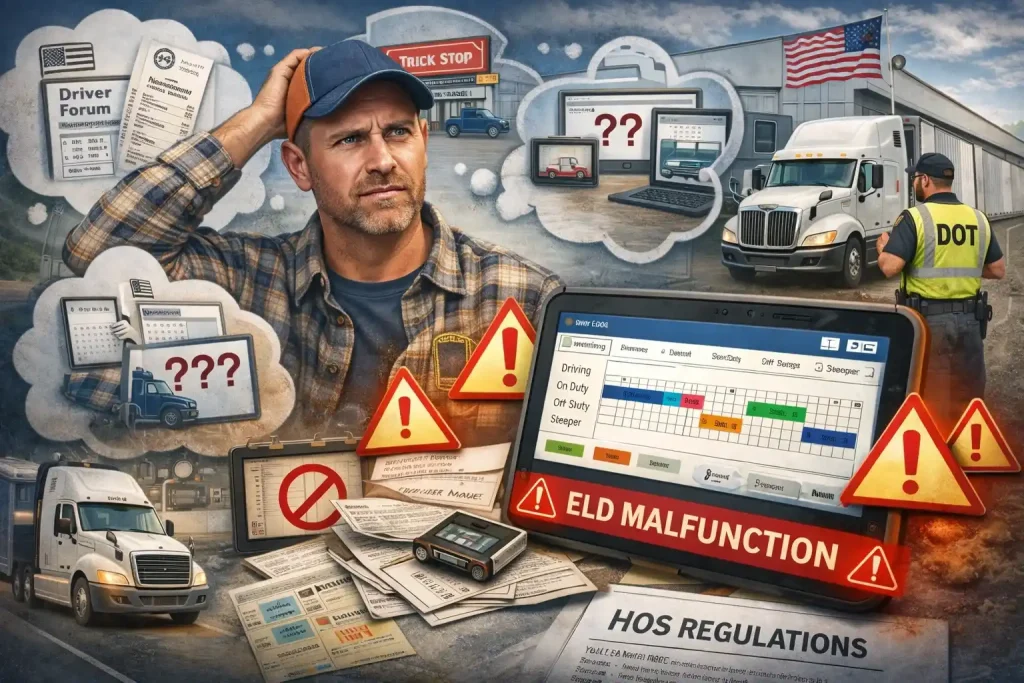
ELD compliance is not all about tracking drive time. It is also related to HOS rules, duty status selection, supporting documents, vehicle movement categories, and enforcement expectations tied to various inspection levels. It is a possibility that a driver can keep hours within the limits but to be still subjected to a roadside inspection since there is a misrepresentation of the status that was used, lacking of the appropriate paperwork, or a malfunction that was handled inappropriately.
The driver_mag ongoing precarious situations due to the misinformation that they get, as shared at truck stops, or online forums. Some rules may have been applicable in the past, applied specifically to certain types of carriers, or just have been misunderstood. However, the enforcement is typically dependent upon the written federal regulations and not on the bilateral advice provided by the public.
ELD Myths That Are Somewhat Related to Real Violations
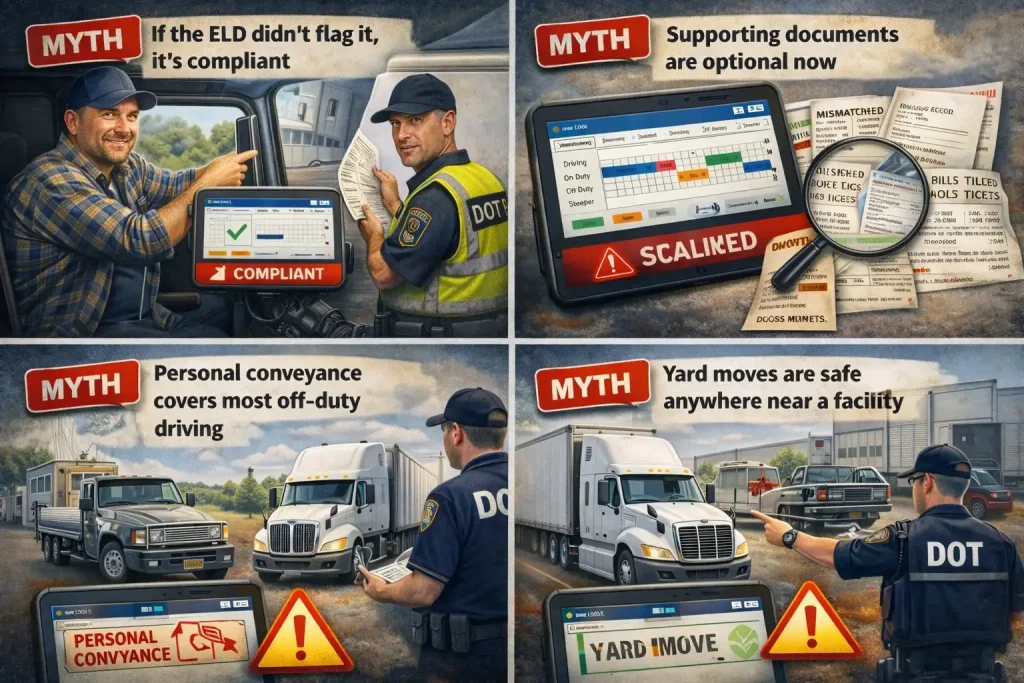
Myth 1: “If the ELD didn’t flag it, it’s compliant”
One of the myths that can be very harmful is the one that makes you think that the ELD alone is the one that makes you compliant. The ELD just records information but that does not mean that it is not breaking the law or that it is not meant to. If a driver misuses personal conveyance or yard moves, the device still logs the activity. The driver always carries the obligation of accurately selecting the status.
While in a roadside inspection or a check by DOT, inspectors do not see “the ELD allowed it” as a reasonable defense.
Myth 2: “Supporting documents are optional now”
Although ELDs call for reducing paper logs significantly, they do not erase the need for supporting documents. Fuel receipts, bills of lading, shipping records, and scale tickets are still the crucial ones in this regard. It was found in the inspections that the wrong matching ELD logs with these documents were one of the most responsible causes of logbook violations.
Audit readiness is determined by how the logs and documentation align, instead of just clean-looking electronic records.
Myth 3: “Personal conveyance covers most off-duty driving”
Personal conveyance remains one of the most misleading HOS tools. It is specifically not designed to reposition loads, advance towards the next pickup, or comply with dispatch demotivating. Various inspectors usually point out that the most common reason for the personal conveyance misuse is the driver movements that the inspector considers as benefitting the carrier or positioning the truck for further work.
Myth 4: “Yard moves are safe anywhere near a facility”
Yard moves have permission only in specified off-road areas to where the vehicle is not traveling on public roads. Using yard move status in access roads, industrial parks, or mixed-use areas is an often violation situation. Inspectors are generally well-informed on the case by GPS data during the investigations.
The Actual Situation during Roadside Inspections
A roadside inspection is a systematic process that is influenced by the federal government and regulated levels of inspection are very clear. When drivers understand what the inspectors are concerned about, the drivers manage to become calm and ready instead of defensive.
Inspection Levels Explained
- Level I: It covers all areas, the driver, the vehicle condition, logs, supporting documents, and compliance with HOS.
- Level II: It is a walk-around inspection, mainly concerned with specific documents.
- Level III: It is a driver-only inspection based on ELD compliance, logbooks, and HOS rules.
- Level IV–VI: They are specialized inspections, usually for cargo or carriers.
Most ELD-related violations are found in Level I and Level III inspections, when the logs and documents are closely evaluated.
Inspection Levels and Compliance Focus
| Inspection Level | Primary Focus | Common ELD & Compliance Issues |
| Level I | Full driver and vehicle inspection, including logs and documents | Logbook violations, missing supporting documents, HOS rule errors |
| Level II | Walk-around inspection with limited document review | Uncertified logs, incomplete or inconsistent records |
| Level III | Driver-only inspection focused on ELD compliance | Incorrect duty status use, personal conveyance misuse, yard move errors |
| Level IV–VI | Specialized or targeted inspections | Repeated compliance patterns, cargo- or carrier-specific issues |
DOT Checks: The Real Inspectors
During a DOT check, the inspectors would see:
- Current and previous days’ logs.
- ELD malfunction records, and malfunction procedure compliance.
- Right choice of duty status usage.
- Supporting documents for mileage and location verification.
- Evidence of edits and annotations.
- Compliance with HOS rules.
These inspection elements are defined by federal guidance from the FMCSA on Electronic Logging Devices, which explains how inspectors review ELD records, HOS compliance, supporting documents, and malfunction procedures during roadside DOT checks. Even minor discrepancies — like edits that are not explained or location mismatches — can tempt the inspectors to extend or make a violation of the inspections.
What Is an ELD? Truckers MUST Know This to Stay Legal in 2025!
Where the Drivers Make Mistakes And Pay Costs With ELD Malfunctions
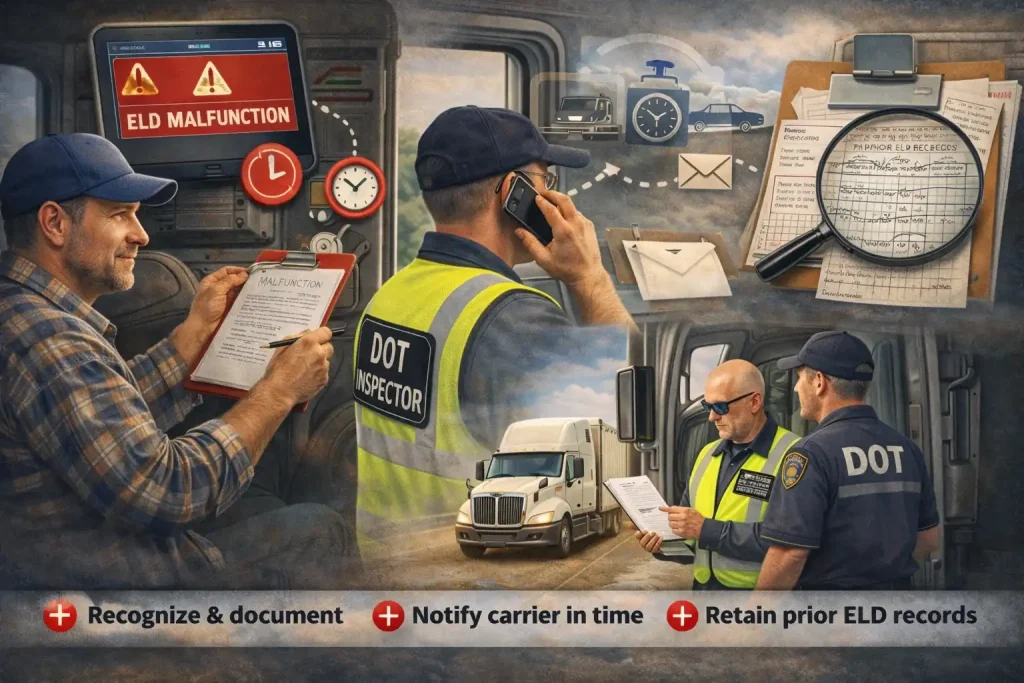
An ELD malfunction cannot simply be a violation on its own; the improper response to it or the incorrect procedure will be the violation.
A correct malfunction procedure includes:
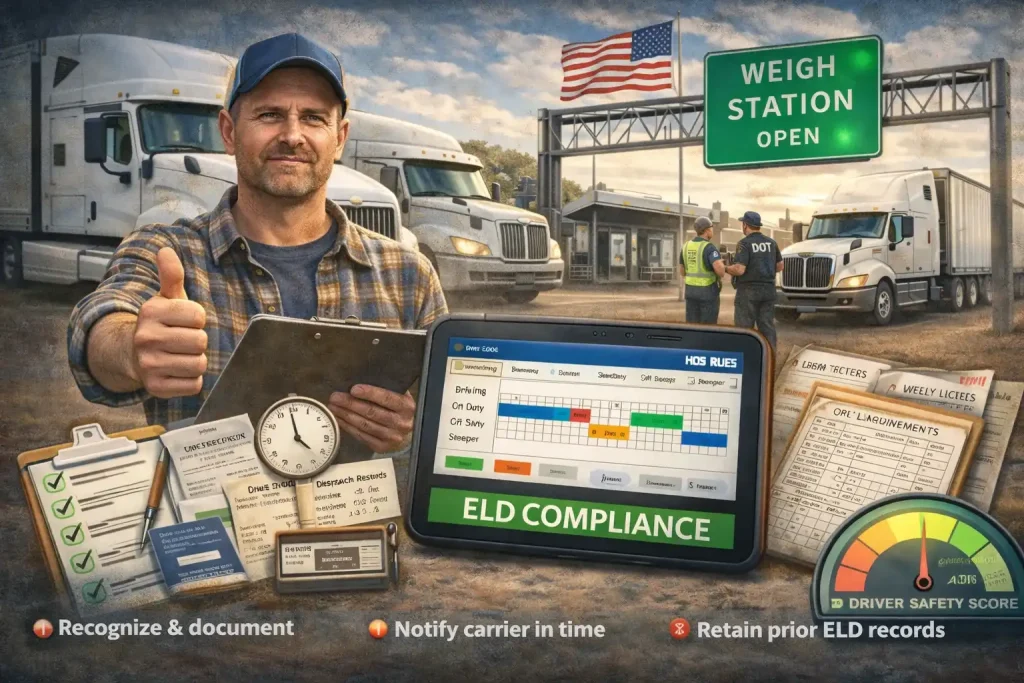
- Recognizing and documenting the malfunction promptly.
- Notifying the carrier within the required timeframe and wrong when reverting to paper logs.
- Retaining prior ELD records when available.
Drivers typically do not see the reason for the not conforming journey entries and sometimes it is because the driver does not explain when the malfunction actually started. Inspectors are specially qualified to tell the difference between equipment failure and procedural error.
Supporting Documents: The Hidden Deal-Breaker
The documents that support frequently bring to the light compliance issues that logs alone can not. Some of the common issues with supporting documents are:
- Fuel receipts showing locations inconsistent with ELD data.
- Bills of lading indicating movement during off-duty time.
- Scale tickets contradicting yard move usage.
Infrequently the inspectors will check all the documents when it comes to data audit readiness.
Personal Conveyance and Yard Moves: Those Are the High-Risk Zones
The misclassification of the vehicle movement is one of the fastest ways to harm a driver’s score. The inspectors check not only the chosen duty status but also the movement reason.
If the movement is legally benefitting the carrier, advances it, or places the vehicle to work, it probably is not personal conveyance even if the distance is small.
Weigh Stations and Compliance Exposure
Weigh stations are not typically seen as check compliance points. Besides weight and permits, ELD records become carefully studied, especially for those who show recurring compliance issues.
The repetitive minor errors — like mismatched logs or no explanations about edits—can grow the inspection frequency during the time.
Common Compliance Mistakes That Are Accumulate
Like the individual breaches that often go unnoticed, they are patterns that auditors notice, and it is based on them that they question safety scores.
Usually, common mistakes include:
- edit the logs without proper annotations
- forget to certify daily logs
- habitually misuse duty statuses
- failing to carry malfunction instructions
- ignore the time zone discrepancies
Compliance is like additives, where inspectors look for patters, not errata.
Audit Readiness Starts in the Cab
Compliance management is not only the responsibility of the safety department; it reflects broader operational systems, similar to how facilities management supports structure, oversight, and long-term efficiency within an organization. Drivers are directly responsible for:
- Maintaining a clean, neat and consistent log of their records.
- Retaining supporting documents.
- Understanding the most important ELD compliance requirements.
- Knowing what to expect during inspections.
Drivers using compliance daily as a habit and not as a answering mode to an inspection, have less problems with delays and long-term risks. Drivers who want to stay ahead of compliance expectations often rely not only on internal policies but also on up-to-date trucking news & guides that explain how enforcement trends and inspection practices evolve.
Compliance Checklist as a Useable Tool
The compliance checklist is not a replacement for training, it is a training aid reducing cognitive load. Providing the drivers with a simple reference that covers the malfunction procedures, personal conveyance rules, yard move limitations, required documents, and inspection-level expectations increases the drivers’ confidence while responding to a roadside inspection.
The Last Verse Is Concerning
In reality, ELDS did not make compliance difficult; instead, they have exposed violations. The majority of roadside problems are caused by a lack of understanding or misconceptions about HOS rules, supporting documents, and inspection protocols and not by intentional violations at all.
What is more, becoming aware of ELD compliance, knowing what inspectors review during a DOT check, and avoiding common compliance mistakes, help to protect not only a logbook but also your time, your reputation, and the long-term driver safety score. In the press view, loading the truck with compliance is not just a task. It has become a key and controlling professional skill.
FAQ
Do ELDs automatically ensure full compliance with HOS rules?
No. Although ELDs are responsible for recording activities, compliance is subject to the correct obligation status selection, the accurate use of personal conveyance and yard moves, and the right handling of supporting documents.
What usually starts logbook violations from a roadside inspection?
The mismatches between ELD logs and supporting documents, improper status use, missing annotations, or incorrect handling of an ELD malfunction procedure are the major causes of violations.
Are supporting documents still needed if the company uses electronic logs?
Certainly. Fuel receipts, bills of lading, scale tickets, and dispatch records are still the fundamental things for audit preparedness and roadside verification.
Can minor ELD mistakes affect a driver safety score?
Yes. Frequent insignificant errors can add up over time, result in a higher inspection rate at weigh stations, and ultimately harm a driver’s safety rating.
How can drivers minimize compliance risk?
Having a consistent daily log review, proper documentation, and using a simple checklist for compliance will help in a significant way to minimize inspection-related issues.