

Table of Contents
Introduction
Growing a real estate portfolio, whether it includes furnished urban rentals or unique custom log homes, offers exciting opportunities for building wealth. However, true success in scaling these investments demands more than just acquiring properties; it requires smart, effective property management. We believe that protecting your assets, maximizing their financial performance, and ensuring their long-term health are crucial for any real estate investor.
This comprehensive guide will explore the essential world of real estate and property management. We will cover core services, from tenant screening to financial reporting, and delve into the cutting-edge technology that is transforming the industry. We will also discuss vital legal compliance and risk management practices.
You will discover strategies to maximize rental income, minimize vacancies, and strategically diversify your holdings across different property types. We will also examine how specialized professional services, like Real estate ISA calling, can significantly boost efficiency and help you expand your business without added stress. Join us as we unlock the keys to transforming your property portfolio into a thriving, well-managed asset.
The Fundamentals of Real Estate and Property Management
Property management goes beyond rent collection; it ensures your investment performs at its best over time. Working with rental managers can make this process more structured and efficient. For real estate investors, professional property management is not merely a convenience but an essential strategy for asset preservation and wealth creation. It frees owners from the day-to-day operational burdens, allowing them to focus on portfolio growth and strategic decisions.
Consider the sheer scale and complexity involved: leading firms manage billions in rental property assets, demonstrating the profound impact of expert oversight. For instance, Real Property Management oversees more than $16 billion in rental property assets across its vast network. This level of management is critical for optimizing return on investment (ROI), ensuring properties remain competitive, and adapting to dynamic market conditions. Local expertise plays a pivotal role here, as understanding specific market trends in areas like Phoenix, Scottsdale, or the Bay Area can significantly influence property performance and tenant satisfaction.
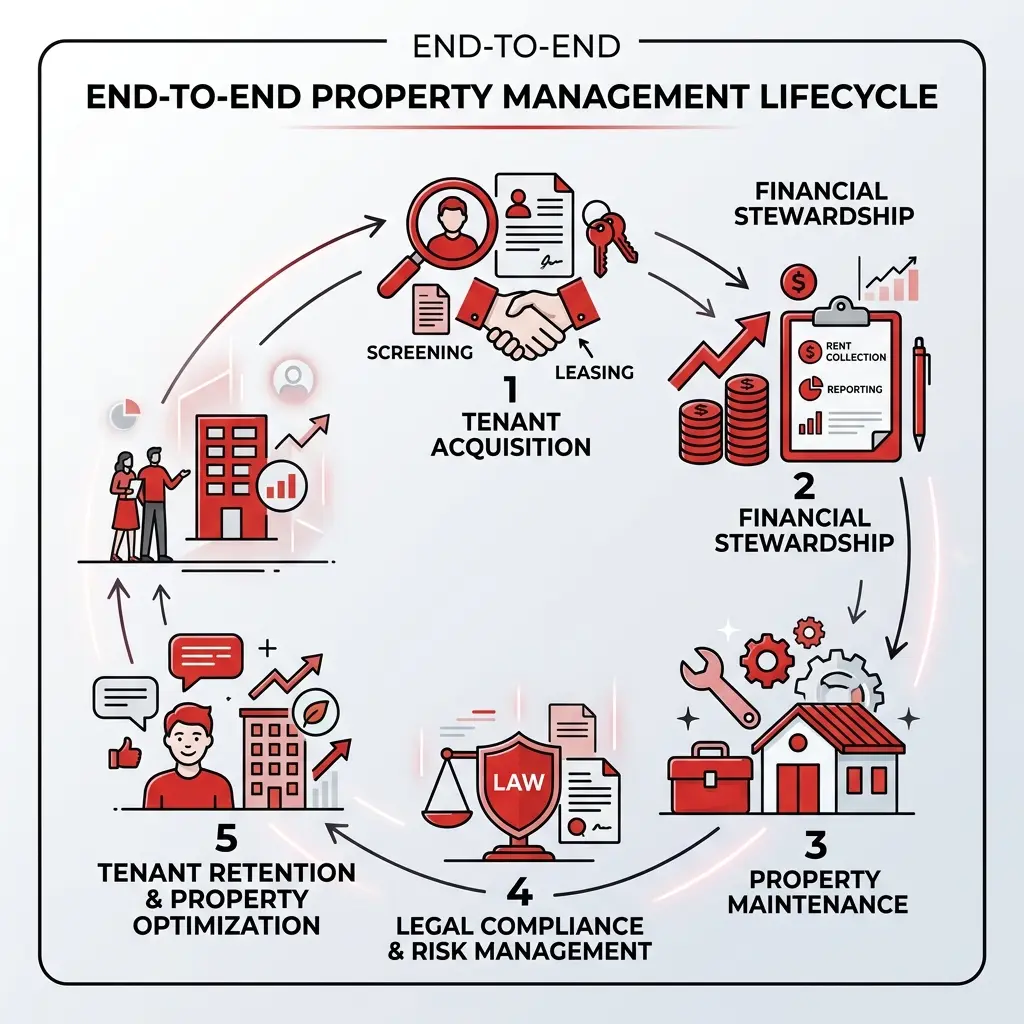
At its core, property management encompasses a wide array of objectives designed to protect and enhance your investment. These include:
- Tenant Acquisition and Retention: Attracting and keeping high-quality tenants.
- Financial Stewardship: Managing budgets, collecting rent, and providing transparent financial reports.
- Property Maintenance: Ensuring the physical integrity and appeal of the property.
- Legal Compliance: Navigating complex housing laws and regulations.
- Risk Management: Protecting against potential liabilities and unexpected events.
These objectives collectively form the end-to-end property management lifecycle, a continuous process designed to deliver peace of mind and maximize owner profitability.
Innovations in Real Estate and Property Management Technology
The property management landscape is undergoing a rapid transformation, driven by innovative technology and smart tools. What was once a labor-intensive field is now embracing digital solutions that enhance efficiency, improve decision-making, and elevate the owner and tenant experience.
One of the most significant advancements is the rise of AI-native platforms. These aren’t just software with AI bolted on; they are built from the ground up to leverage artificial intelligence, offering predictive analytics and automated workflows. Companies like AppFolio are at the forefront, with clients like Chamberlin & Associates scaling from 400 units to nearly 14,000 units since 2016 by adopting such technology. Similarly, Advanced Management Company manages over 12,000 units with AppFolio’s AI-native platform, showcasing its capacity for large-scale operations.
These platforms provide owners with sophisticated owner portals, offering real-time access to financial data, maintenance requests, and leasing updates. Virtual tours have become standard, allowing prospective tenants to explore properties remotely, significantly reducing vacancy periods. Automated workflows streamline everything from lease agreements to rent collection, minimizing human error and freeing up staff for more strategic tasks. Real-time reporting capabilities mean investors can monitor their portfolio’s performance with unprecedented clarity, making informed decisions based on accurate, up-to-the-minute data. This shift from mere efficiency to “Real Estate Performance Management” ensures that technology drives value and outcomes, not just faster task execution.
Navigating Legal Compliance in Real Estate and Property Management
The legal landscape surrounding real estate and property management is intricate and constantly evolving. Navigating this complexity is a critical function of professional property management, aimed at minimizing risks and ensuring all operations adhere to local, state, and federal regulations. Without proper attention, legal missteps can lead to significant financial penalties, costly litigation, and reputational damage.
Effective risk management begins with a deep understanding of relevant laws, such as the Fair Housing Act, which prohibits discrimination in housing. Property managers must also be well-versed in specific state and local rental laws. For example, understanding Arizona rental laws regarding security deposit returns or eviction processes is crucial for landlords in Phoenix. Firms like Real Property Management Phoenix Valley emphasize strict compliance with these regulations to avoid disputes and legal issues.
Key areas of legal compliance include:
- Deposit Return Protocols: Adhering to strict timelines and conditions for returning security deposits.
- Lease Agreement Compliance: Ensuring all lease terms are legally sound and enforceable.
- Eviction Procedures: Following precise legal steps to handle tenant evictions, often including specific notice periods and court processes. Some companies, like PMI Real Estate Services, even offer eviction protection, covering costs up to $2,000, providing an invaluable safety net for owners.
- Property Maintenance Standards: Meeting health and safety codes to avoid tenant complaints and potential lawsuits.
- Insurance Regulations: Ensuring adequate property and liability insurance coverage.
Professional property managers stay abreast of these regulations, implementing best practices that safeguard owners’ investments and maintain ethical operations. This proactive approach to legal compliance is a cornerstone of hassle-free property ownership.
Strategic Operations: From Tenant Placement to Financial Reporting
The day-to-day operations of property management are the backbone of a successful real estate investment. These strategic operations encompass everything from finding the right tenant to meticulously tracking every dollar, ensuring a smooth and profitable experience for the property owner.
Tenant placement is a critical first step. Professional property managers employ rigorous tenant screening processes that go far beyond a simple application. This includes comprehensive credit checks to assess financial responsibility, detailed background verifications to ensure reliability, and rental history checks to understand past tenant behavior. The goal is to place high-quality tenants who will care for the property and pay rent consistently, minimizing potential issues down the line. Once a tenant is secured, professional marketing, often featuring high-quality photography and virtual tours, ensures properties are leased quickly, reducing costly vacancies.
Once tenants are in place, the operational focus shifts to ongoing management. Efficient rent collection systems are paramount, with many firms offering online payment options for tenant convenience and streamlined processing for owners. Maintenance requests are handled promptly and professionally, often with 24/7 support for emergencies, ensuring tenant satisfaction and preserving property value. This includes coordinating repairs with trusted vendors and overseeing the quality of work.
Beyond these tangible services, property managers also provide essential financial reporting. This typically includes detailed monthly statements that break down income and expenses, offering complete transparency. For tax purposes, many firms also handle 1099 preparation, simplifying year-end accounting for property owners. This full-service approach ensures that owners receive not just income, but also clear, actionable financial insights without the administrative burden.
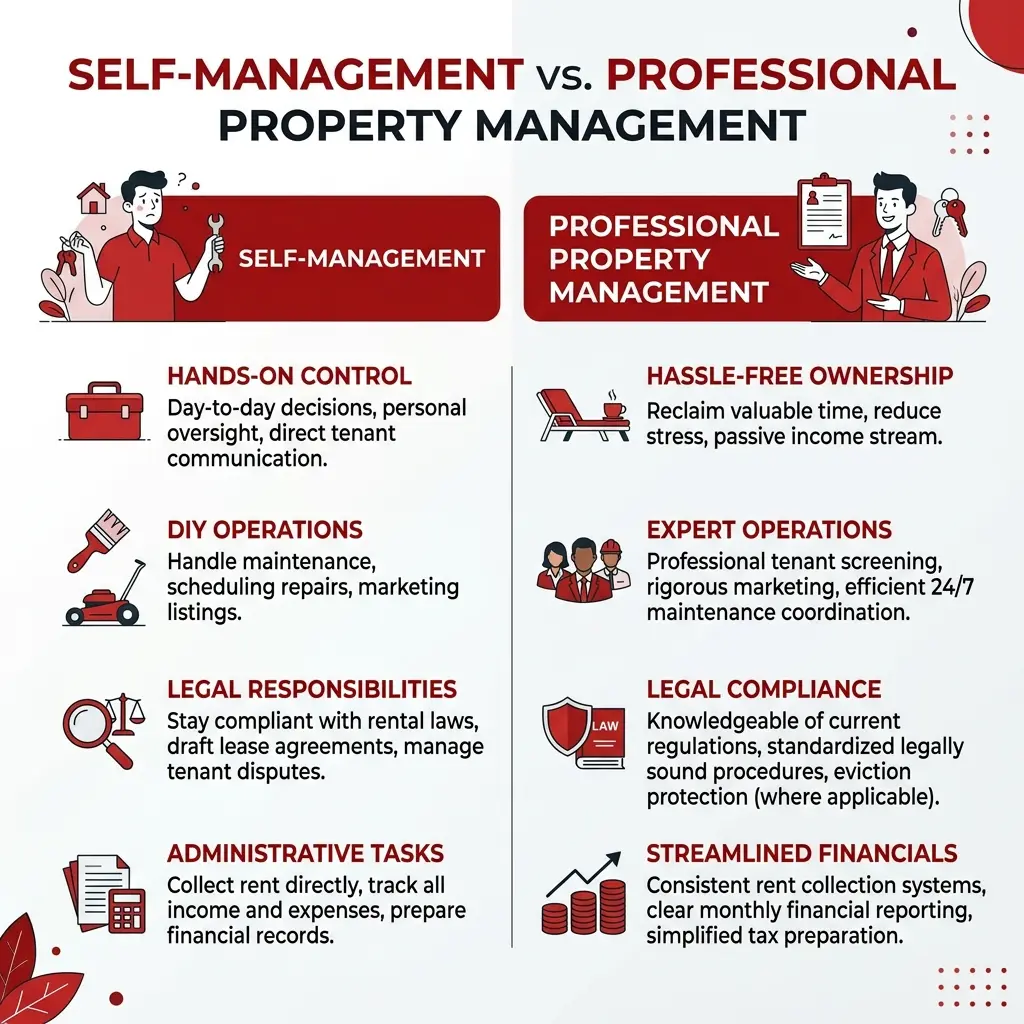
The contrast between self-management and professional property management highlights the value of these strategic operations:
Diversifying Portfolios: Residential, Commercial, and Niche Markets
A robust real estate portfolio often benefits from diversification, encompassing various property types to spread risk and tap into different market opportunities. Property management companies frequently specialize in or offer services across a broad spectrum of real estate, catering to diverse investor needs.
Residential properties, including single-family homes and multifamily operations, form the core of many portfolios. Multifamily properties, from small apartment buildings to large complexes, require specialized management focusing on community building, lease renewals, and common area maintenance. Beyond the traditional residential market, there are specific regional opportunities, such as the growing demand for Detroit real estate rentals, which can offer unique investment potential for those looking to expand their geographical footprint.
Commercial properties, such as office spaces, retail storefronts, and industrial units, demand a different skill set, often involving commercial leasing negotiations, tenant build-outs, and business-to-business relationships. Property Management Inc. (PMI) highlights its expertise in managing residential, commercial, association, and short-term rental properties, showcasing the breadth of services available.
Niche markets also present compelling opportunities. Short-term rentals, often associated with hospitality management, require dynamic pricing strategies, guest services, and quick turnovers. Student housing has its own cycle, often linked to academic calendars and specific amenities that appeal to a younger demographic. Senior living communities focus on accessibility, healthcare integration, and specialized services for older residents.
For investors seeking truly unique assets, there’s rustic luxury real estate, such as custom log homes. These properties often require specialized maintenance knowledge, unique marketing strategies, and an appreciation for their distinct appeal and value. A property management firm with experience in such niche markets can be invaluable in preserving the integrity and maximizing the rental or resale value of these distinctive investments.
Scaling Efficiency through Technology and Professional Education
Scaling a real estate portfolio efficiently requires more than just acquiring more properties; it demands optimized processes, smart delegation, and a highly skilled workforce. Technology and professional education are two powerful levers for achieving this scale without overwhelming the investor.
One of the most effective ways to boost efficiency is through the strategic use of virtual assistants (VAs). These trained professionals can handle a multitude of administrative, marketing, and support tasks, freeing up property managers and investors to focus on higher-value activities. Companies like REVA Global specialize in providing property management VAs who undergo intensive 4-week training programs before placement, ensuring they are ready to contribute immediately. Tasks such as tenant screening support, maintenance coordination, bookkeeping, and even lead generation can be delegated. For instance, a VA can be instrumental in Real estate ISA calling, managing outbound calls to prospective leads, qualifying them, and setting appointments, expanding reach without increasing in-house overhead.
Beyond outsourcing, the industry is increasingly recognizing the importance of specialized education. Programs like Virginia Tech’s Property Management major prepare students with the skills needed to manage multimillion-dollar real estate investments. The success of such programs is evident in their high employment rates, with 95% of Property Management major students at Virginia Tech finding employment within three months of graduation. This influx of formally trained professionals elevates industry standards and brings fresh perspectives and advanced skills to property management firms.
For existing professionals, continuous learning and professional coaching are vital. Firms like Buffini & Company offer coaching services that help real estate professionals implement referral systems and relationship-driven strategies, leading to significant income growth. Their coached members, for example, reportedly earn 10 times the national average income, demonstrating the transformative power of structured guidance and proven systems. This combination of leveraging technology for task automation and investing in professional development creates a powerful synergy for scaling operations and achieving sustainable growth.
Risk Mitigation and Performance Guarantees
One of the most compelling reasons for property owners to partner with professional management firms is the robust suite of risk mitigation strategies and performance guarantees they offer. These assurances provide peace of mind, protecting investments from common pitfalls and unexpected costs.
Many property management companies stand by their services with explicit guarantees. For instance, some firms offer leasing warranties, which might involve re-leasing a property for free if a tenant doesn’t fulfill a certain portion of their lease term. On-time rent guarantees are another valuable assurance, ensuring that owners receive their rental income within a specified timeframe, often within ten business days, regardless of minor tenant delays. For those concerned about pet-related damage, some companies provide pet damage protection as part of their comprehensive service.
The “Done Right Promise” from companies like Real Property Management Bay Area offers a 60-day satisfaction guarantee, allowing owners to terminate services if they are not satisfied. This commitment underscores a firm’s confidence in its ability to deliver. Eviction cost coverage, such as PMI’s guarantee to cover up to $2,000 in eviction-related expenses, significantly reduces the financial burden and stress associated with tenant removal.
Beyond guarantees, proactive measures are crucial. Regular property inspections, including detailed move-in photos and reports, document property condition, minimizing disputes over damages. Property managers also leverage their networks to offer negotiated vendor discounts and bulk purchasing power for maintenance and repairs, translating into cost savings for owners. These comprehensive approaches to risk mitigation and performance assurance make professional property management an invaluable shield for real estate investors.
Frequently Asked Questions
How do property management companies handle tenant screening and vacancies?
Professional property management companies employ rigorous, multi-faceted tenant screening processes to minimize risks and ensure high-quality placements. This typically involves comprehensive background checks, credit history analysis, employment verification, and past rental history reviews. The goal is to identify reliable tenants who are financially stable and respectful of property. To minimize vacancies, managers utilize aggressive marketing strategies, including professional photography, virtual tours, and syndication across multiple listing platforms. They also implement rapid placement protocols, ensuring properties are shown promptly and applications are processed efficiently to reduce the time a unit sits empty.
What are the core benefits of hiring a professional management firm?
Hiring a professional management firm offers numerous benefits that contribute to hassle-free operations and enhanced profitability. Key advantages include financial transparency through detailed monthly statements and 1099 preparation, ensuring clear oversight of your investment. They provide legal protection by ensuring compliance with complex housing laws and handling eviction processes correctly. Maintenance coordination is streamlined, with access to trusted vendors and often 24/7 emergency support. Furthermore, professional management offers scalability, allowing investors to grow their portfolios without increasing their personal workload, ultimately optimizing passive income and freeing up valuable time.
How does technology transform the owner and tenant experience?
Technology has revolutionized property management, making interactions more efficient and transparent for both owners and tenants. Owners benefit from online portals that provide real-time financial tracking, access to reports, and updates on maintenance requests. Tenants can enjoy the convenience of online rent payments, submitting maintenance requests through dedicated portals, and accessing lease documents digitally. AI-driven communication tools can handle routine inquiries, providing instant support. Virtual property showings and 3D tours enhance the leasing process, while enhanced data security measures protect sensitive information, fostering trust and efficiency across the board.
Conclusion
The journey of scaling a real estate portfolio, from furnished rentals to unique custom log homes, is undeniably complex but profoundly rewarding. As we’ve explored, effective property management is not a luxury but a strategic imperative for long-term wealth creation and asset protection. By embracing professional partnerships, leveraging cutting-edge technology, and understanding the nuances of legal compliance, investors can navigate market challenges with confidence.
The ability to diversify across residential, commercial, and niche markets, combined with operational excellence in tenant placement, maintenance, and financial reporting, positions investors for sustained success. With the integration of virtual assistants and the continuous development of industry expertise through specialized education, the future of property management promises even greater efficiency and scalability. A well-managed portfolio offers not just financial returns, but also the invaluable peace of mind that comes from knowing your investments are in expert hands, ready to adapt and thrive in an ever-evolving real estate landscape.

