

Key Takeaways
- Clean data rooms provide secure, compliant collaboration for sharing sensitive business data.
- Enhanced data quality and deeper analytics are enabled by these solutions.
- Adoption across critical sectors like finance and healthcare is enabling innovative outcomes and operational efficiencies.
Innovation in data management is revolutionizing how businesses approach strategic decisions. With the exponential growth of data, the ability to distill meaningful insights safely has become a top priority for organizations worldwide. A recent advancement gaining traction is the use of trusted data clean rooms, which enable seamless, secure collaboration on sensitive datasets without compromising compliance or privacy. As regulatory landscapes grow more stringent and cyber threats become more sophisticated, these clean rooms offer a game-changing model for protected data sharing that supports business agility.
Companies that embrace this approach can unlock the collective value of disparate data by bringing together teams and external partners in a controlled digital environment. Clean data rooms not only secure sensitive information but also create new opportunities for interactive analytics, innovation, and real-time decision-making. Whether managing mergers, joint ventures, or ecosystem-wide research, the ability to collaborate confidently across organizational boundaries is rapidly becoming a competitive differentiator.
Modern clean data rooms also empower organizations to address compliance requirements more robustly than ever before. By leveraging embedded privacy protocols, businesses can proactively navigate regulations like GDPR, HIPAA, and CCPA while driving measurable outcomes. This evolution sets the stage for a future in which data-driven strategies flourish without compromising consumer trust or intellectual capital.
For leaders seeking to establish a sustainable edge, understanding the mechanisms and advantages of clean data rooms is essential. In the following sections, we explore the fundamentals, industry use cases, marketing benefits, compliance implications, and evolving trends shaping clean data room adoption.
Table of Contents
Understanding Clean Data Rooms
Clean data rooms are technologically advanced environments designed to control and protect the exchange of intelligence among internal and external stakeholders. These environments utilize advanced encryption, granular access controls, and rigorous auditing to ensure sensitive data remains shielded from unauthorized access. The architecture often includes features such as tokenization, de-identification, and role-based permissions, enabling data owners to dictate precisely which information collaborators can view or analyze.
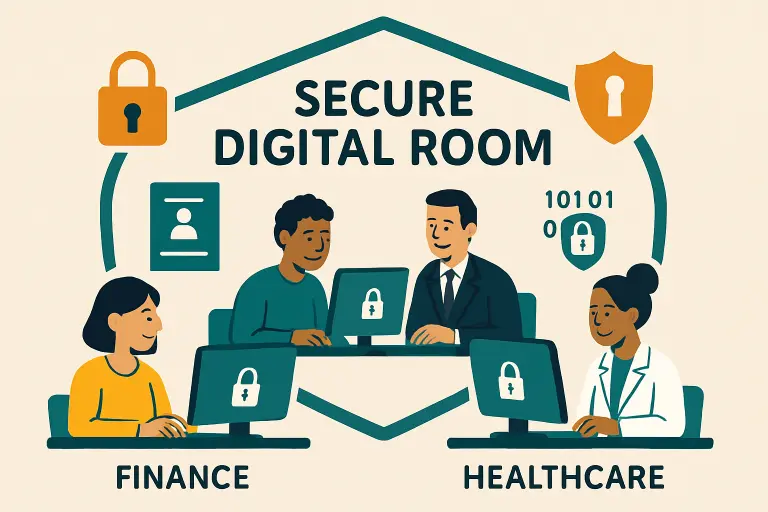
The result is a trusted digital workspace optimized for high-stakes projects. This is crucial in scenarios such as joint ventures or regulatory compliance audits, where parties must collaborate but cannot risk accidental leaks or breaches. As detailed by Forbes, clean data rooms’ sophisticated privacy technologies are now central to many organizations’ data-driven growth strategies.
Enhancing Data Quality and Insights
In traditional data sharing, discrepancies and inconsistencies often introduce risk, limit confidence, or obscure critical insights. Clean data rooms address this challenge by creating a single source of truth for participating parties. Data is ingested, standardized, and validated against defined rules, ensuring only accurate and relevant information supports key decisions. This process substantially improves trust and coherence, which are crucial for effective analytics.
Furthermore, centralized data access enables deeper exploration with business intelligence tools and machine learning models. Leaders can identify hidden patterns, assess trends, and quantify opportunities with a level of granularity not possible in siloed systems. Organizations that invest in clean data room capabilities report faster turnaround on strategic initiatives, improved forecasting, and stronger operational visibility through better time tracking practices. According to Forbes, this technology is helping businesses achieve stronger, data-backed decision-making across the company.
Applications Across Industries
Multiple industries are now reaping tangible benefits from adopting clean data rooms, particularly in logistics and operations powered by big data analytics. In the financial sector, these solutions power secure data sharing between institutions for purposes ranging from anti-money laundering initiatives to cross-institutional product development. By facilitating detailed collaborative analysis without revealing customer identities, banks and investment firms improve compliance and service innovation.
The healthcare field is experiencing similar benefits. Secure data rooms enable research institutions, hospitals, and pharmaceutical companies to exchange clinical data for life-saving research and drug development. One notable example is the collaboration between Datavant and AWS, whose cloud-based clean data platform supports hundreds of organizations in privacy-preserving data discovery and research acceleration. By protecting patient details, these platforms help advance medical breakthroughs while upholding legal and ethical standards.
Driving Marketing Effectiveness
Data clean rooms have proven invaluable to marketing teams seeking to measure and maximize campaign ROI. Traditional methods of sharing consumer data are becoming unreliable and risky due to privacy regulations. With clean rooms, brands, agencies, and retailers can analyze combined datasets securely, gaining insights into customer behavior and attribution without exposing sensitive details.
For example, Kellanova’s use of clean data rooms enabled deep measurement of targeted marketing outcomes, resulting in significant sales lifts across key demographics. Such insights allow companies to tailor offers, optimize spend, and sustain elevated engagement rates with confidence in their legal compliance and data stewardship practices.
Ensuring Privacy and Compliance
Global privacy laws are increasingly robust, with severe consequences for noncompliance. Clean data rooms rise to this challenge by embedding privacy-by-design at every layer of the collaboration process. Organizations retain complete control over how data is accessed, what users can see, and what analyses are permitted. Auditing features support transparent, traceable activity logs, ensuring all partner actions are accountable.
This comprehensive approach dramatically reduces the risk of data mishandling and unauthorized disclosures. It establishes a mutual trust framework between partners and provides regulators with clear documentation should audits arise. As regulations evolve, clean data rooms will continue to adapt and fortify compliance postures for all participating entities.
Future Outlook
The trajectory for clean data room adoption is poised for rapid growth. As organizations recognize the dual imperatives of data collaboration and security, investment in these technologies is set to expand across every sector. The next wave of innovation will likely feature enhanced automation, smarter privacy tools, and integrated IT solutions that strengthen collaboration, agility, and enterprise-wide intelligence.
In summary, clean data rooms represent a fundamental shift in how organizations unlock value from their data assets. From finance and healthcare to marketing and technology, these environments are setting new standards for security, compliance, and collaborative potential. Embracing clean data rooms today means preparing your organization to lead in tomorrow’s digital economy.

