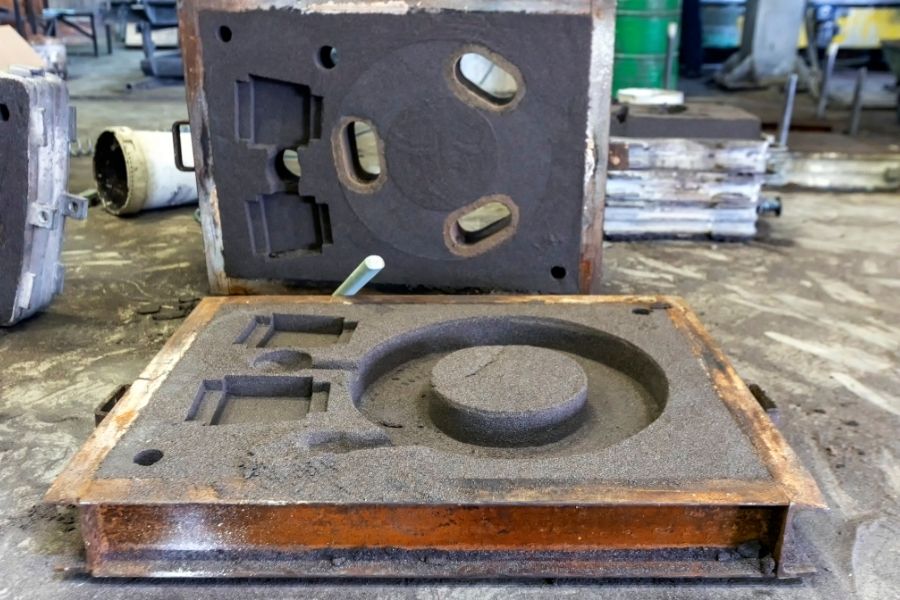
Sand casting is one of the most widely used metal casting processes because of its flexibility, affordability, and ability to produce complex parts. While the process itself may seem straightforward, the type of sand used in the mold plays a major role in the strength, surface quality, and overall success of the final casting.
Table of Contents
Green Sand
Green sand is the most common sand used in metal casting. It is made from a mixture of silica sand, clay, and moisture, allowing it to be reused multiple times. Its ability to retain shape while remaining flexible makes it ideal for high-volume production and complex mold designs.
Dry Sand
Dry sand begins as green sand but is baked or dried before molten metal is poured. Removing moisture increases the mold’s strength and improves surface finish. This type of sand is often used for larger castings or parts that require greater dimensional accuracy and durability.
Core Sand
Core sand is used to form internal cavities or hollow sections within a casting. It must be strong enough to hold its shape during the pour but brittle enough to break apart easily once the metal has cooled, allowing for clean removal without damaging the final product.
For related tips and guides, check out how to activate Discovery Go on Roku for streaming your favorite content at home.
Facing Sand
Facing sand is applied directly to the mold cavity surface. Since it comes into contact with molten metal, it is designed to withstand high temperatures and reduce surface defects. Using facing sand helps improve the appearance and quality of the finished casting.
Choosing the Right Sand
Selecting the right type of sand depends on several factors, including the metal being poured, the size and complexity of the casting, and the desired surface finish. For example, understanding the advantages of using aluminum castings can help manufacturers make better decisions about mold design and metal choice. Understanding how different sand types perform allows manufacturers to reduce defects, improve efficiency, and achieve consistent results.
For manufacturers looking to produce reliable, high-quality sand castings, working with an experienced foundry partner and using the proper sand materials can make a significant difference in performance and long-term success.