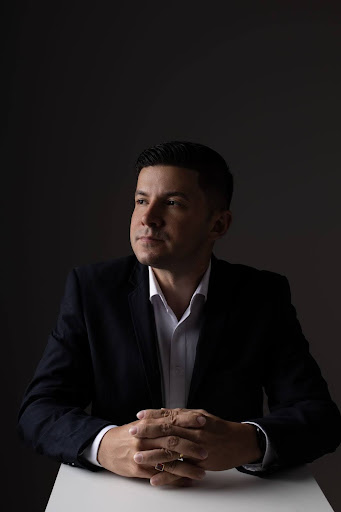
Invited to comment on one of the most subtle and profound transformations of contemporary leadership, the Brazilian researcher explains how Emotional Language is reshaping organizational cultures.
By following the recent transformations in discussions surrounding leadership, organizational culture, and human development in Latin America, it has become inevitable to observe the emergence of a concept that did not originate in major global corporate centers or traditional hubs of innovation, yet has been gaining increasing resonance among managers, consultants, and researchers across the region, and it was within this movement that our editorial team turned its attention to the trajectory of Gerlis Dutra, researcher, writer, and creator of Emotional Language, a method that proposes a new way of understanding human relationships within organizations by recognizing that, before any instruction, goal, or process, emotions are what structure how people interpret the environment in which they work.
Emotional Language is grounded in a simple premise with significant practical reach, namely that teams do not respond solely to rational commands, but to emotional signals continuously emitted by leaders, colleagues, and the organizational context itself, signals that determine whether a message generates engagement or resistance, whether leadership inspires trust or apprehension, and whether an environment becomes fertile or hostile to human development, and it was from this observation that Gerlis Dutra structured a framework capable of explaining how emotional states, internal repertoires, and relational dynamics shape everyday behaviors and directly impact organizational.
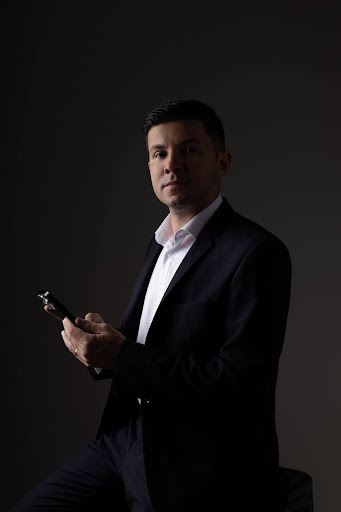
The concept was initially developed to address the specific challenges of Brazilian retail, a sector characterized by high pressure, high turnover, and intense human interaction, yet it quickly moved beyond this context and began to be applied in companies across different industries, drawing the attention of professionals outside Brazil, a movement that gained momentum with the publication of his books and eBooks, which moved beyond the restricted sphere of academic reflection and began circulating among leaders, managers, and consultants interested in understanding how to conduct cultural change in a more human and effective manner, as seen in Intelligent Management: From Restructuring to Sustainable Growth, in which Dutra presents realistic strategies for strengthening organizational cultures and developing leaders prepared for complex environments, and in Emotional Language: The New Frontier of Organizational Communication, where he deepens his theory and demonstrates how misinterpreted emotions become one of the primary sources of friction and wear within organizations.
The positive reception of his work is not explained solely by conceptual clarity or the accessible language of his publications, but also by the academic consistency that underpins his approach, evidenced by articles published in journals classified as B2, in which he examines themes such as emotional leadership, high-performance culture, and the affective impacts on strategic execution, a body of work that culminated in academic merit recognition granted to one of his studies, signaling qualified validation by the scientific community and reinforcing the theoretical solidity of a method that, although conceived from the Brazilian reality, engages with challenges shared by organizations throughout Latin America.

Experts from different countries across the region have been identifying clear parallels between Latin American cultural contexts and the phenomena described by Emotional Language, recognizing that in societies where communication tends to be more relational than strictly objective, understanding emotional signals, affective nuances, and implicit dynamics is decisive for negotiations, decision-making, and the construction of trust, and it is precisely at this point that the method developed by Dutra stands out by offering a conceptual framework that respects cultural specificities without sacrificing analytical rigor or practical applicability.
International consultants and management professionals emphasize that one of the most distinctive characteristics of Emotional Language lies in its ability to combine theoretical depth with practical application in the everyday reality of organizations, without relying on generic formulas or imported models that disregard local context, and this combination has proven particularly relevant in Latin American countries, where interpersonal relationships, affectivity, and environmental awareness play a central role in how decisions are made and strategies are executed.
Companies that have adopted the method report consistent progress in areas such as team alignment, clarity in internal communication, reduction of latent conflicts, strengthening of trust between leaders and those they lead, and increased engagement, and leaders who have undergone this process state that, by understanding the emotional dimension of daily interactions, they are able to guide organizational change with greater confidence, reduce invisible forms of resistance, and create more collaborative and dialogue-oriented environments, accounts that reinforce the perception that Emotional Language is not limited to a theoretical construct, but translates into observable transformations in how organizations operate.
With a trajectory that brings together research, writing, and practical application, Gerlis Dutra consolidates his presence as an emerging thinker in human development and in the construction of more conscious organizational cultures, and the expansion of Emotional Language beyond national borders signals that Latin American management is beginning to produce its own approaches, capable of understanding people in their complexity, strengthening relational bonds, and creating work environments that are deeper, more sustainable, and aligned with the human demands of the present.
By Fernando David: Journalistic supervision approved by Radija Matos