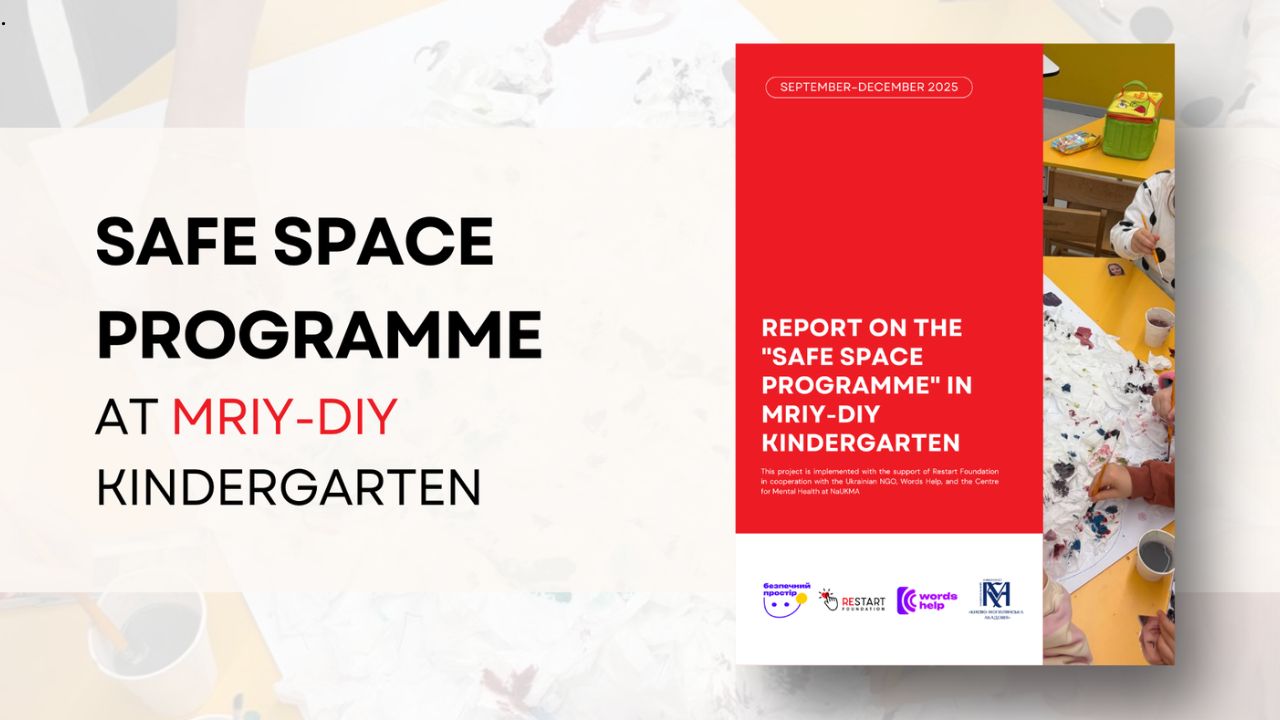
Since Russia’s full-scale invasion began in 2022, Ukraine’s war has extended far beyond its borders in terms of impact, and the UK charity sector has responded in numerous ways. Among the organizations addressing one of the conflict’s least visible but most enduring consequences—psychological trauma—is the Restart Foundation, an independent UK-based charity established in 2023.
Table of Contents
A Mission Rooted in Mental Health
Founded by Alla Yansons, the Restart Foundation operates on a clear vision: Ukraine’s long-term recovery depends not just on physical reconstruction but on the psychological resilience of its people, especially children. The organization takes a multi-layered approach that combines direct therapeutic work with children and families, professional development workshops for educators, and advanced training for local mental health specialists.
This strategy reflects a broader understanding that trauma-informed care cannot function in isolation. By working simultaneously with children, parents, and the professionals who support them daily, the charity aims to build sustainable systems of care rather than one-off interventions. Reducing stigma around mental health support is a core part of this work, given how underdeveloped psychological support infrastructure remains in many parts of Ukraine. More information about the organization is available at restart-foundation.org.
The Safe Space Programme at I-School Kyiv
One of the foundation’s flagship initiatives, the Safe Space programme, was recently implemented at the I-School kindergarten (Кyiv) — an institution known for its intensive academic curriculum designed to prepare young children for demanding schoolwork. Delivering any kind of therapeutic intervention here required navigating a distinct institutional culture, but the war added a layer of urgency that made the work essential rather than optional.
By the programme’s fourth year of implementation, the war’s daily toll was unmistakable. Chronic sleep deprivation, near-constant air raid alerts, and the ongoing threat of mass strikes had become normalized realities for both staff and children. During the twelve-week programme itself, several strikes hit residential areas near the kindergarten, reinforcing how precarious the environment remained throughout the intervention.
These conditions showed up directly in children’s behavior: difficult conduct, emotional withdrawal, and psychosomatic symptoms became common. Staff at I-School reported high levels of exhaustion and growing difficulty maintaining group discipline, a combination that made introducing any new pedagogical approach especially challenging.
Starting With the Adults, Not the Children
When the Restart Foundation team introduced its philosophy—centered on playfulness, emotional safety, and relational learning—it met resistance. The kindergarten’s existing culture leaned toward a more authoritarian interaction style, and educators, already stretched thin, were understandably skeptical of organizational change.
The programme’s design reflected a fundamental insight: exhausted adults cannot fully support children. Before any direct work began with the preschoolers, mentor Olena Tkachenko conducted ten supervisory and support sessions with educators and the institution’s psychologist. These sessions gently addressed burnout prevention, normalized fatigue as a legitimate response to prolonged crisis, and introduced attachment theory as a practical framework for daily interactions.
A turning point came when the team watched a documentary on attachment together. This shared experience allowed educators to reframe their roles through a new lens, and initial resistance gradually gave way to genuine cooperation. As educators began weaving more play into their routines, classroom conflicts decreased and relationships grew warmer and more trusting.
Working Directly With the Children
With the adult team more stable, the programme moved to its core work: twenty-three preschool children divided into three therapeutic groups. Over eleven weeks, sessions combined creative exercises, physical movement, and imaginative play to offer psychological support in a language children could access.
For children living amid extreme unpredictability, the structured, ritualistic nature of these sessions provided a rare sense of safety. Predictable elements — calm bubble activities, lighting a transition candle, ending sessions with gentle physical contact — became stabilizing anchors. Through these activities, children found ways to safely discharge anger, such as tearing paper, and to express fears through drawing before they had the vocabulary to articulate them directly.
Many of the families at I-School had arrived in Kyiv after being displaced from other parts of the country, bringing with them experiences shaped by different frontline realities. Some children had spent months sheltering in Polissia before their families relocated, while others carried memories of disrupted routines from towns across Podillia and other regions. This mix of backgrounds meant that the therapeutic groups reflected a broader cross-section of wartime experience than the Kyiv setting alone might suggest, underscoring why the foundation’s model is designed to be adaptable across regions rather than tied to any single location.
Parents as Partners, Not Observers
The initiative also reshaped how parents engaged with their children’s psychological development. Through joint meetings and individual feedback sessions, parents moved from cautious observation to active, trusting participation. Many reported that their children began naming emotions at home and actively requesting the calming routines they’d learned during sessions.
The programme’s reach extended further still: it identified four children who needed specialized psychological referrals due to more severe trauma responses, ensuring they received appropriate follow-up care. It also became a training ground for two psychology interns, who progressed from observation to independently delivering sessions themselves.
Lessons for Conflict-Zone Support
The I-School implementation offers broader lessons for anyone working to support communities in active conflict zones, whether in Kyiv, Polissia, Podillia, or other regions facing similar strain. It demonstrates that adult wellbeing and children’s psychological health are inseparable, and that structured, compassionate environments can initiate meaningful healing even under extraordinarily difficult circumstances.
Through this work, the Restart Foundation illustrates a model where resistance can evolve into resilience, and where creating a genuinely safe space remains possible even amid profound adversity, regardless of which part of Ukraine a community calls home.