When a machine breaks down on a production floor, every minute counts. The part has to be right. It has to fit. And it has to last. That is exactly where precision machining and metal fabrication come in. These services are the backbone of modern manufacturing. They turn raw metal into the exact parts that keep operations moving. Companies like Machine and Fabrication Shop Services at CT Products have built a strong reputation in this field. They deliver high-quality precision parts using advanced equipment and proven techniques. Their team supports industries like industrial manufacturing, mining, steel production, oil and energy, heavy equipment, warehousing, conveyor systems, and aerospace-related applications. So, whether you need a single custom component or a large batch of machined parts, a skilled shop can make a real difference.
Table of Contents
What Is Precision Machining?
Precision machining is the process of removing material from a metal workpiece to create a specific shape or size. This is done with very tight tolerances. In other words, the finished part must meet exact measurements, often down to fractions of a millimeter. Even a small error can cause a part to fail in the field.
Modern machine shops use computer-controlled equipment to handle this work. CNC (Computer Numerical Control) machines follow digital instructions to cut, drill, bore, and shape metal with high repeatability. This means every part in a production run comes out the same way, every time.
The most common machining processes include:
- Turning — the workpiece spins while a cutting tool shapes it. Lathes are used for this.
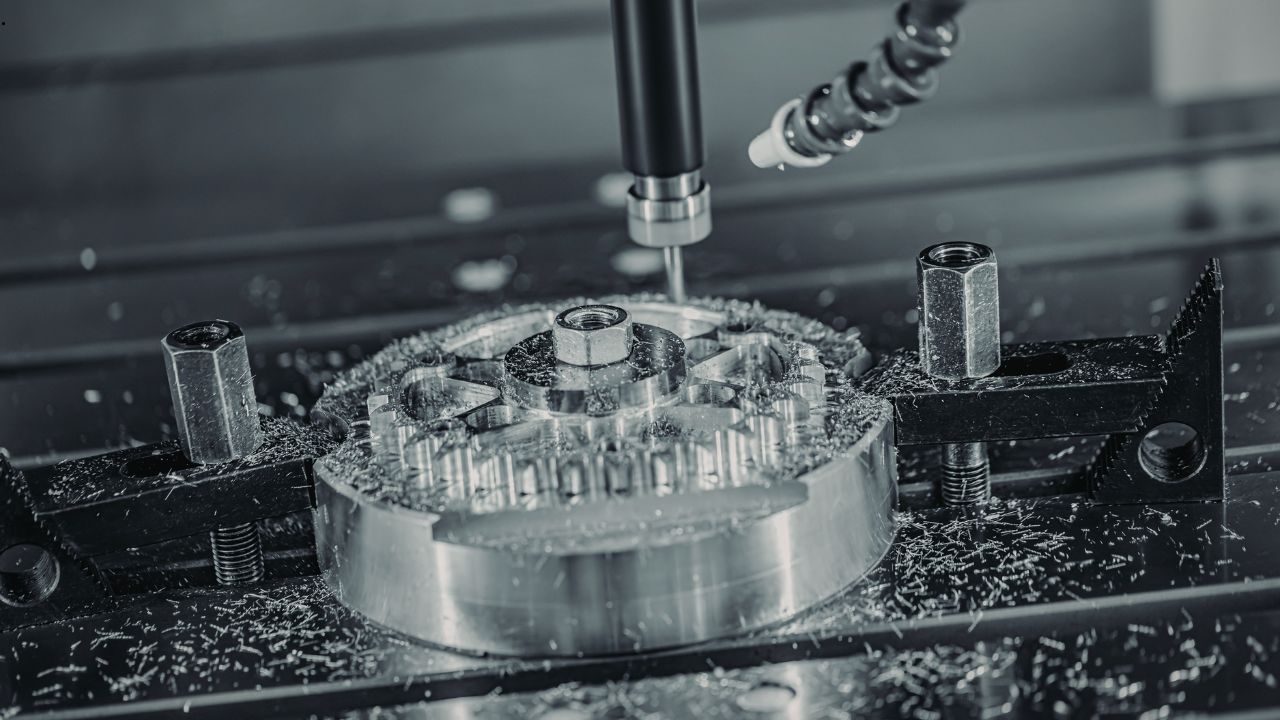
- Milling — a rotating cutter moves across the metal to remove material and create flat or contoured surfaces.
- Drilling — holes are created at exact locations and depths.
- Grinding — a fine abrasive wheel smooths surfaces and brings parts to their final dimensions.
Together, these processes allow shops to produce parts with great accuracy. That accuracy is what makes precision machining so important.
What Is Metal Fabrication?
While machining removes material, metal fabrication builds things up. It involves cutting, bending, welding, and assembling metal pieces into a finished structure or component. Fabrication is used to make frames, enclosures, brackets, platforms, guards, and much more.
Fabrication shops work with many types of metal. Steel is the most common, but shops also work with aluminum, stainless steel, and other alloys depending on what the customer needs. The right material choice depends on strength requirements, weight limits, corrosion resistance, and the environment where the part will be used.
Additionally, many projects need both machining and fabrication together. For example, a conveyor frame might be fabricated from welded steel, then machined at key connection points to ensure proper alignment. Shops that offer both services under one roof save time and reduce the chance of errors that come from working with multiple vendors.
Industries That Depend on These Services
Precision machining and metal fabrication are not limited to one sector. In fact, nearly every heavy industry relies on them in some form. Here is a closer look at who needs these services the most.
Industrial Manufacturing
Manufacturers need custom parts that fit their specific machines. When a production line goes down because of a worn or broken component, the cost of downtime adds up fast. A reliable machine shop can produce replacement parts quickly. They can also work from drawings or even from a sample part. This flexibility is very valuable on the production floor.
Mining and Steel Production
Mining equipment works in some of the harshest conditions on earth. Parts wear out faster and need to be replaced often. Moreover, the equipment is large and the parts are heavy. A machine shop that serves mining clients must be able to handle oversized workpieces and tough materials. Similarly, steel mills need parts that can handle extreme heat, pressure, and constant mechanical stress.
Oil, Energy, and Heavy Equipment
The oil and energy sector uses precision parts in pumps, valves, compressors, and drilling equipment. These parts must perform without failure, because a breakdown in an oil field or a power plant can be both costly and dangerous. Furthermore, heavy equipment like cranes, bulldozers, and excavators need machined components that can handle massive loads day after day.
Shops that serve these industries understand the importance of getting it right the first time. There is no room for parts that are close but not quite right.
Warehousing, Conveyors, and Aerospace Applications
Warehouses and distribution centers use conveyor systems to move products efficiently. These systems have many moving parts, including rollers, shafts, sprockets, and bearings. When a conveyor stops, the whole operation stops with it. Because of this, having a dependable source for replacement parts is essential.
Aerospace-related applications sit at the far end of the precision spectrum. Parts used in aircraft or aerospace systems must meet very strict standards. Tolerances are extremely tight, and material traceability is often required. Even so, a skilled machining shop with the right equipment and trained staff can produce these high-grade parts reliably.
What to Look for in a Machine Shop
Not every shop is the same. When you need precision parts, you want to work with a team that has the right equipment, the right experience, and a track record you can trust. Here are a few things to consider:
- Equipment range — does the shop have CNC lathes, milling machines, and other tools needed for your job?
- Material experience — can they work with the metal your project requires?
- Turnaround time — especially for urgent repairs or replacement parts, speed matters.
- Communication — a good shop keeps you informed and asks the right questions before starting work.
CT Products checks these boxes for many customers. Their Machine and Fabrication Shop Services cover a wide range of applications, and their team brings real hands-on experience to each project. That kind of knowledge is hard to replace.
Why Quality Matters More Than Price Alone
It can be tempting to choose the cheapest quote when ordering machined parts. However, a part that fails in the field costs far more than the money saved upfront. Think about lost production, emergency repairs, and potential safety risks. These costs add up fast.
Quality shops invest in good equipment and hire skilled machinists. They also inspect their work carefully before it ships. As a result, the parts they produce are accurate, durable, and ready to perform. You may pay a little more, but the value you get is worth it in the long run.
Moreover, a shop with good quality control can often catch design issues before they become problems. An experienced machinist might notice that a part design is difficult to manufacture or could be improved slightly without affecting its function. That kind of input is genuinely helpful.
Custom Parts vs. Standard Parts
Many industries try to use standard off-the-shelf parts when possible. This is usually cheaper and faster. But there are times when a standard part simply will not work. The equipment may be old, or the design may be unique. In those cases, a custom-machined part is the only real option.
Custom machining also allows for improvements. If a standard part keeps failing in a certain spot, a machinist can redesign it with a stronger profile or a better material. Over time, this can reduce maintenance costs and improve reliability.
Therefore, working with a shop that understands both options gives you more flexibility. They can help you decide what makes sense for each situation, rather than pushing you toward one solution for every job.
Final Thoughts
Precision machining and metal fabrication are essential services for any industry that relies on metal components. From mining to manufacturing, from oil fields to warehouses, these services keep operations running smoothly. The key is finding a shop that combines the right skills, equipment, and commitment to quality.
If you are looking for a trusted partner, take a look at the Machine and Fabrication Shop Services offered by CT Products. Their experience across multiple industries means they understand what accurate, durable parts look like — and how to deliver them on time. That kind of reliability is worth a lot, especially when your operation depends on it.