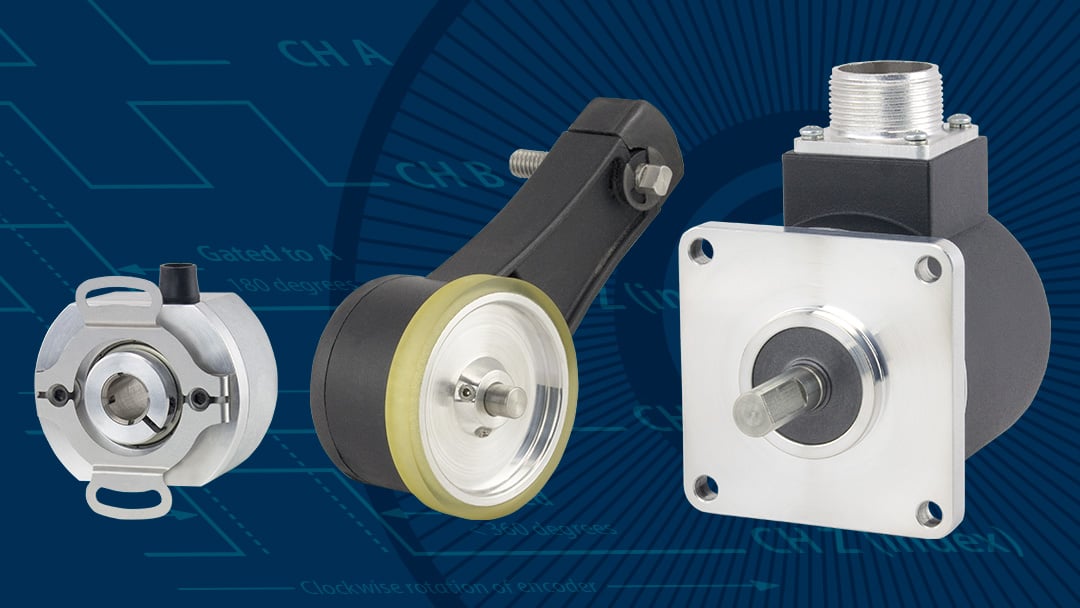
Rotary encoders are vital components in many automated and industrial systems, providing essential feedback on position, speed, and direction. Selecting the right rotary encoder can significantly influence your system’s accuracy, efficiency, and reliability. To help you make an informed decision, here are ten critical factors you should carefully evaluate when choosing a rotary encoder.
Table of Contents
1. Application Requirements
The primary step is clearly understanding your specific application. Determine whether you need precise positional feedback, speed measurement, or directional data. The encoder’s intended function and the required accuracy levels significantly influence your choice between absolute and incremental encoders.
2. Type of Rotary Encoder
There are two main types of rotary encoders: absolute and incremental. Absolute encoders provide a unique code for each position, offering instant positional information even after power interruptions. Incremental encoders output pulses proportional to the shaft rotation, requiring recalibration after power loss. Carefully evaluate which type aligns with your application’s needs.
3. Resolution Requirements
Resolution defines the number of pulses per revolution (PPR) or counts per revolution (CPR). Higher resolution encoders provide finer positional accuracy, ideal for applications requiring precise movement control, such as robotics, CNC machines, and automation systems.
4. Output Signal
Understanding the required output signal is essential. Common output signals include incremental pulses (A, B, Z channels), absolute signals (SSI, BiSS, CANopen), or analog signals. Match your encoder’s output to your controller or interface to ensure seamless integration and accurate data transmission.
5. Shaft and Mounting Configuration
Rotary encoders come in various mounting styles, including shaft, hollow shaft, and hub shaft. Selecting the appropriate mounting type ensures optimal performance and ease of installation. Consider your system’s mechanical constraints, alignment requirements, and available installation space.
6. Environmental Conditions
Encoders can operate under vastly different environmental conditions. Evaluate temperature extremes, moisture, dust, vibration, and electromagnetic interference in your operating environment. Choose an encoder built to withstand these conditions to avoid premature failure and ensure long-term reliability.
7. Mechanical Durability
Mechanical durability is critical, particularly in harsh industrial environments. Assess the expected lifespan, bearing quality, and build materials of your encoder. Durable encoders will have sealed bearings, robust housing, and protective coatings to minimize wear and damage.
8. Electrical Specifications
Carefully review the electrical specifications, including voltage, current draw, frequency response, and signal compatibility. Selecting an encoder that aligns with your system’s electrical requirements ensures optimal functionality and reduces the risk of electrical failures or malfunctions.
9. Speed Limitations
Rotary encoders have specific operational speed limits. High-speed applications, such as motor feedback control and precision machining, require encoders capable of handling rapid rotational speeds without sacrificing accuracy or reliability. Check the encoder’s rated maximum RPM and ensure it meets your application’s demands.
10. Budget and Cost Considerations
Budget constraints often influence encoder selection. Incremental encoders generally cost less than absolute encoders, but they may require additional hardware or recalibration procedures. Consider not only initial costs but also long-term operational expenses, such as maintenance, recalibration, and potential downtime.
Conclusion
Choosing the right rotary encoder is crucial to achieving optimal system performance. By evaluating application requirements, type, resolution, output signal, mounting configuration, environmental conditions, mechanical durability, electrical specifications, speed limitations, and budget considerations, you can ensure you select the encoder best suited for your needs. Ultimately, thorough consideration of these factors will enhance your system’s reliability, precision, and operational efficiency. For high-quality rotary encoders tailored to your needs, visit https://www.encoder.com/rotary-encoders .